


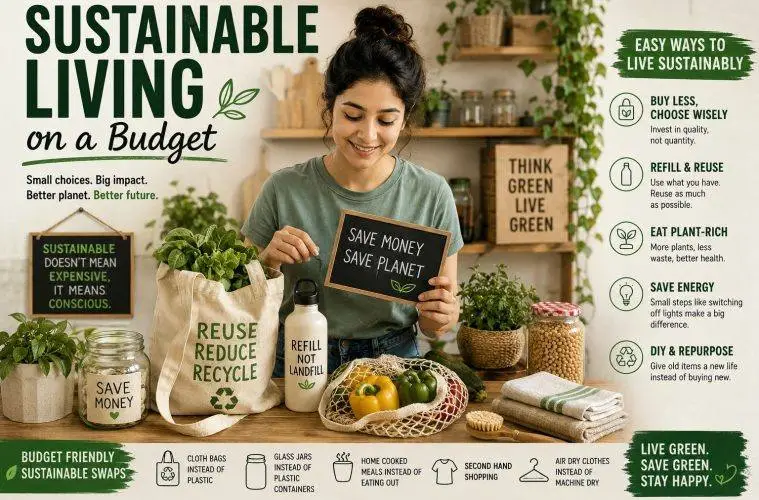
Sustainable living can help you save money, reduce waste, and make eco-friendly choices without overspending.
Can You Live Sustainably Without Spending a Lot of Money?
June 23, 2026
One of the biggest misconceptions about sustainability is that it requires expensive products, major home upgrades, or significant lifestyle changes. While solar panels, electric vehicles, and premium eco-friendly brands often dominate sustainability conversations, living sustainably is not limited to people with large budgets.
At its core, sustainable living is about using resources wisely, reducing waste, and making thoughtful decisions about consumption. In many cases, these habits naturally lead to lower expenses and a simpler lifestyle.
For individuals and families looking to save money while reducing their environmental impact, sustainable living can be both practical and affordable.
Why Sustainable Living Is Becoming More Popular
In recent years, growing concerns about environmental issues have encouraged many people to rethink their daily habits. At the same time, rising costs of living have forced households to become more mindful about spending.
These two trends have created increased interest in sustainable living practices that are accessible to everyone, regardless of income level.
People are beginning to realize that sustainability and financial responsibility often work together. Actions that conserve resources frequently reduce household expenses as well.
This combination has made sustainable living more appealing than ever before.
The Power of Buying Less
One of the simplest ways to live sustainably is to purchase fewer items.
Modern advertising encourages constant consumption, making it easy to buy products that are not truly necessary. However, every purchase requires resources for manufacturing, transportation, packaging, and eventual disposal.
Choosing to buy only what you genuinely need reduces environmental impact while protecting your budget.
Before making a purchase, it can be helpful to ask whether the item will provide long-term value or whether it is simply an impulse buy.
Over time, adopting a more intentional approach to shopping can lead to significant savings while reducing household clutter and waste.

Image credit : AI generated
Making the Most of What You Already Own
A sustainable lifestyle often begins with appreciating the items already available in your home.
Many products are replaced long before they stop functioning. Clothing can often be repaired, furniture can be restored, and household items can frequently be repurposed for new uses.
Extending the life of products reduces waste while delaying replacement costs.
Rather than immediately purchasing something new, many consumers are finding creative ways to reuse existing items. This approach not only supports sustainability goals but also encourages resourcefulness and financial discipline.
The most sustainable product is often the one you already own.
Reducing Household Energy Use
Energy consumption plays an important role in both environmental sustainability and monthly household expenses.
Fortunately, reducing energy use does not require expensive technology. Small adjustments can make a meaningful difference.
Turning off lights when leaving a room, unplugging unused electronics, using natural daylight whenever possible, and choosing energy-efficient appliances can all help reduce electricity usage.
These simple habits may seem minor individually, but together they can contribute to lower utility bills throughout the year.
Reducing energy demand also benefits the environment by decreasing the resources required to generate electricity.
Conserving Water and Saving Money
Water conservation is another effective strategy for sustainable living on a budget.
Many households unknowingly waste substantial amounts of water each day through small leaks, excessive usage, or inefficient habits.
Making an effort to use water more responsibly can lower utility costs while protecting an increasingly valuable natural resource.
Simple changes such as taking shorter showers, fixing leaks promptly, and being mindful of water usage during household chores can produce noticeable results over time.
These habits require little or no financial investment while offering both environmental and economic benefits.
Image credit : Sigma Earth
Why Secondhand Shopping Makes Sense
The growing popularity of secondhand shopping reflects a shift toward more sustainable consumer behavior.
Purchasing pre-owned items reduces demand for new manufacturing and helps keep products in use longer. It also provides opportunities to find quality goods at lower prices.
Many people are surprised by the variety of items available through thrift stores, resale platforms, and local community exchanges.
From clothing and books to furniture and home décor, secondhand markets offer countless opportunities to save money while supporting sustainability.
Choosing used products whenever possible can significantly reduce spending without sacrificing quality.
Reducing Food Waste at Home
Food waste is one of the most common forms of household waste, and it can have a substantial impact on grocery budgets.
Many families purchase more food than they can realistically consume, resulting in spoiled ingredients and unnecessary expenses.
Planning meals in advance and being intentional about grocery shopping can help reduce waste while maximizing food budgets.
Leftovers can often be repurposed into new meals, and proper food storage can extend freshness.
By making better use of the food already purchased, households can lower expenses and reduce the environmental costs associated with food production and disposal.
Growing Your Own Food
Home gardening has become increasingly popular among individuals seeking affordable sustainability solutions.
Even people with limited outdoor space can grow herbs, vegetables, and small fruits in containers, balconies, or window boxes.
Growing food at home provides a deeper connection to what we consume while reducing dependence on packaged products and long-distance transportation.
Although home gardening may not replace grocery shopping entirely, it can contribute to lower food costs while promoting sustainable habits.
Many gardeners also find the process rewarding and educational.
Image credit : the office crowd
Transportation Choices Matter
Transportation is another area where sustainable decisions can benefit household finances.
Walking, cycling, carpooling, and public transportation can often reduce fuel expenses and vehicle maintenance costs.
While not every option is practical for every situation, small adjustments can still make a difference.
Combining errands into fewer trips or choosing alternative transportation methods when possible helps conserve resources and save money.
Over time, these choices contribute to both personal financial goals and environmental sustainability.
Avoiding Expensive Sustainability Trends
As sustainability becomes more popular, companies increasingly market products as environmentally friendly.
While many eco-friendly products offer genuine benefits, consumers should be cautious about unnecessary purchases made solely because they are labeled as sustainable.
Replacing perfectly functional items with newer alternatives is not always the most environmentally responsible decision.
True sustainability focuses on reducing consumption and maximizing the usefulness of existing resources.
Being mindful of marketing claims can help consumers avoid unnecessary spending while remaining committed to sustainable values.
Building Sustainable Habits Gradually
One reason some people feel overwhelmed by sustainability is the belief that every aspect of life must change immediately.
In reality, meaningful progress often comes from small, consistent improvements.
Starting with one habit—such as reducing food waste or lowering energy use—can create momentum for additional changes over time.
Sustainability is a long-term commitment rather than a short-term project.
By focusing on gradual improvements, individuals can create lasting habits that fit comfortably within their budgets and lifestyles.
Confirmed Benefits
Research consistently shows that reducing waste, conserving energy, shopping secondhand, and minimizing unnecessary purchases can lower household expenses while reducing environmental impact.
Common Misconceptions
Many people assume sustainable living is only accessible to higher-income households. However, some of the most effective sustainability practices require little or no spending and often lead to financial savings.
Why Sustainable Living Is Good for Your Wallet and the Planet
The relationship between sustainability and affordability is stronger than many people realize.
Living sustainably often means consuming fewer resources, making smarter purchasing decisions, and finding value in what you already have.
These behaviors naturally reduce costs while supporting environmental goals.
Rather than viewing sustainability as an expensive lifestyle trend, it may be more accurate to see it as a practical approach to living more intentionally.
Conclusion
Sustainable living does not have to be expensive or complicated.
By buying less, reducing waste, conserving resources, and making thoughtful choices, individuals can lower their environmental impact while improving their financial well-being.
The most effective sustainable habits are often the simplest ones. Over time, small changes can produce significant benefits for both households and the planet.
For those looking to save money and live more responsibly, sustainable living on a budget remains one of the most accessible and rewarding lifestyle choices available today.
FAQs
What is sustainable living on a budget?
Sustainable living on a budget involves reducing waste, conserving resources, and making environmentally conscious choices without spending excessive amounts of money.
Can sustainable living save money?
Yes. Many sustainable habits, such as reducing energy use, avoiding unnecessary purchases, and minimizing food waste, can lower household expenses.
Is sustainable living expensive?
Not necessarily. While some eco-friendly products can be costly, many sustainable practices are free or inexpensive to adopt.
What is the easiest way to start living sustainably?
Starting with simple habits such as buying less, reducing food waste, and conserving energy can make a significant difference.
Why is secondhand shopping considered sustainable?
Secondhand shopping extends the life of products, reduces manufacturing demand, and helps keep usable items out of landfills.
How does reducing waste help the environment?
Reducing waste lowers resource consumption, decreases landfill usage, and minimizes pollution associated with manufacturing and disposal.
Can sustainable living work for families?
Absolutely. Many sustainable practices can help families save money while teaching responsible consumption habits.
What is the biggest myth about sustainable living?
The biggest myth is that sustainability always requires expensive products. In reality, many sustainable habits focus on spending less rather than spending more.
Published by HOLR Magazine