


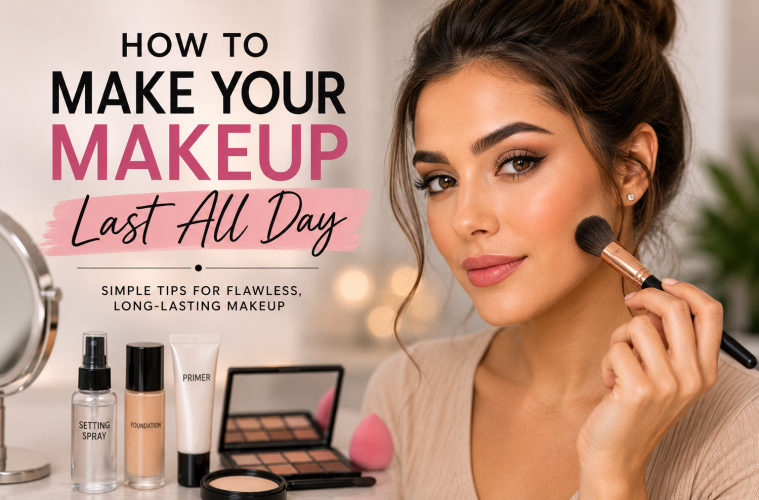
The right preparation, application, and a few simple product choices can help your makeup stay fresh and comfortable from morning plans to evening events.
August 26, 2026: There is something frustrating about spending time getting your makeup just right, only to look in the mirror a few hours later and realize your foundation has faded, your concealer has settled into fine lines, your eyeliner has moved, and your lipstick has almost disappeared.
Whether you are getting ready for work, a long day out, a wedding, or a dinner or simply want your everyday makeup to hold up better, longevity often comes down to what you do before and during application.
There is no single product that guarantees makeup will look exactly the same from morning until night. Your skin type, weather, products, application technique, how much you touch your face, and even how much you sweat can all affect how makeup wears.
The good news is that a few practical changes can make a noticeable difference.
HOLR breaks down how to make your makeup last longer without turning your routine into a complicated series of steps.
Start With Clean, Prepared Skin
Long-lasting makeup starts before you apply foundation.
If your skin has excess oil, sweat, or leftover skincare or product buildup sitting on the surface, makeup may have difficulty applying evenly and staying in place.
Start with a gentle cleanser appropriate for your skin type, then follow with your usual skincare routine.
You do not need to scrub your skin or use multiple products simply because you want your makeup to last. Overworking the skin can leave it feeling irritated or uncomfortable.
If you have acne-prone skin, the American Academy of Dermatology recommends choosing makeup labeled “oil-free,” “won’t clog pores” or “non-comedogenic,” and removing makeup before bed.
Do Not Skip Moisturizer
It may seem strange to moisturize when you are trying to control oily skin, but dehydrated or uncomfortable skin can make makeup look uneven.
Use a moisturizer suited to your skin type and allow it to absorb before beginning your makeup.
If your skin is naturally dry, a suitable moisturizer can help create a smoother surface for foundation. If your skin is oily, you may prefer a lighter gel or lotion texture.
The goal is not to make your skin as matte as possible.
The goal is to create a comfortable, balanced base.
Give Your Skincare Time to Set
One common mistake is applying makeup immediately after putting on several skincare products.
If your moisturizer or sunscreen is still sitting heavily on the surface, foundation may move around rather than blending smoothly.
Give your skincare a little time to settle before moving on to makeup.
You do not necessarily need to wait a specific number of minutes every time. Instead, pay attention to how your skin feels. When the products have absorbed and your skin no longer feels excessively wet or slippery, you can begin applying makeup.

Image Credit: IPSY
Choose a Primer Based on Your Skin
Primer is not essential for everyone, but it can be useful when you are trying to improve how makeup wears.
The important thing is choosing one based on what your skin actually needs.
If you have oily skin, you may prefer a primer designed to reduce the appearance of excess shine. If your skin is dry, a hydrating primer may help create a more comfortable base.
You can also use different primers on different areas of your face.
For example, you might use a mattifying product around the T-zone while keeping the rest of the face more hydrated.
There is no need to apply a thick layer. A small amount spread evenly is usually enough.
Apply Foundation in Thin Layers
More foundation does not necessarily mean longer-lasting foundation.
In fact, applying too much product at once can make makeup look heavy and may increase the chance of it separating or settling as the day goes on.
Start with a thin layer and build coverage only where you need it.
Use a damp makeup sponge, brush, or clean fingertips depending on the product and finish you prefer. Blend carefully around the nose, jawline, and hairline so there are no obvious edges.
If you need additional coverage, add a little more product to specific areas instead of covering your entire face with another thick layer.
This tends to create a more natural finish while using less makeup overall.
View this post on Instagram
Use Concealer Strategically
Concealer can disappear quickly when it is applied heavily in areas that naturally move.
Instead of covering your entire under-eye area with a thick layer, apply a small amount where you actually need coverage.
Blend gently and avoid repeatedly adding product throughout the day.
The same principle applies to blemishes. Apply concealer directly to the area rather than layering extra foundation over your entire face.
The less unnecessary product you use, the less there is to move, crease, or fade.
Set Makeup With Powder Where You Need It
Powder can help reduce shine and set certain areas of your makeup.
But applying a thick layer of powder over your entire face is not always necessary.
Focus on areas where makeup tends to move or where you naturally become oily, such as around the nose, forehead, and chin.
If you have dry skin, you may prefer to use less powder and keep some areas of the face looking more natural.
A small amount applied with a brush or puff can be enough.
The goal is to set makeup, not make the skin look completely flat.
Pay Attention to Your T-Zone
The forehead, nose, and chin often produce more visible shine than other areas of the face.
If your makeup tends to disappear from these areas first, consider treating them differently from the rest of your skin.
Use a suitable primer and a small amount of setting powder where needed.
During the day, blotting papers can also help absorb excess oil without adding another heavy layer of powder.
This can be particularly useful if your makeup starts looking shiny rather than genuinely faded.
Use Setting Spray as a Finishing Step
Setting spray can be useful for helping makeup look more cohesive and for providing a finishing layer.
Different formulas are designed for different finishes, including matte, natural and dewy looks.
Follow the directions on the specific product and spray it evenly rather than concentrating it in one area.
It is also worth remembering that setting spray is not magic. If your foundation is incompatible with your skincare, your skin is extremely oily or you are sweating heavily, a spray alone is unlikely to keep everything perfectly intact.
Think of it as one part of the routine rather than the entire solution.
Choose Long-Wear Products When You Need Them
If you know you have a particularly long day ahead, choose products specifically designed for longer wear.
This can include:
- Long-wear foundation
- Waterproof or water-resistant mascara
- Transfer-resistant lip products
- Long-wear eyeliner
- Setting products
You do not have to use long-wear formulas every day.
They can be especially useful for occasions when you will not have much opportunity to touch up your makeup.
When choosing cosmetics, always follow the product’s instructions and pay attention to how your skin reacts. The FDA advises consumers to read cosmetic labels, follow directions, and stop using a product if it causes an unexpected reaction.
Be Careful With Cream Products
Cream blushes, bronzers and highlighters can give the skin a beautiful finish, but they can also move if too much product is applied.
Use a small amount and blend it carefully.
If you want additional longevity, you can layer a compatible powder product lightly over a cream product.
For example, a cream blush followed by a small amount of powder blush can provide dimension while helping the colour remain visible for longer.
The key is moderation.
Too many layers can make makeup look heavy instead of helping it last.
Make Your Eye Makeup Last Longer
Eye makeup can be one of the first areas to show signs of wear.
Eyelids can become oily throughout the day, causing eyeshadow and eyeliner to crease or move.
An eyeshadow primer can provide a smoother base, particularly if your eyelids are naturally oily.
You can also apply eyeshadow in thin layers rather than placing a large amount of product on the lid at once.
For eyeliner, choose a formula designed for the finish and longevity you want. If your eyes tend to water, a water-resistant option may be more practical.
Mascara should also be replaced regularly. The FDA notes that manufacturers generally recommend discarding mascara after a few months because the wand can introduce bacteria and fungi into the product with repeated use.
Never add water or saliva to dried mascara in an attempt to make it usable again. The FDA warns that this can introduce microorganisms into the product.
Help Your Lipstick Stay Longer
Lip colour often fades faster than complexion makeup because you eat, drink, talk and naturally touch your lips throughout the day.
Start with comfortable, smooth lips rather than applying lipstick over dry or peeling skin.
A lip liner can help define the shape and create a base for your lipstick.
Apply lipstick evenly, then remove excess product by gently pressing your lips against a tissue if appropriate for the formula.
For longer-lasting colour, you can apply a second thin layer rather than one very thick layer.
If you are going to eat, accept that some touch-up may still be necessary. Long-wear lipstick can improve longevity, but no lip product is completely immune to food and drinks.
Keep Your Hands Away From Your Face
This sounds obvious, but it is one of the easiest things to overlook.
Touching your face throughout the day can transfer oils and bacteria and can move makeup from areas where you want it to stay.
Try to avoid resting your hands on your cheeks, rubbing your eyes or repeatedly touching your nose and forehead.
If you need to fix something, use a clean tool or tissue rather than your fingers whenever possible.
The FDA also recommends washing your hands before applying cosmetics and keeping cosmetic containers and applicators clean.
Be Careful With Dry Shampoo and Hair Products
Your makeup can be affected by what you put on your hair, too.
Hair oils, styling products, and sprays can transfer onto your forehead or cheeks, particularly if your hair touches your face throughout the day.
If you are styling your hair after applying makeup, try to complete products that involve sprays or heavy styling before your final makeup steps when possible.
This can help reduce unwanted residue landing on your freshly applied makeup.
How to Make Makeup Last in Hot or Humid Weather
Heat and humidity can make long-lasting makeup considerably more challenging.
If you know you will be outside in warm weather, start with lightweight skincare and avoid applying unnecessarily heavy layers.
Use products suited to your skin type and consider a long-wear base if you need your makeup to remain intact for an extended period.
Powder can help manage shine, but avoid continually adding more throughout the day.
Instead, blot excess oil first and then apply a small amount of powder where necessary.
If you are sweating heavily, gently press a clean tissue against the skin rather than wiping your face.
Most importantly, do not skip sunscreen simply because you are wearing makeup. If your makeup product includes SPF, check its label and directions rather than assuming it provides adequate sun protection simply because it is makeup. The FDA notes that products marketed with SPF claims are regulated differently because sunscreen is intended to protect against the sun.
Do Not Forget Your Neck
If you are wearing foundation beyond your face, blend it carefully into the areas where you need it.
A noticeable difference between your face and neck can make an otherwise polished makeup look appear unfinished.
You do not necessarily need to cover your entire neck with foundation. The right approach depends on your outfit, the coverage of your foundation, and the finish you want.
Build Your Routine Around Your Skin Type
There is no single makeup routine that works perfectly for everyone.
If you have oily skin
Focus on controlling shine without completely stripping the skin. A lightweight moisturizer, suitable primer and targeted powder can help.
If you have dry skin
Prioritize comfortable hydration and avoid applying excessive powder to areas that already feel dry.
If you have combination skin
Treat different areas differently. Your T-zone may need more oil control while your cheeks need more moisture.
If you have acne-prone skin
Look for makeup labeled oil-free, non-comedogenic or “won’t clog pores,” and make sure you remove your makeup before going to bed. The American Academy of Dermatology also recommends cleaning makeup brushes regularly.
What to Do When Your Makeup Starts Fading
Even the best routine may need a touch-up.
The key is not to simply pile more makeup on top of what is already there.
First, identify what has happened.
If your skin is oily, gently blot the excess oil.
If your foundation has separated, lightly blend the area with a clean sponge or brush before adding a small amount of foundation.
If your under-eye concealer has creased, gently smooth the area before applying a tiny amount of additional product.
For lipstick, remove any remaining uneven colour if necessary and reapply.
A few targeted adjustments usually look better than adding another complete layer of makeup.
Keep Your Makeup Tools Clean
Your makeup brushes and sponges come into regular contact with your skin, so keeping them clean is an important part of a good routine.
The American Academy of Dermatology recommends cleaning makeup brushes regularly, particularly for people with acne-prone skin.
Dirty tools can also affect how makeup applies. A brush covered in old foundation and powder is unlikely to give you the same smooth application as a clean one.
Avoid sharing brushes, sponges, and makeup products with other people.
The FDA specifically advises consumers not to share cosmetics because this can spread germs.
Know When to Replace Your Makeup
Longevity is not just about how long makeup stays on your face.
The products themselves also need to be stored and replaced appropriately.
Cosmetics can degrade over time, particularly when exposed to moisture, heat and air. Changes in smell, colour or texture can be signs that a product should be discarded.
Eye products deserve particular attention because they can become contaminated more easily.
If you develop an eye infection, the FDA recommends stopping the use of eye cosmetics and discarding the products you were using around the time of the infection.
Common Mistakes That Make Makeup Wear Off Faster
Sometimes the problem is not your makeup products but your routine.
A few common mistakes include:
- Applying too much skincare immediately before makeup
- Using products that do not work well together
- Applying thick layers of foundation
- Using too much powder
- Touching your face frequently
- Skipping moisturizer when your skin needs it
- Applying makeup before skincare has settled
- Forgetting to clean makeup brushes
- Using old or contaminated products
- Constantly adding more makeup instead of removing excess oil first
You do not need to correct everything at once.
Try changing one or two steps and see how your makeup behaves throughout the day.
A Simple Long-Lasting Makeup Routine
If you want a straightforward routine rather than a long list of products, try this order:
Step 1: Cleanse your face gently.
Step 2: Apply moisturizer suited to your skin type.
Step 3: Allow skincare to settle.
Step 4: Apply primer where you need it.
Step 5: Apply a thin layer of foundation.
Step 6: Add concealer only where necessary.
Step 7: Apply cream products such as blush or bronzer.
Step 8: Set areas that need additional longevity with a small amount of powder.
Step 9: Apply eye and lip makeup.
Step 10: Finish with setting spray if you use one.
Step 11: Carry a few essentials for targeted touch-ups.
This routine can be adjusted depending on your skin, the weather, and the occasion.
The Bottom Line
Making your makeup last all day is less about finding one miracle product and more about creating a routine that works with your skin.
Start with clean, comfortable skin. Give your skincare time to settle, choose products according to your skin type and apply makeup in thin, controlled layers. Set the areas that genuinely need it rather than covering your entire face in powder.
And remember that makeup is supposed to move a little. Your face moves when you talk, smile, eat and go about your day. A little fading or creasing does not mean your makeup has failed.
HOLR breaks down the story here: the best long-lasting makeup routine is one that keeps your skin comfortable while helping your makeup stay fresh for as long as you realistically need it.
Rather than constantly adding more products, pay attention to what makes your makeup fade in the first place. Once you understand that, your routine becomes much easier to adjust.
FAQs
How can I make my makeup last all day?
Start with clean, moisturized skin, allow your skincare to settle, use a suitable primer and apply foundation in thin layers. Set areas that become oily and use a setting spray if it works well with your makeup routine.
How do I stop my foundation from fading?
Use a foundation suited to your skin type, apply thin layers and avoid applying too much skincare immediately beforehand. Setting the areas where your foundation tends to move can also help.
How can I make makeup last in hot weather?
Use lightweight skincare, choose long-wear products when appropriate, control excess shine with blotting and targeted powder, and avoid wiping your face when you sweat. Sunscreen should still be part of your daytime routine.
Does setting spray make makeup last longer?
Setting sprays are designed to help finish and, depending on the formula, extend the wear of makeup. Results vary by product, skin type and environmental conditions, so it should be considered one part of a long-lasting routine rather than a guarantee.
How can I keep my eye makeup from smudging?
Start with a clean, suitable base and consider an eyeshadow primer if your eyelids are oily. Choose long-wear or water-resistant formulas when appropriate, and avoid touching or rubbing your eyes throughout the day.
Published by HOLR Magazine