


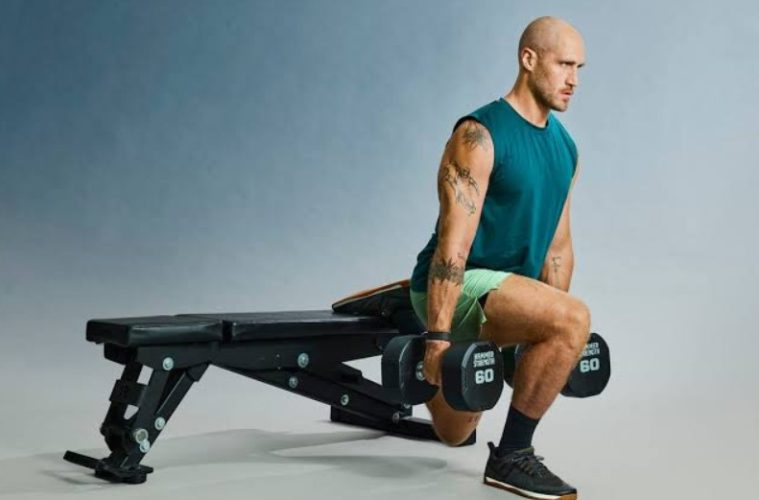
Build stronger quads and glutes with this demanding single-leg exercise by mastering your setup, range of motion, form, and progression.
Why the Bulgarian Split Squat Works
August 29, 2026 – The Bulgarian split squat, also known as the rear-foot-elevated split squat, is a single-leg exercise that trains the quads, glutes, and hamstrings while also challenging balance and stability. Because each leg works independently, the movement can expose strength differences that bilateral exercises such as standard squats may hide. It also demands more control and positioning than a typical squat, making proper setup especially important.

Find Your Starting Position
Begin standing on the floor in front of a stable bench or elevated surface. Place one foot behind you on the bench, then adjust your front foot until your shin is roughly vertical and your thigh approaches parallel with the floor at the bottom of the movement. Your stance should provide enough room to lower comfortably without forcing the front knee into an awkward position.
Once your feet are set, brace your core, keep your neck neutral, and create tension through your upper body. Stand tall with a slight forward hinge rather than arching your lower back. Getting this position right before adding weight is one of the simplest ways to make the exercise feel more controlled.
Control Every Rep
Lower your body slowly while keeping control of the front leg. Try to maintain a relatively vertical shin as you descend, and stop your rear knee about an inch above the floor instead of letting it touch down. A brief pause at the bottom can reinforce control and prevent you from bouncing out of the deepest part of the repetition.
From there, press through the front foot to return to standing. The exercise should feel deliberate rather than explosive. Rushing the descent or using the rear leg to push yourself upward reduces the amount of work performed by the front leg.
Keep Your Glutes Active
Your glutes should stay engaged throughout the movement. Allowing them to relax can make it easier for the front knee to drift inward, compromising your position and reducing the effectiveness of the exercise.
Think about keeping the knee aligned with the foot as you lower and rise. Maintaining tension through the glutes also helps you drive out of the bottom position, where the exercise tends to become most demanding.
Start With Bodyweight
You do not need weights to make Bulgarian split squats challenging. Bodyweight repetitions are an effective way to learn the balance, stance, depth, and control required before introducing additional resistance.
For an unloaded leg-day finisher, the guidance in the source recommends three sets of 15 to 20 repetitions per leg. Once your form is reliable, gradually introduce dumbbells, kettlebells, or a barbell and reduce the repetition range. A weighted version can be programmed earlier in a workout when your legs are fresher, with three sets of eight to 10 repetitions as a starting point.
Choose the Right Load
Once the bodyweight version feels stable, dumbbells are one of the simplest ways to increase resistance. You can hold them at your sides or experiment with other positions, depending on your experience and the amount of stability the exercise requires.
Kettlebells and barbells can also be used, but the more demanding the loading position becomes, the more important your balance and technique will be. Add resistance gradually rather than allowing the weight to change your movement pattern.
Avoid Common Mistakes
The first major mistake is setting up too close or too far from the bench. Too little distance can create an uncomfortable front-knee position, while too much can make it difficult to maintain the intended movement and rear-leg stretch. Establish the front-foot position before placing the rear foot on the bench.
Another mistake is allowing the rear knee to hit the ground. The exercise is meant to emphasize controlled movement, so stopping just above the floor keeps the rear leg from becoming a passive support. Finally, avoid letting the front knee collapse inward or using momentum to rush through the bottom of each repetition.
Build It Into Leg Day
Because the Bulgarian split squat is demanding, where you place it in your workout matters. Once you are using meaningful resistance, it can fit earlier in a leg session alongside other compound movements, before less demanding isolation exercises.
You can also use the bodyweight version as a finisher when the goal is simply to add more work for the quads and glutes. The amount of resistance and repetition volume should change according to where the exercise sits in your workout.
Use It to Improve Balance
The exercise offers more than muscle-building potential. Working one leg at a time forces you to stabilize your body and maintain posture throughout the movement. That can help develop control and athleticism alongside strength.
It can also reveal differences between your legs. Pay attention if one side consistently feels less stable, reaches a different depth, or struggles to complete the same number of controlled repetitions. Training each side independently gives you a practical way to identify and gradually address those differences.
Progress Without Losing Form
Progress does not always mean adding more weight. You can make the movement harder by improving your range of motion, controlling the lowering phase, adding a pause, or gradually increasing resistance while keeping the same technique.
The goal is to make your muscles do more work without turning the exercise into a test of balance or momentum. Once your setup and movement are consistent, small increases in load can help drive further strength and muscle gains.

Final Thoughts
The Bulgarian split squat is challenging because it combines single-leg strength, balance, mobility, and control in one movement. Its effectiveness comes from making the front leg do most of the work while the rear foot provides support.
Start with bodyweight, establish your stance carefully, keep the rear knee off the floor, and maintain active glutes throughout every repetition. Once the movement feels reliable, add resistance gradually and use it as a serious part of your lower-body training.
FAQs
What muscles does the Bulgarian split squat work?
It primarily targets the quads and glutes, while the hamstrings and stabilizing muscles also contribute to the movement.
How many Bulgarian split squats should I do?
For bodyweight work, three sets of 15 to 20 repetitions per leg can be used as a finisher. With added weight, three sets of eight to 10 repetitions is a useful starting point.
Should my back knee touch the floor?
No. Aim to stop about an inch above the floor and briefly control the bottom position rather than resting the knee on the ground.
What equipment do I need?
You need a stable elevated surface such as a bench. The exercise can be done with bodyweight or loaded with dumbbells, kettlebells, or a barbell.
How can I make Bulgarian split squats harder?
Once your technique is consistent, gradually add resistance or increase the challenge through controlled tempo, pauses, or additional training volume.
Published by HOLR Magazine