


Final interview moment raises questions about boundaries
Tension surfaces during recorded conversation
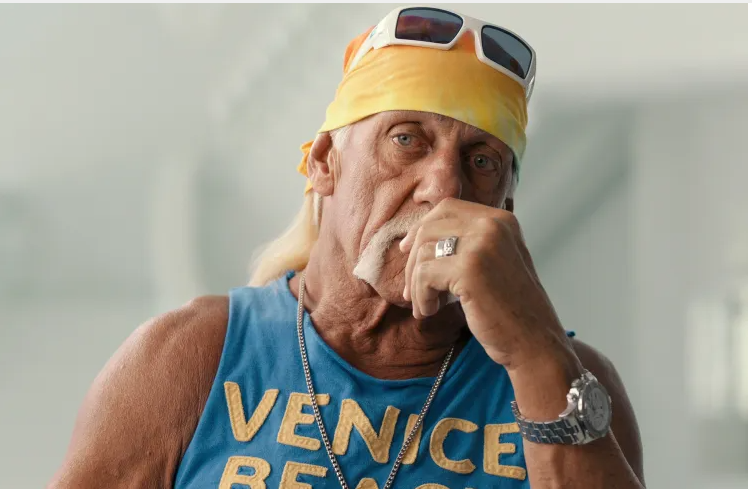
April 23, 2026: Hulk Hogan reportedly confronted producers during a filmed interview, telling a team associated with Netflix to “stop” asking questions about his brother’s overdose. The moment, described as part of what may be one of his final recorded interviews, has drawn significant attention due to its emotional weight and the broader implications it raises about media practices.
The exchange reportedly occurred after repeated questioning on the topic, suggesting a buildup of discomfort that ultimately led to Hogan’s direct response. While interviews often aim to explore both public and private aspects of a subject’s life, this moment underscores how quickly such efforts can cross into sensitive territory.
:max_bytes(150000):strip_icc():focal(749x0:751x2):format(webp)/Hulk2-Hogan-Real-American-Netflix-042126-8073616570854d598533adbab6d35b66.jpg)
Image Credit: Netflix
A deeply personal subject brought into the spotlight
The topic at the center of the exchange—his brother’s overdose—is inherently personal and emotionally charged. For Hulk Hogan, revisiting such a subject in a filmed setting introduces a layer of vulnerability that is not always visible in traditional public appearances.
Discussions involving loss, addiction, and family trauma require careful handling, particularly when they are intended for a wide audience. While such topics can add depth to a narrative, they also carry the risk of causing distress if not approached with sensitivity.
Hogan’s reaction highlights the difficulty of navigating these conversations in real time, especially when boundaries may not be clearly established beforehand.
Documentary storytelling and its demands
Productions associated with Netflix often aim to provide comprehensive, in-depth portrayals of their subjects. This approach frequently involves addressing both achievements and personal struggles, creating a fuller picture of an individual’s life.
However, this pursuit of completeness can sometimes conflict with a subject’s willingness to engage with certain topics. Filmmakers must balance the desire for a compelling narrative with respect for the individual’s comfort and consent.
The reported exchange illustrates how this balance can become strained, particularly when the subject matter involves unresolved or deeply emotional experiences.
:max_bytes(150000):strip_icc():focal(749x0:751x2):format(webp)/Hulk3-Hogan-Real-American-Netflix-042126-31dbf81ce926496595ce307349875c95.jpg)
Image Credit: Netflix
The evolving conversation around interview ethics
In recent years, there has been increased attention on how interviews are conducted, especially in documentary settings. Audiences are more aware of the dynamics between interviewer and subject, and there is growing emphasis on ethical practices.
The situation involving Hulk Hogan reflects this shift. Moments where a subject visibly pushes back can influence how viewers perceive both the content and the creators behind it.
Ethical considerations now extend beyond what is asked to include how questions are framed, how persistence is handled, and whether subjects feel empowered to set boundaries.
Public figures and private grief
Despite decades in the spotlight, Hulk Hogan’s reaction serves as a reminder that public figures maintain private dimensions of their lives. Grief, in particular, is a deeply personal experience that may not align with the demands of public storytelling.
The expectation that public figures should openly discuss all aspects of their lives is increasingly being questioned. Moments like this highlight the importance of recognizing the limits of what should be shared, even in the context of a documentary.
Hogan’s response can be seen as an assertion of those limits, reinforcing the idea that participation in a project does not equate to unrestricted access.
:max_bytes(150000):strip_icc():focal(749x0:751x2)/Hulk-Hogan-Real-American-Netflix-042126-2c04d4e559f24743aa4fa82930b39d7a.jpg)
Image Credit: Netflix
Audience reactions and differing perspectives
The exchange has sparked a range of reactions, reflecting broader debates about media responsibility. Some viewers have expressed support for Hogan, emphasizing the importance of respecting personal boundaries and avoiding intrusive questioning.
Others argue that addressing difficult topics is essential to creating an honest and complete narrative. From this perspective, challenging questions are seen as a necessary part of meaningful storytelling.
This divide illustrates the complexity of audience expectations, where authenticity and sensitivity must be carefully balanced.
The role of editing and final presentation
Another key aspect of the situation is how the moment will be handled in the final production. Streaming platforms like Netflix have significant control over how interviews are edited and presented.
The inclusion or exclusion of this exchange could shape audience perception in different ways. Keeping it in may highlight authenticity and transparency, while removing it could shift focus back to other aspects of the story.
These editorial decisions play a crucial role in determining how narratives are ultimately received.
:max_bytes(150000):strip_icc():focal(725x362:727x364):format(webp)/hulk-hogan-wives-linda-hogan-072425-f49a3e9e712d4172b5bcecd15b55c9d3.jpg)
Image Credit: Jeff Kravitz/FilmMagic
Broader implications for documentary filmmaking
The incident reflects a wider shift in how documentary filmmaking is approached. As audiences become more conscious of ethical considerations, creators are under increasing pressure to ensure that their methods align with evolving standards.
This includes obtaining clear consent, respecting boundaries, and being mindful of how sensitive topics are explored. The balance between storytelling and responsibility is becoming more central to the creative process.
The situation involving Hogan may contribute to ongoing discussions about best practices within the industry.
A moment of vulnerability in the public eye
At its core, the exchange is a reminder of the human element behind every public figure. Even those accustomed to media attention can reach a point where certain topics feel too personal or painful to revisit.
Hulk Hogan’s response brings that vulnerability into focus, offering a moment that contrasts with the controlled narratives often seen in media productions.
Such moments can resonate deeply with audiences, as they reveal the complexities of balancing public identity with private experience.
:max_bytes(150000):strip_icc():focal(951x405:953x407):format(webp)/Hulk-Hogan-Real-American-0406262-4b-89e9adff28644ef6b0692f02f8d15dc4.jpg)
Image Credit: Courtesy of Netflix
Final Thoughts
The reported interaction between Hulk Hogan and producers associated with Netflix highlights the delicate balance between storytelling and respect. While audiences value depth and authenticity, the boundaries of personal experience must remain a priority.
As documentary storytelling continues to evolve, moments like this underscore the importance of empathy, consent, and thoughtful engagement—ensuring that powerful stories are told without compromising the dignity of those at their center.
FAQs
Q1: What happened during Hulk Hogan’s interview?
He told producers to stop asking about his brother’s overdose during a filmed interview.
Q2: Who was involved in the production?
The interview was linked to a Netflix project.
Q3: Why is this moment significant?
It raises questions about interview ethics and respecting personal boundaries.
Q4: How have audiences reacted?
Reactions are mixed, with discussions around both storytelling and sensitivity.
Q5: What does this highlight about media today?
It shows the growing importance of ethical practices in interviews and documentaries.
Published by HOLR Magazine