


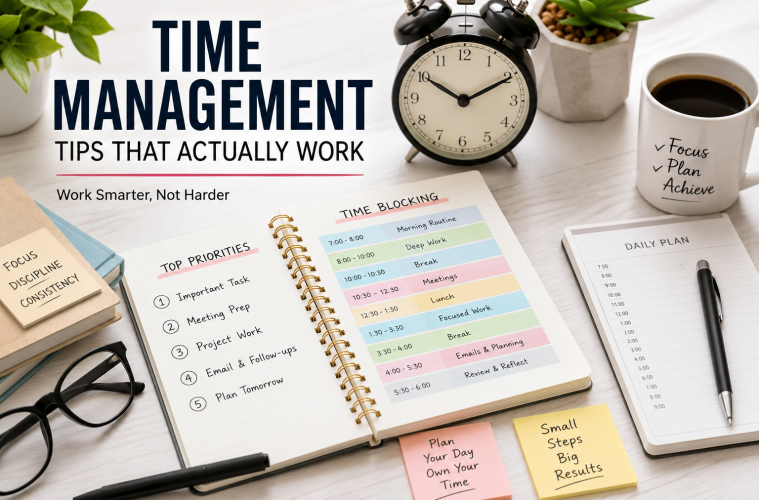
July 15,2026: We’ve all had those days when our to-do list seems to grow faster than we can complete it. You start the morning with the best intentions, answer a few emails, attend a meeting, get distracted by notifications, and suddenly it’s evening. Despite being busy all day, it feels like very little was actually accomplished.
If this sounds familiar, you’re not alone.
Time management has become one of the most searched productivity topics in the world. Professionals want to perform better at work, students want to study more efficiently, entrepreneurs are trying to balance multiple responsibilities, and parents are constantly juggling family and career commitments. Everyone seems to be asking the same question: How can I get more done without feeling overwhelmed?
The good news is that effective time management isn’t about squeezing more tasks into your day or working longer hours. According to productivity experts and organizational psychologists, it’s about making intentional choices about how you spend your time and attention.
HOLR explores the time management strategies that are backed by research and used by some of the world’s most productive people.
Image Credit: AI
Why Time Management Is Really About Attention
Many people think they have a time problem when they actually have an attention problem.
Every person has the same twenty-four hours in a day. The difference often lies in how those hours are used.
Research in cognitive psychology suggests that constantly switching between tasks reduces efficiency and increases mental fatigue. Every time you check a notification, respond to an email while working on another project, or jump between multiple assignments, your brain must refocus. This process, often referred to as task switching, can reduce productivity and make even simple tasks take longer than expected.
Instead of trying to multitask, experts recommend focusing on one important task at a time. Giving your full attention to a single project often produces better results than dividing your attention among several activities.
This simple shift can make work feel less stressful while improving both the quality and speed of what you accomplish.
Image Credit: AI
Start With Priorities, Not a To-Do List
A long to-do list can feel productive, but it often creates unnecessary pressure.
Many productivity experts recommend identifying your three most important tasks before the day begins. These are the tasks that will have the biggest impact if completed, regardless of how many smaller items remain on your list.
Starting with high-value work also reduces the temptation to spend the day completing quick, easy tasks simply to feel productive.
It’s natural to answer emails or organize files first because they provide an immediate sense of accomplishment. However, these activities rarely move your biggest goals forward.
By completing meaningful work during your most focused hours, you ensure that the day’s most important priorities receive the attention they deserve.
Time Blocking Helps Reduce Decision Fatigue
One strategy that has gained popularity among productivity experts is time blocking.
Rather than working from an endless to-do list, time blocking involves assigning specific periods of the day to individual tasks. For example, you might dedicate the first hour of your morning to writing, reserve another hour for meetings, and schedule email responses during a fixed afternoon window.
This approach reduces decision fatigue because you’re no longer asking yourself what to work on next every few minutes.
Instead, your schedule has already made that decision.
Many successful entrepreneurs, executives, and creators use time blocking because it helps protect deep, focused work from constant interruptions.
Even if your schedule changes throughout the day, having a general structure often makes it easier to stay productive without feeling overwhelmed.
Stop Confusing Being Busy With Being Productive
Modern work culture often rewards busyness.
Back-to-back meetings, overflowing inboxes, and packed calendars can create the impression that we’re accomplishing a great deal.
But productivity experts argue that being busy isn’t the same as being effective.
Imagine spending eight hours responding to emails while postponing the project that’s due tomorrow. Although you’ve worked all day, the task with the greatest impact remains unfinished.
True productivity focuses on results rather than activity.
Instead of asking, “How much did I do today?” consider asking, “Did I complete the work that mattered most?”
This small mindset shift can dramatically change how you approach your day.
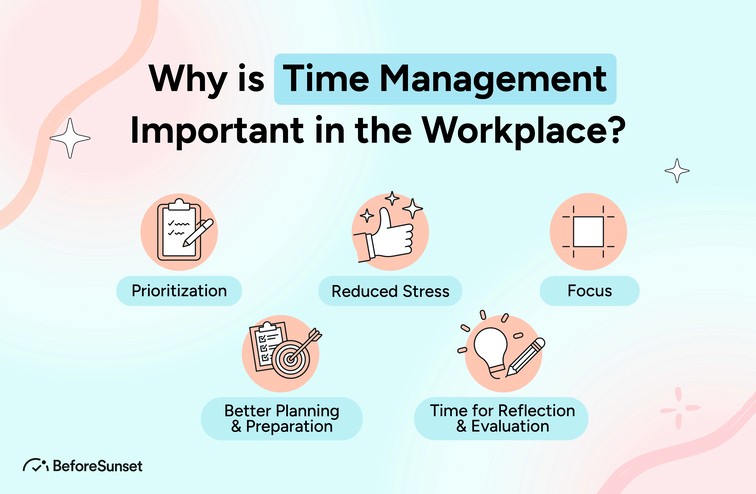
Image Cfredit: beforesunset.ai
The Pomodoro Technique: Does It Really Work?
One of the most widely used productivity methods is the Pomodoro Technique, a time management strategy that involves working in focused intervals—typically 25 minutes—followed by a short five-minute break. After completing four work sessions, a longer break is taken.
While the exact timing doesn’t work for everyone, the principle behind it is supported by research. The brain naturally loses focus after prolonged periods of concentration, and regular breaks can help maintain attention and reduce mental fatigue. Rather than pushing through hours of uninterrupted work, short breaks allow your mind to reset, making it easier to stay productive over longer periods.
If 25 minutes feels too short, don’t be afraid to adjust the method. Some people prefer working for 45 or even 60 minutes before taking a break. The goal isn’t to follow a strict formula—it’s to create a rhythm that helps you stay focused without burning out.
Reduce Distractions Before They Steal Your Time
Many people believe they lack motivation when the real challenge is constant interruption.
Notifications, social media, text messages, and unexpected emails can easily break concentration. Research suggests that once you’re interrupted, it can take several minutes to fully regain focus on the original task.
Instead of relying entirely on willpower, create an environment that supports concentration. Turning off unnecessary notifications, placing your phone out of reach, closing unused browser tabs, or setting specific times to check email can make a noticeable difference.
Some professionals also use “focus hours,” where colleagues know they shouldn’t be interrupted unless something is urgent. Protecting even one or two hours of uninterrupted work each day can dramatically improve productivity.
Learn to Say “No”
One of the most underrated time management skills isn’t scheduling—it’s setting boundaries.
Many people overload their calendars because they feel obligated to accept every invitation, meeting, or request. Over time, this leaves little room for meaningful work or personal time.
Productivity experts often point out that every time you say “yes” to one commitment, you’re automatically saying “no” to something else, whether it’s family time, exercise, rest, or another important project.
Learning to politely decline unnecessary commitments isn’t selfish. It’s an essential part of managing your time intentionally.
Setting realistic boundaries allows you to give your full attention to the responsibilities that matter most instead of spreading yourself too thin.
Work With Your Energy, Not Against It
Not everyone is most productive at the same time of day.
Some people produce their best work early in the morning, while others feel more creative in the afternoon or evening. Instead of forcing yourself into someone else’s routine, pay attention to your natural energy levels.
Reserve your most mentally demanding work for the time of day when you feel most focused. Less demanding tasks, such as answering emails, organizing files, or scheduling meetings, can often be completed during periods when your energy naturally dips.
Time management isn’t just about managing the clock—it’s also about managing your energy.
Common Time Management Myths
One of the biggest myths is that successful people simply work longer hours. While dedication certainly matters, research consistently shows that productivity declines when people become overworked. Long hours without adequate rest often lead to mistakes, poor decision-making, and burnout.
Another common misconception is that multitasking improves efficiency. In reality, studies in cognitive psychology suggest the opposite. Constantly switching between tasks reduces concentration and often increases the time needed to complete each activity.
Perhaps the biggest myth of all is waiting until you “feel motivated.”
Motivation is helpful, but it’s not always reliable. Many successful people build consistent routines that allow them to make progress even on days when motivation is low. Action often creates motivation—not the other way around.
Small Habits Lead to Big Results
Improving your time management doesn’t require a complete lifestyle overhaul.
Simple habits practiced consistently can have a lasting impact. Planning tomorrow before ending today’s work, reviewing weekly goals, keeping a realistic calendar, and protecting time for rest are all habits commonly shared by highly productive people.
Equally important is recognizing that rest is part of productivity, not the opposite of it. Sleep, exercise, hobbies, and spending time with family all contribute to better focus, creativity, and long-term performance.
Sustainable productivity isn’t about doing more every day—it’s about consistently making progress without sacrificing your health or well-being.
The Bottom Line
Effective time management isn’t about filling every minute of your schedule. It’s about spending your time on what matters most.
By identifying priorities, reducing distractions, working with your natural energy levels, and building consistent habits, you can accomplish more while feeling less overwhelmed. The goal isn’t perfection or constant busyness—it’s creating a balanced approach that helps you stay focused, productive, and fulfilled.
Remember, everyone has the same twenty-four hours in a day. The difference isn’t how much time you have—it’s how intentionally you choose to use it.
HOLR has the latest lifestyle and productivity insights, helping readers discover practical, research-backed strategies that make everyday life more manageable and meaningful.
Frequently Asked Questions
What are the best time management tips?
Some of the most effective time management tips include prioritizing important tasks, using time blocking, minimizing distractions, taking regular breaks, and planning your day in advance.
Does the Pomodoro Technique really work?
Yes. Many people find the Pomodoro Technique effective because it encourages focused work sessions followed by short breaks, helping reduce mental fatigue and improve concentration.
Why is time management important?
Good time management helps reduce stress, improve productivity, meet deadlines, and create a healthier balance between work and personal life.
How can I stop procrastinating?
Breaking large tasks into smaller steps, removing distractions, setting realistic deadlines, and starting with one simple action can make it easier to overcome procrastination.
Is multitasking bad for productivity?
Research suggests that multitasking can reduce focus and efficiency because the brain must constantly switch between tasks. Focusing on one task at a time is generally more productive.
What are the biggest stories trending online today? Read the latest here
Published by HOLR Magazine