


HOLR HIGHLIGHTS
The key details readers need to know.
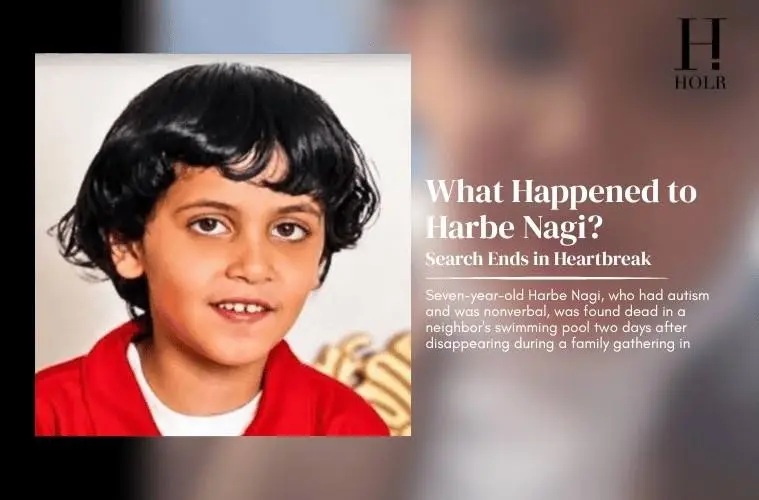
- Seven-year-old Harbe Nagi, who had autism and was nonverbal, was found dead in a neighbor’s swimming pool two days after disappearing during a family gathering in Menands, New York. Authorities have ruled his death an accidental drowning.
- The discovery shocked investigators after officials confirmed the same backyard pool had been searched multiple times during the extensive rescue effort. Police later explained that cloudy water created a “false bottom” effect, preventing search teams from seeing Harbe beneath the surface.
- While investigators found no evidence of foul play, local and state authorities are reviewing the search operation to understand how Harbe remained undiscovered for nearly two days and whether lessons can be learned for future missing-child investigations.
Published: July 6, 2026
What began as an ordinary family celebration in a quiet New York neighborhood quickly transformed into every parent’s worst nightmare.
On the afternoon of June 28, seven-year-old Harbe Nagi disappeared while attending a graduation gathering with his family in the Village of Menands, just outside Albany. Within minutes, police officers, firefighters, state agencies, volunteers, and neighbors launched an urgent search, hoping the young boy had simply wandered a short distance away.

X
As the hours stretched into days, the search grew into one of the largest emergency responses the Capital Region had seen in recent years. Helicopters scanned the skies, drones searched from above, K-9 teams tracked possible scent trails, and hundreds of volunteers combed neighborhoods, wooded areas, parks, and nearby waterways. Every available resource was focused on bringing Harbe home safely.
But on the morning of June 30, the search ended in heartbreak.
Will Waldron/Times Union
Authorities confirmed that Harbe had been found in a swimming pool located just two houses from where he was last seen. An autopsy later determined that the seven-year-old died from accidental drowning, while investigators revealed a detail that stunned both the community and search crews: the same pool had been searched multiple times during the operation, but Harbe’s body remained hidden beneath cloudy water that created what officials described as a “false bottom” effect. The revelation has prompted an internal review of the search while leaving many in the community grieving a tragedy that unfolded just steps from where the search first began.
Who Was Harbe Nagi?
Before his name appeared in headlines across New York, Harbe Nagi was a joyful seven-year-old known for his bright smile, gentle nature, and love of familiar routines.
Harbe lived with autism and was nonverbal, communicating primarily in Arabic with his family. According to officials, he had a history of wandering—a behavior often referred to as “elopement” within the autism community. Children who wander can unintentionally place themselves in dangerous situations, particularly when they are drawn toward roads, wooded areas, or bodies of water.
Investigators also shared that Harbe had a fascination with water, a detail that later became central to understanding the tragic circumstances surrounding his death. While authorities emphasized there was no evidence of foul play, they noted that children with autism can sometimes be naturally attracted to water without fully recognizing its dangers. The heartbreaking reality has once again highlighted the unique safety challenges many families of autistic children face every day.
The Afternoon Harbe Disappeared
The tragedy unfolded on Sunday, June 28, during what was supposed to be a joyful family celebration.
Harbe and his family were attending a graduation gathering at a relative’s home on Park Drive in Menands, a small village just north of Albany. Surrounded by relatives and friends, the afternoon had been filled with conversation and celebration before everything changed in an instant.
According to Menands Police, Harbe was last seen outside the home shortly after 4 p.m. When family members realized he was no longer nearby, they immediately began searching the property before contacting authorities. Police received the missing child report at approximately 4:20 p.m., prompting an urgent response.
Because Harbe was nonverbal and had autism, investigators understood that every passing minute was critical. Missing children with autism are often considered especially vulnerable, as they may not respond when their name is called or seek help from strangers if they become lost.
Within minutes, officers began searching nearby streets while requesting assistance from neighboring law enforcement agencies. Residents were asked to check garages, sheds, vehicles, backyards, and home security cameras in hopes of finding any clue about Harbe’s whereabouts. (CBS6 Albany)
An Extraordinary Search Gripped the Community
As Sunday evening turned into Monday, the search expanded into one of the largest coordinated rescue efforts the Capital Region had seen in years.
The Menands Police Department was quickly joined by the New York State Police, the FBI, Department of Environmental Conservation Forest Rangers, local fire departments, emergency medical personnel, aviation units, drone operators, and specially trained K-9 teams. Together, they searched an area spanning roughly six-tenths of a mile from where Harbe was last seen.
Search crews carefully combed neighborhoods, wooded trails, playgrounds, drainage areas, nearby ponds, and every location investigators believed a child could have wandered. Helicopters flew overhead while drones provided aerial views of dense vegetation and difficult-to-reach areas.
The search quickly became a community-wide effort.
Dozens of volunteers arrived to assist, walking street after street and distributing missing-person flyers throughout the neighborhood. Local residents opened their homes to investigators and searched their own properties, hoping to help bring the young boy home safely.
One particularly emotional moment came when search teams used an ice cream truck to slowly drive through the neighborhood while playing “Twinkle, Twinkle, Little Star,” one of Harbe’s favorite songs. Family members hoped the familiar melody might encourage him to come out if he had wandered into nearby woods or hidden somewhere unfamiliar.
As darkness fell and the search entered its second day, hope remained that Harbe would be found alive. Few could have imagined that the answer investigators were desperately searching for was waiting just a short distance from where the search had begun.
The Discovery That Changed Everything
By Tuesday morning, nearly two days after Harbe disappeared, search teams were still working tirelessly, refusing to give up hope.
Then, shortly after 10 a.m. on June 30, investigators made a heartbreaking discovery.
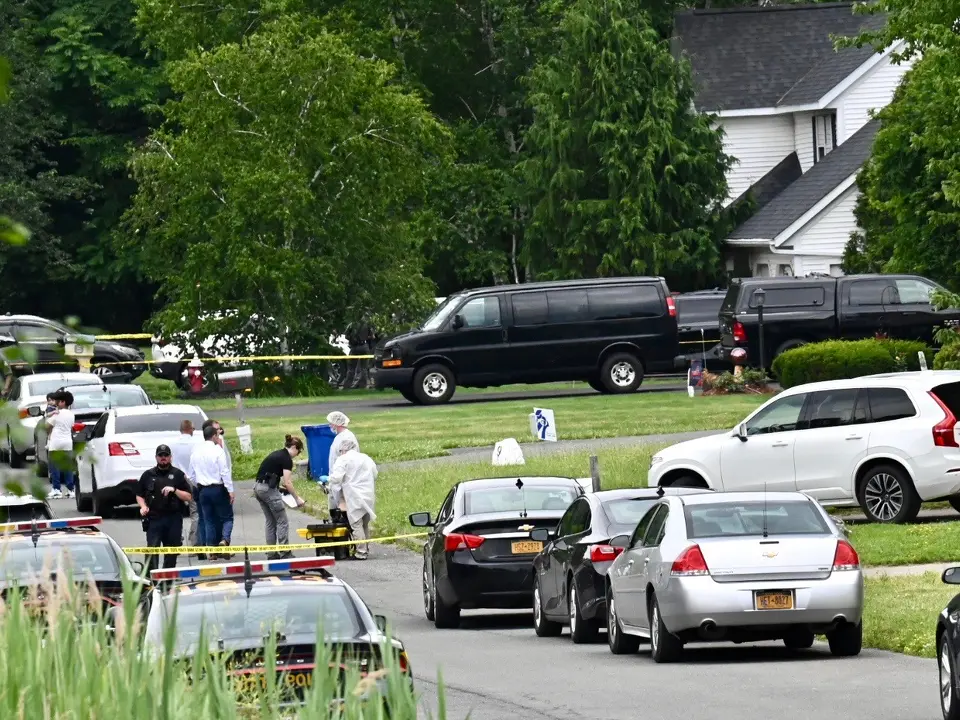
Harbe Nagi was found unresponsive in a backyard swimming pool located just two houses away from the home where he had last been seen. Despite immediate efforts by emergency responders, the seven-year-old was pronounced dead at the scene.
For many in the community, the news was almost impossible to comprehend.
How could a child who had been the focus of such an extensive search be found so close to where the investigation began?
That question quickly became one of the central focuses of the investigation.
Why Didn’t Search Teams Find Harbe Sooner?
Following the discovery, Menands Police addressed the question many residents had been asking.
Investigators confirmed that the swimming pool where Harbe was eventually found had been searched multiple times during the operation.
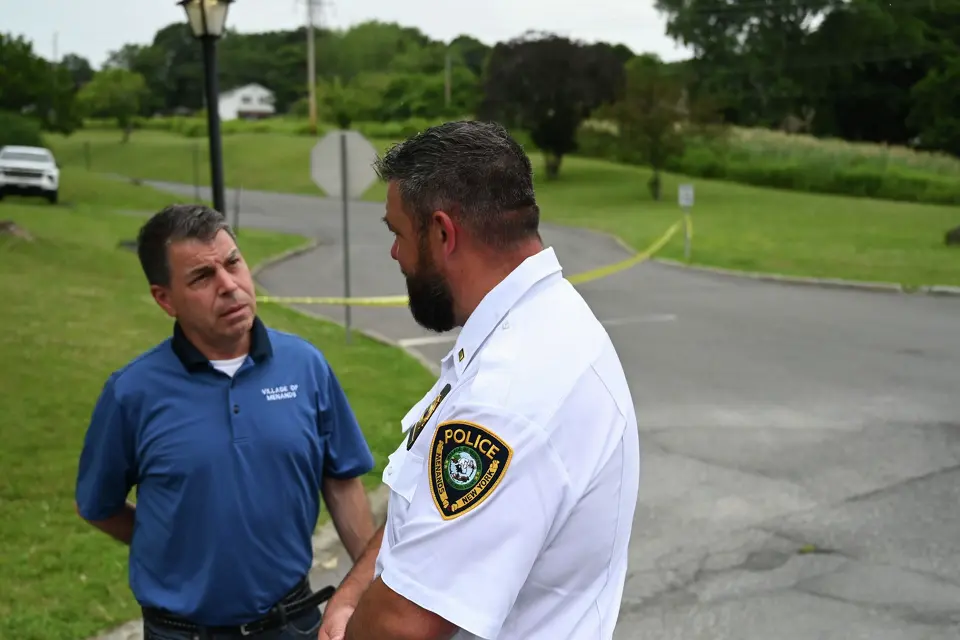
According to officials, the pool water was heavily clouded due to chemical treatment and poor visibility. Police Chief Ted Parisi explained that the murky water created what searchers described as a “false bottom,” making it appear significantly shallower than it actually was.
Will Waldron/Times Union
From the surface, responders believed they were looking directly at the bottom of the pool when, in reality, Harbe’s body remained concealed beneath the cloudy water.
Authorities said it was only after his body naturally rose closer to the surface that search teams were finally able to see him.
Will Waldron/Times Union
The explanation shocked both local residents and many of the volunteers who had participated in the search. While investigators acknowledged the difficult conditions, they also recognized why many people questioned how such a heartbreaking outcome could occur despite an enormous rescue effort.
As a result, both the Menands Police Department and New York State Police have begun reviewing the search operation to determine whether any procedures can be improved for future missing-child investigations. Officials stressed that the review is intended to identify lessons learned rather than assign blame.
Police Confirm an Accidental Drowning
Following an autopsy performed by the Albany County Coroner’s Office, investigators confirmed that Harbe’s death was the result of accidental drowning.
Will Waldron / Times Union
Officials also stated there was no evidence of foul play and no indication that anyone intentionally caused the child’s death.
While the ruling answered one of the biggest questions surrounding the case, many others remain difficult for Harbe’s family and the wider community.
Investigators have not publicly disclosed exactly how long Harbe was in the pool before he was discovered. Instead, authorities have focused on ensuring the investigation is fully documented while supporting the family through an unimaginable loss.
Police emphasized that all available evidence points to a tragic accident rather than criminal activity.
A Community Comes Together to Remember Harbe
In the days following Harbe’s death, the Village of Menands transformed from a search site into a place of mourning.
Flowers, stuffed animals, handwritten messages, and candles appeared near the neighborhood where Harbe disappeared as residents gathered to remember the young boy whose story had touched people far beyond New York’s Capital Region.
Community members also organized vigils and memorial gatherings, offering support to Harbe’s family during an incredibly difficult time. Local leaders praised the hundreds of volunteers, first responders, firefighters, forest rangers, police officers, and federal agents who dedicated countless hours to the search.
Although the outcome was heartbreaking, many residents said the overwhelming response demonstrated the strength and compassion of the Menands community.
For Harbe’s family, however, the grief remains immeasurable.
Their hope of bringing home a missing child became the painful reality of planning a funeral for a little boy whose smile had brightened the lives of those around him.
What Happens Next?
Although investigators have concluded that Harbe Nagi’s death was an accident, the case is far from closed from an operational standpoint.
In the days following the tragedy, Menands Police confirmed that they would conduct a thorough review of the search effort to better understand how Harbe remained undiscovered despite an extensive operation involving local, state, and federal agencies. New York State Police are also assisting in evaluating the response, with officials emphasizing that the review is intended to improve future missing-child investigations rather than assign blame.
Authorities have repeatedly acknowledged the difficult conditions search crews faced, particularly the poor visibility inside the backyard swimming pool where Harbe was eventually found. At the same time, police recognize that the community has understandable questions about how such a heartbreaking outcome occurred just steps away from where the search first began.
While investigators say there is no indication of criminal wrongdoing, they hope the lessons learned from Harbe’s case will strengthen emergency response procedures and help protect vulnerable children in the future.
A Heartbreaking Reminder About Autism and Water Safety
Harbe’s story has also renewed an important conversation among autism advocates, first responders, and families across the country.
According to organizations that support autistic children, wandering—often referred to as elopement—is one of the most significant safety concerns for many families. Experts say some autistic children may unexpectedly leave familiar environments and can be naturally drawn toward water without recognizing the dangers it presents.
For that reason, advocacy groups continue encouraging families to consider water safety education, secure fencing around pools, door alarms, GPS tracking devices when appropriate, and community awareness initiatives that can help first responders locate vulnerable children more quickly during emergencies.
For Harbe’s loved ones, however, those broader conversations cannot ease the pain of losing a child whose life ended far too soon.
Remembering Harbe Nagi
In the days after his death, the Village of Menands came together not only to mourn but also to celebrate the life of a little boy who had touched so many hearts.

Photo: Screengrab from WNYT
Neighbors left flowers, stuffed animals, candles, and handwritten messages near the neighborhood where Harbe disappeared. Community members attended memorial services, while local leaders praised the extraordinary efforts of volunteers and emergency responders who searched tirelessly throughout the two-day operation.
Although the search ended in tragedy, Harbe’s story has become a powerful reminder of how an entire community can unite in hope during unimaginable circumstances.
His family continues to grieve the loss of a son, grandson, and beloved child whose smile brought joy to those who knew him best.
As Menands begins the difficult process of healing, Harbe Nagi will be remembered not for the tragedy that captured national attention but for the young life that inspired an outpouring of compassion from strangers determined to bring him home.
FAQs
Who was Harbe Nagi?
Harbe Nagi was a seven-year-old boy from New York who had autism and was nonverbal. He disappeared while attending a family gathering in Menands before being found in a neighboring swimming pool two days later.
What happened to Harbe Nagi?
Harbe disappeared on June 28, 2026, prompting an extensive search involving local, state, and federal agencies. On June 30, he was found in a backyard pool just two houses from where he was last seen. Authorities later ruled his death an accidental drowning.
Where was Harbe Nagi found?
Investigators located Harbe in a neighbor’s swimming pool on Park Drive in Menands, New York. The pool was situated only two houses away from the home where he had disappeared.
Why wasn’t Harbe found during the initial search?
According to Menands Police, the pool had been searched multiple times. However, officials said the water was extremely cloudy, creating what they described as a “false bottom” that prevented search teams from seeing Harbe beneath the surface until his body naturally rose closer to the top.
Did police suspect foul play?
No. Following the investigation and autopsy, authorities stated there was no evidence of foul play. The Albany County Coroner ruled Harbe’s death an accidental drowning.
Are authorities reviewing the search?
Yes. The Menands Police Department and New York State Police have confirmed they are reviewing the search operation to determine whether improvements can be made to future emergency responses involving missing children.