


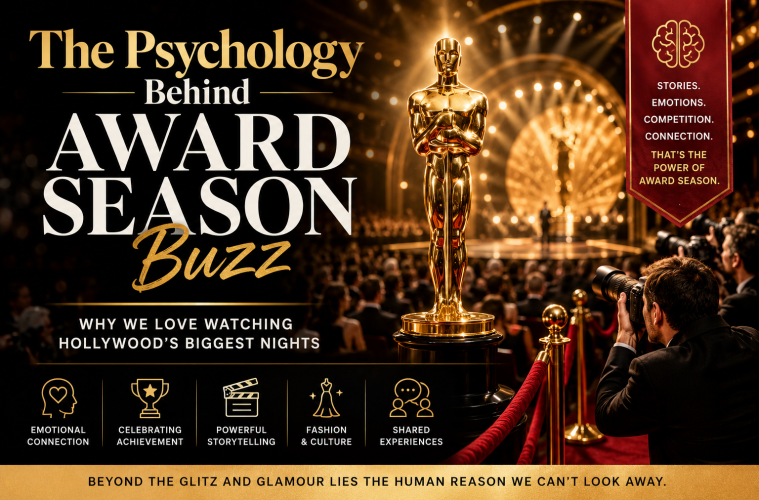
The Psychology Behind Award Season Buzz: Why We Love Watching Hollywood’s Biggest Nights
July 30,2026: Every year, as the entertainment industry enters award season, something remarkable happens.
Social media fills with predictions.
Fans debate deserving winners.
Fashion enthusiasts anticipate red carpet looks.
Critics publish rankings.
Film lovers rush to watch nominated movies before the ceremonies begin.
Whether it’s the Oscars, Emmys, Golden Globes, Grammys, Tony Awards, or international film festivals, award season consistently captures global attention.
Millions of people who may not watch every nominated film or television series still tune in to see who wins, who surprises audiences, and which moments become tomorrow’s headlines.
Award shows have evolved into much more than ceremonies celebrating artistic achievement.
They’ve become cultural events that combine entertainment, fashion, storytelling, competition, and emotion into a single shared experience.
But why do these events continue to fascinate audiences decade after decade?
The answer isn’t simply celebrity culture.
It lies in several fascinating psychological principles that influence how people connect with stories, success, competition, and social experiences.
HOLR explores the psychology behind award season buzz and why Hollywood’s biggest nights continue to generate excitement around the world.

Image Credit: Getty
Humans Naturally Love Competition
From childhood sports to international competitions, people are naturally drawn to contests.
Psychologists suggest that competition creates anticipation because outcomes remain uncertain until the very end.
Award shows work in much the same way.
Nominees represent different performances, creative styles, and artistic visions.
Viewers develop personal favorites and emotionally invest in the results.
When winners are announced, audiences experience excitement similar to watching a championship game.
Even people with no professional connection to Hollywood enjoy predicting outcomes because uncertainty activates curiosity.
Simply wondering, “Who will win?” keeps audiences engaged.
Stories Matter More Than Statistics
Unlike sporting events that rely primarily on scores, award season revolves around stories.
Every nominee brings a personal journey.
Some actors spent years waiting for recognition.
Others overcame career setbacks.
Directors may have worked for decades before receiving major nominations.
Musicians often describe years of persistence before achieving mainstream success.
These narratives transform awards into emotional experiences.
Audiences don’t simply celebrate trophies.
They celebrate perseverance.
The winner’s story often becomes just as meaningful as the award itself.
People connect deeply with resilience because it reflects universal human experiences.
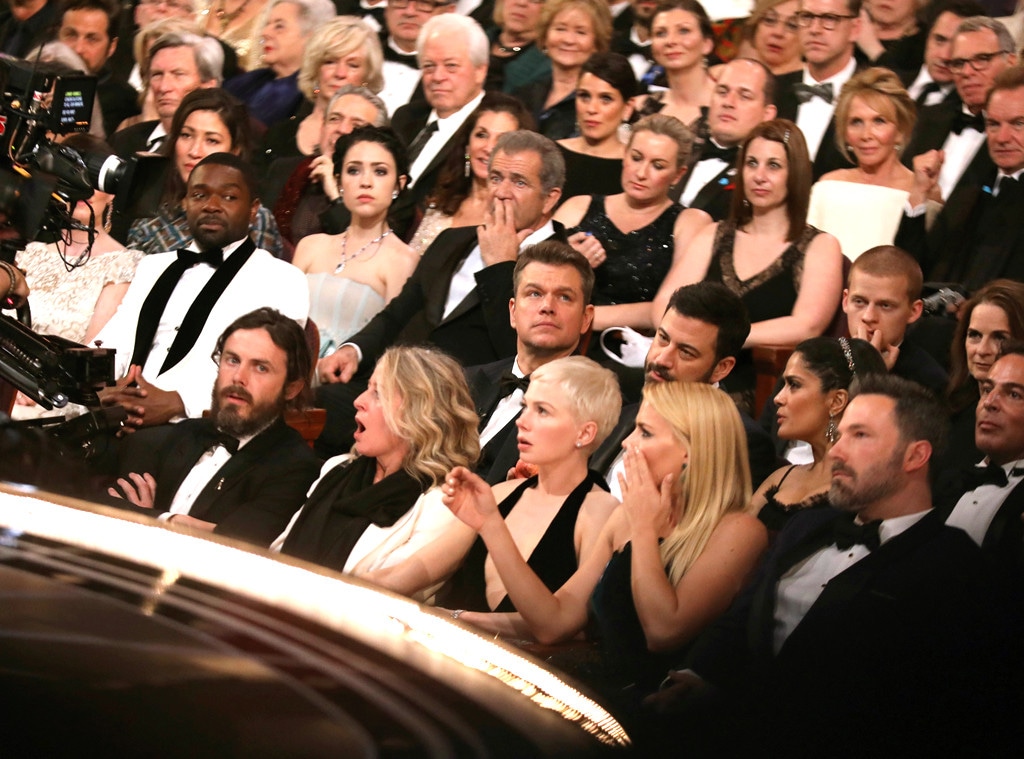
Image Credit: Matt Sayles/Invision/AP
Celebrity Culture Creates Emotional Investment
Award season also highlights the unique relationship audiences have with celebrities.
Psychologists describe these one-sided emotional connections as parasocial relationships.
Although celebrities don’t personally know individual fans, repeated exposure through movies, interviews, music, podcasts, and social media creates familiarity.
Over time, audiences begin feeling emotionally invested in certain performers.
When favorite actors receive nominations, fans often celebrate as though supporting a close friend.
Likewise, unexpected losses sometimes spark passionate discussions online.
These emotional reactions demonstrate how powerful storytelling and familiarity can become.
Award Shows Celebrate Achievement
People naturally admire excellence.
Award ceremonies represent recognition after years of dedication, creativity, and hard work.
Whether someone wins an Oscar after decades in the industry or receives a first Grammy nomination, audiences appreciate moments that recognize long-term effort.
These ceremonies remind viewers that success often follows persistence rather than instant fame.
This message resonates beyond entertainment.
Artists, entrepreneurs, students, athletes, and professionals from every field often find inspiration in stories of perseverance.
Award season becomes a celebration of ambition itself.
Fashion Has Become Part of the Experience
Award season isn’t only about trophies.
The red carpet has evolved into one of fashion’s biggest annual stages.
Designers unveil custom creations.
Jewelry houses showcase extraordinary pieces.
Beauty trends emerge.
Stylists receive recognition.
Fashion journalists analyze every appearance.
For many viewers, the red carpet is as anticipated as the awards ceremony itself.
It represents creativity beyond film or music, turning award season into a celebration of design, culture, and personal expression.
This broadens the audience by attracting fashion enthusiasts alongside entertainment fans.
Social Media Amplifies Every Moment
Award season has changed dramatically because of digital media.
Years ago, audiences watched ceremonies primarily through television broadcasts.
Today, millions participate simultaneously across social platforms.
Fans share reactions instantly.
Memes spread within minutes.
Acceptance speeches go viral.
Fashion photos circulate worldwide almost immediately.
These real-time conversations transform individual viewing into a collective global experience.
Even people who aren’t watching live often encounter award season highlights throughout the evening.
Social media has made award ceremonies more interactive than ever before.

Image Credit: Getty
Why Surprises Keep Audiences Watching
One reason award shows remain exciting is unpredictability.
Although critics and entertainment journalists make predictions, surprises happen almost every year.
Unexpected winners.
Emotional speeches.
Historic achievements.
Standing ovations.
Memorable performances.
These unscripted moments create excitement because audiences know anything can happen.
Psychologists have long recognized that uncertainty increases attention.
Award season benefits from this perfectly.
The possibility of witnessing history keeps millions watching until the final announcement.
Award ceremonies don’t simply celebrate creative achievements—they often influence what audiences choose to watch, listen to, and discuss in the weeks that follow.
A film that wins a major award frequently experiences renewed interest on streaming platforms.
An actor’s acceptance speech may spark conversations across social media.
A television series that receives multiple nominations often attracts new viewers who want to see what all the attention is about.
This phenomenon is sometimes called the “award effect.”
Recognition from respected organizations acts as a form of social proof, encouraging audiences to explore content they may have previously overlooked.
For many people, award nominations serve as trusted recommendations, helping them discover new films, music, books, or television shows.
The Power of Shared Cultural Moments
In today’s world of on-demand streaming, people rarely watch the same content at the same time.
Award shows are different.
Millions of viewers gather simultaneously to watch live announcements, performances, acceptance speeches, and red-carpet interviews.
These shared experiences create a sense of community.
Whether discussing winners with friends, reacting on social media, or participating in office conversations the next day, award season becomes a collective event that connects people through entertainment.
Psychologists suggest that shared cultural moments strengthen feelings of belonging because they give people common experiences to discuss and remember.
This is one reason memorable award show moments often remain part of pop culture for years.
The Emotional Impact of Acceptance Speeches
One of the most anticipated parts of any award ceremony isn’t always who wins—it’s what winners say.
Acceptance speeches often become the emotional highlight of the evening.
Some celebrate family.
Others honor mentors.
Many express gratitude after years of rejection, setbacks, and perseverance.
These moments resonate because they reveal vulnerability.
Instead of polished performances, audiences witness genuine emotion.
A heartfelt speech reminds viewers that behind every successful career are years of dedication, uncertainty, and hard work.
These stories inspire audiences far beyond Hollywood.
The Influence of Fashion and Personal Style
Award season has also become one of fashion’s most influential events.
Designers spend months creating custom looks.
Jewelry brands showcase extraordinary pieces.
Hair and makeup artists introduce new trends that often influence beauty conversations throughout the year.
For many viewers, the red carpet is an event in itself.
Fashion coverage extends beyond celebrity style to include discussions about sustainability, craftsmanship, individuality, and cultural expression.
Many trends that later appear in retail collections first gain attention during award season.
This demonstrates how entertainment, fashion, and consumer culture increasingly overlap.
Award Shows Reflect Cultural Change
Award ceremonies have evolved alongside society.
Over the years, discussions surrounding diversity, representation, inclusion, international storytelling, and independent filmmaking have become increasingly visible.
Audiences now pay attention not only to who wins but also to which stories receive recognition.
Award season often reflects broader conversations happening throughout the entertainment industry.
As filmmaking and television continue becoming more global, audiences are discovering stories from different cultures, languages, and perspectives.
This expanding representation has helped award ceremonies reach broader international audiences while encouraging greater appreciation for diverse storytelling.
Why Award Season Continues to Matter
Some critics question whether award ceremonies remain relevant in an era dominated by streaming platforms and social media.
Yet year after year, millions continue watching.
The reason is simple.
Award season offers something algorithms cannot.
It creates anticipation.
Conversation.
Surprise.
Celebration.
Emotion.
Rather than consuming entertainment individually, audiences experience these moments together.
Awards also encourage appreciation for artistic achievement.
They remind viewers that filmmaking, music, television, and theatre involve years of collaboration among actors, directors, writers, producers, designers, editors, composers, and countless other creative professionals.
Recognition extends beyond celebrity—it celebrates craftsmanship.
The Future of Award Season
Award ceremonies will almost certainly continue evolving.
Digital platforms now allow fans to participate through live voting, interactive social media discussions, behind-the-scenes content, and real-time interviews.
Artificial intelligence, virtual experiences, and global streaming access may further transform how audiences experience award shows in the future.
Despite these technological changes, one element is unlikely to disappear.
People will always be drawn to great stories.
Whether celebrating a first-time nominee, an emotional comeback, or a groundbreaking performance, award season reflects the universal human desire to recognize creativity, perseverance, and excellence.
Final Thoughts
Award season remains one of entertainment’s most enduring traditions because it speaks to something deeply human.
Beyond glamorous red carpets and golden trophies lies a celebration of storytelling, resilience, ambition, and artistic achievement.
The excitement surrounding Hollywood’s biggest nights isn’t driven solely by celebrity culture.
It is fueled by psychology.
We enjoy competition.
We admire perseverance.
We connect with compelling stories.
We celebrate shared cultural moments.
And we naturally become emotionally invested in people whose work has moved us.
As entertainment continues evolving, award ceremonies will likely adapt to new technologies and viewing habits.
However, the emotions they inspire—hope, excitement, surprise, admiration, and inspiration—remain timeless.
Ultimately, award season isn’t simply about deciding who takes home a trophy.
It’s about celebrating creativity and reminding audiences why stories continue to shape culture around the world.
FAQs
Why are award shows so popular?
Award shows combine competition, storytelling, fashion, live entertainment, and celebrity culture, creating exciting shared experiences that attract audiences around the world.
What is the psychology behind award season?
Award season appeals to psychological concepts such as social proof, emotional storytelling, competition, anticipation, and parasocial relationships, making viewers feel invested in the outcomes.
Why do people care about who wins awards?
Many viewers admire artistic achievement and enjoy supporting performers whose work they value. Winning awards can also influence public perception and encourage more people to watch nominated films or shows.
What are the biggest stories trending online today? Read the latest here
Published by HOLR Magazine
Image Credit: AI