


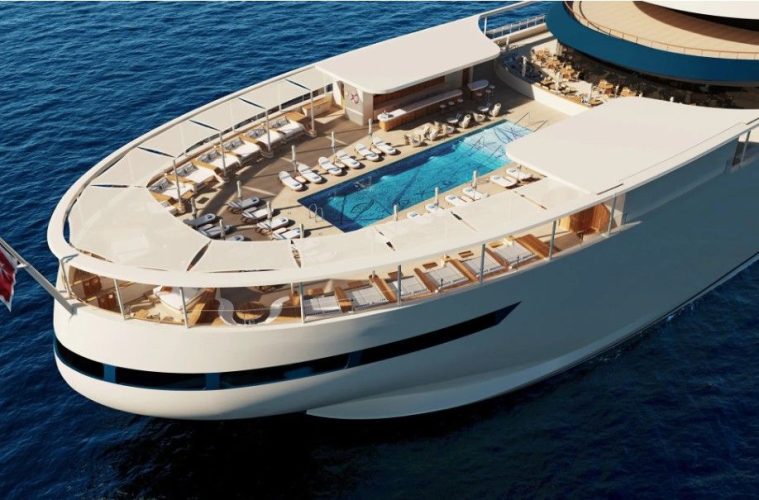
The Four Seasons I yacht is bringing omakase, fine dining, rare Champagne and destination-driven menus to sea, creating a very different take on traditional cruise cuisine.
A Five-Star Dining Experience At Sea
August 18, 2026 – The idea of cruise food often brings to mind sprawling buffets, casual dining rooms and familiar resort-style menus. Four Seasons I is taking a very different approach.
The first yacht from the luxury hospitality brand’s new yacht division is designed to feel less like a conventional cruise ship and more like a floating five-star resort. That philosophy extends directly to its food and beverage program, where intimate restaurants, carefully sourced ingredients and highly personalized service are central to the experience.
The yacht’s first voyage from Athens takes guests through the Greek islands, giving its culinary program a natural connection to the Mediterranean.
Rather than treating food as something passengers simply need between excursions, the yacht makes dining one of the reasons to stay onboard.
:max_bytes(150000):strip_icc()/Why-High-End-Hospitality-Smartest-Brands-Are-Taking-Luxury-to-Sea-FT-DGTL0626-Orient-Express-Corinthian-04-9ab80b0b1af24872b04f9b5640815fac.jpg)
Credit: Four Seasons Yachts
An Intimate Setting With 11 Dining Options
Four Seasons I has only 95 suites and a 1:1 guest-to-staff ratio, creating a much more intimate atmosphere than many traditional cruise experiences.
That sense of scale carries into its dining program. The yacht features 11 dining and drinking establishments, ranging from casual options to more sophisticated restaurants.
Guests can start the morning with a pastry and espresso, order a Wagyu cheeseburger while relaxing beside the pool or settle into an elegant setting for cocktails made with vintage spirits.
The variety also means passengers are not locked into one style of dining throughout their trip. A relaxed meal can be followed by an elaborate tasting menu or an evening drink overlooking the sea.
Miuna Brings Omakase To The Mediterranean
One of the standout culinary destinations onboard is Miuna, an intimate sushi restaurant with an omakase-style experience.
The restaurant has just 16 seats, with most positioned around a Hinoki wood chef’s counter. Its design, with wood-paneled walls and a hammered metal backsplash, creates an atmosphere that feels closer to an upscale restaurant on land than a cruise-ship dining room.
The menu is also designed to move with the yacht.
Instead of offering exactly the same seafood throughout the voyage, Miuna’s omakase changes from port to port, allowing the kitchen to incorporate fresh seafood available in different destinations.
That approach makes the restaurant part of the journey rather than a separate experience disconnected from the places passengers are visiting.
Sedna Turns Dinner Into A Culinary Event
For an even more elevated experience, Sedna serves as the yacht’s fine-dining destination.
The restaurant is also home to a Chef in Residence program, bringing accomplished chefs from other Four Seasons properties onboard to present their signature cooking.
During one Mediterranean sailing, the tasting menu was led by Luca Piscazzi of Pelagos at Four Seasons Astir Palace Hotel Athens. Future appearances include Yoric Tièche of Le Cap at the Grand-Hôtel du Cap-Ferrat and Paolo Lavezzini of Il Palagio at Four Seasons Hotel Firenze.
That rotating approach gives Sedna a sense of discovery. The culinary experience can change depending on when a guest sails, adding another reason for food-focused travelers to return.
:max_bytes(150000):strip_icc():format(webp)/Why-High-End-Hospitality-Smartest-Brands-Are-Taking-Luxury-to-Sea-FT-DGTL0626-Four-Seasons-01-94a7aa19578845fd8887625e696ea3d0.jpg)
Credit: Four Seasons Yachts
Menus That Follow The Destination
One of the most interesting elements of the yacht’s culinary philosophy is its emphasis on location.
During Mediterranean sailings, menus feature ingredients and flavors that reflect the region, including fresh-pressed olive oil, handmade pasta and seasonal produce.
When the yacht moves to the Caribbean, the food is expected to evolve with it, incorporating more tropical flavors and cooking techniques associated with the region.
The goal is to make the destination part of the meal rather than simply the view outside the window.
That philosophy also extends to the sourcing process, which can be considerably more complicated on a moving yacht than in a restaurant that receives deliveries at a fixed location.
Food Sourcing At Sea Requires Flexibility
Keeping high-quality ingredients available while constantly moving between destinations presents its own challenge.
The culinary team has to work around changing ports, availability and logistics. Ingredients that are easy to source in one location may not be available at the next, meaning chefs need to adjust menus according to what can be obtained.
That flexibility can also lead to unexpected discoveries.
During one stop in Spetses, a bartender even foraged wild berries from the island and brought them onboard to create cocktails.
It is a small example of how the yacht’s culinary program is intended to respond to its surroundings rather than operate independently of them.
Champagne And Caviar Complete The Luxury Experience
Luxury dining onboard does not stop with the restaurants.
The yacht has an evening Champagne and caviar venue on Deck 6, designed as a place to enjoy drinks while watching the sunset over destinations such as Santorini.
The selection includes more than 40 varieties of Champagne alongside a collection of rare and highly sought-after bottles. Among them is a 1989 Pétrus, with a reported onboard price of $21,000 per bottle.
There are also unexpected touches for guests, including an in-suite delivery of Sevruga caviar, bite-sized blinis and three types of sour cream.
:max_bytes(150000):strip_icc():format(webp)/Why-High-End-Hospitality-Smartest-Brands-Are-Taking-Luxury-to-Sea-FT-DGTL0626-Ritz-Carlton-03-6a2ffe28ef3d43118337bd4734ffb131.jpg)
Credit: Four Seasons Yachts
A Different Approach To Cruise Dining
Four Seasons I is also taking a less traditional approach to how guests pay for food.
Unlike an all-inclusive cruise experience, food and beverages other than breakfast are charged à la carte. That decision gives passengers more control over where and how they spend their dining budget, although it also means meals are not automatically covered in the cruise fare.
For travelers accustomed to traditional cruise dining, the model is another indication that Four Seasons is positioning the yacht as something distinctly different.
Here, food is not simply included for convenience. It is part of the luxury experience the yacht is designed to sell.
Dining That Extends Beyond The Main Restaurants
The yacht’s culinary identity is not limited to its headline restaurants. A large part of the experience comes from the smaller food and beverage moments that take place throughout the day.
Guests can move between casual and elevated settings depending on their mood, whether that means grabbing something quick between activities or settling down for a longer meal.
That flexibility is important on a yacht where passengers may have very different ideas about what makes a good vacation meal. Some may want a carefully prepared dinner every evening, while others may prefer something relaxed after spending the day exploring a port.
Four Seasons I is built to accommodate both without making the food program feel repetitive.
A Burger Can Still Feel Like A Luxury Experience
Even a classic dish such as a cheeseburger receives attention within the yacht’s broader dining philosophy.
The food program does not attempt to make every dish complicated or formal. Familiar comfort foods have their place, too, particularly around the pool and more casual areas.
That balance is part of what makes the yacht’s approach interesting. Luxury dining does not necessarily mean turning every meal into a tasting menu.
Instead, the emphasis is on quality, presentation and service, regardless of whether the guest is eating sushi, pasta or a burger.
:max_bytes(150000):strip_icc():format(webp)/Why-High-End-Hospitality-Smartest-Brands-Are-Taking-Luxury-to-Sea-FT-DGTL0626-Four-Seasons-03-613600749e4a40f1bb5634d64847906c.jpg)
Credit: Four Seasons Yachts
The Drinks Program Gets Equal Attention
Drinks are treated with the same level of detail as the food.
Along with its Champagne and caviar experience, the yacht offers cocktails built around premium ingredients and spirits. The beverage program also has the opportunity to change depending on the destination, much like the food.
That connection between location and what is being served gives the experience another layer.
A cocktail enjoyed while sailing past a Mediterranean island is not simply another drink from a hotel bar. The surroundings become part of the experience, and the yacht’s culinary team can use that setting to create something that feels specific to the journey.
Service Is Part Of The Dining Philosophy
Food quality alone does not explain the yacht’s approach.
Four Seasons I operates with a 1:1 guest-to-staff ratio, allowing the level of personalized service associated with the hotel brand to extend into its dining spaces.
That can influence everything from remembering a guest’s preferences to adjusting a meal around individual needs.
On a traditional cruise, dining can sometimes feel highly structured, particularly when large numbers of passengers are being served at once. The yacht’s smaller scale makes it possible to create something much closer to the experience of dining at an intimate luxury resort.
Why The Yacht Does Not Feel Like A Traditional Cruise Ship
Perhaps the biggest difference is psychological.
Four Seasons I does not appear to be trying to convince guests that cruise food can be slightly better than expected. Instead, its culinary program is designed around the assumption that dining is one of the central reasons someone would choose the experience.
The smaller number of passengers makes intimate restaurants possible. The destination-based menus give chefs greater creative flexibility. Rotating culinary talent keeps the fine-dining experience evolving.
Together, those choices create an environment where meals become part of the itinerary rather than simply another amenity.
:max_bytes(150000):strip_icc():format(webp)/Why-High-End-Hospitality-Smartest-Brands-Are-Taking-Luxury-to-Sea-FT-DGTL0626-Aman-At-Sea-05-c5bd3cc1feac447182368787c4ccc56e.jpg)
Credit: Four Seasons Yachts
Food Becomes Part Of The Journey
That idea is particularly important because the yacht itself is designed around travel at a slower, more intimate pace.
A destination can be experienced through its architecture, beaches, history and culture, but food can provide another way of understanding a place.
Fresh seafood sourced around the Mediterranean, regional ingredients and locally inspired cocktails can all make a port feel more connected to the experience onboard.
The result is a dining program that does not completely separate the ship from the destinations outside it.
A New Definition Of Cruise Food
Four Seasons I ultimately offers a different answer to the question of what cruise food should be.
It does not abandon familiar dishes, but it places them alongside omakase, chef-led tasting menus, serious Champagne selections and destination-driven ingredients.
The result is closer to a collection of restaurants at a luxury resort than a conventional cruise dining program.
That distinction may be exactly what Four Seasons is betting on as it enters the yacht market.
Final Thoughts
Four Seasons I is making dining one of the defining elements of its luxury yacht experience.
With intimate restaurants such as Miuna, fine dining at Sedna, rotating guest chefs, destination-focused menus and an extensive beverage program, the yacht approaches food as an experience in its own right.
What makes the concept particularly compelling is the balance. Guests can enjoy elaborate omakase or a chef-led tasting menu, but they can also order a familiar burger or relax with a drink by the water.
The goal is not simply to make cruise food more luxurious. It is to make dining feel inseparable from the journey itself.
FAQs
What makes Four Seasons I’s food different from traditional cruise dining?
The yacht focuses on intimate restaurants, destination-driven menus, premium ingredients and personalized service rather than relying primarily on large buffet-style dining.
How many dining options are available on Four Seasons I?
The yacht has 11 dining and drinking establishments, offering a range of experiences from casual food and poolside options to sushi, fine dining and specialty beverages.
What is Miuna on Four Seasons I?
Miuna is an intimate sushi restaurant offering an omakase-style experience. It has 16 seats, including seating around a Hinoki wood chef’s counter.
What is Sedna on Four Seasons I?
Sedna is the yacht’s fine-dining restaurant and includes a Chef in Residence program that brings chefs from Four Seasons properties to create special culinary experiences.
Is food included on Four Seasons I?
Unlike some traditional cruise experiences, food and beverages other than breakfast are charged à la carte, allowing guests to choose where they spend their dining budget.
Published by HOLR Magazine