



The image of braces as a teenage rite of passage is fading fast. Today, adults make up a growing share of orthodontic patients, and many are quietly transforming their smiles well into their 30s, 40s, and beyond. The short answer is simple: it is almost never too late.
Modern treatment is discreet, comfortable, and effective. Adults exploring the idea often start with a consultation at a practice like Sun Orthodontist Fort Lauderdale to see what is possible. Understanding the options makes that first step far less daunting.
Why Are So Many Adults Getting Braces Now?
The stigma has all but vanished. Orthodontics is the branch of dentistry that corrects the position of teeth and jaws. What was once seen as purely cosmetic is now widely understood as a health and confidence investment.
The numbers tell the story. Roughly 1 in 4 orthodontic patients today is an adult, a figure that has climbed steadily over the past 2 decades. Discreet options have removed the last big objection.
Confidence drives much of it. A smile shapes first impressions and self-image, and that boost is often what adults value most. Looking polished is a form of self-care, much like the considered grooming routine many people build for their skin and hair.
What Are the Treatment Options?
Adults have more choices than ever. A short list covers the main routes.
- Clear aligners. Removable, near-invisible trays swapped every 1 to 2 weeks.
- Ceramic braces. Tooth-coloured brackets that blend with the teeth.
- Traditional braces. Metal brackets, still the most versatile option.
- Lingual braces. Fixed behind the teeth, hidden from view entirely.
Each suits a different case. Invisalign is a brand of clear aligner that straightens teeth in gradual stages without wires. For image-conscious professionals, removable aligners are often the natural starting point.
How Long Does Adult Treatment Take?
Timelines vary with the case. Most adult treatments run about 12 to 24 months, though minor corrections can finish faster. Adult bone is denser than a teenager’s, so movement can take a little longer.
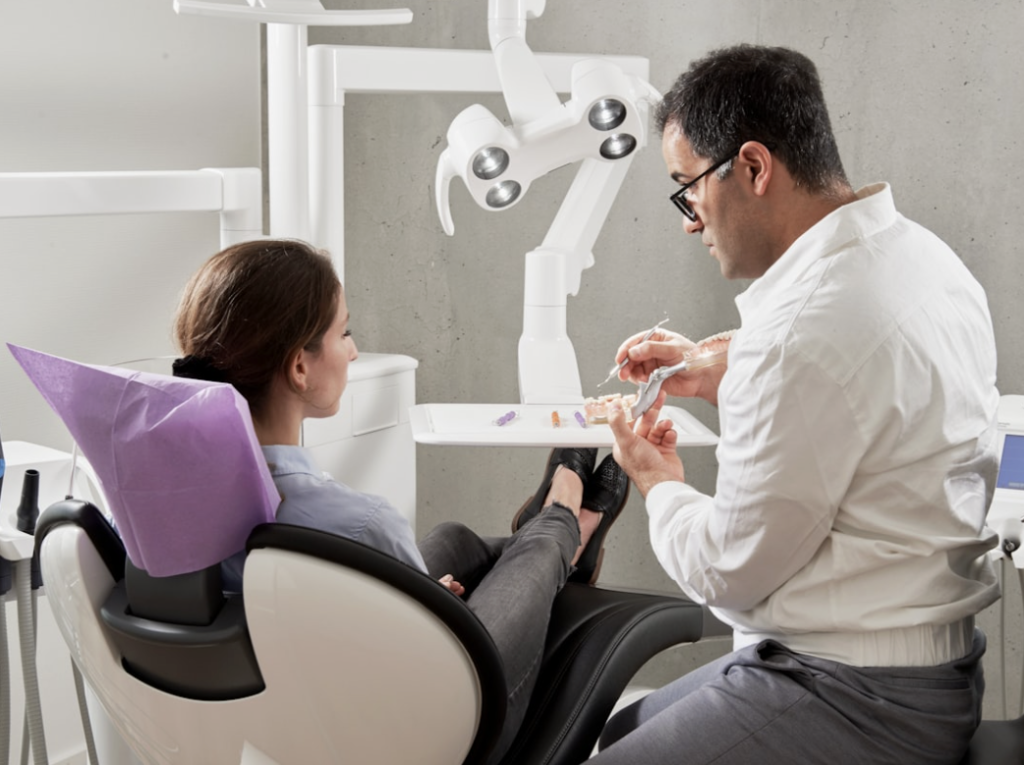
An adult patient at an orthodontist consultation
Consistency matters more than speed. With aligners, wearing them 20 to 22 hours a day is what keeps treatment on track. Skipping wear is the most common reason a plan drags on.
Retention is the final phase. A retainer is a device that holds teeth in their new position after active treatment ends. Teeth naturally drift over time, so wearing one as directed is what protects the result for life. Most orthodontists recommend nightly wear at first, easing to a few nights a week once the bite settles.
Is It Good for More Than Looks?
The health case is strong. Straight teeth are easier to clean, which lowers the risk of decay and gum disease. Guidance on oral health consistently links good alignment to easier daily care.
Function improves too. A corrected bite reduces uneven wear, jaw strain, and even certain headaches. General dental health resources note how alignment affects chewing and speech.
The benefits compound with age. Investing in your teeth at 40 can prevent costly problems at 60, from cracked fillings to shifting bites. Prevention is nearly always cheaper than repair. For many adults, straightening teeth now sits alongside other modern wellness routines, a deliberate choice to look after the body for the long term rather than react to problems later.
How Much Does It Cost, and Is It Affordable?
Cost is the common worry, but it is manageable. Treatment varies by complexity and type, yet most practices offer financing that spreads payments over months. Plans starting from around 88 dollars a month are increasingly common.
A few factors shape the price:
- Treatment type. Lingual and aligner systems often cost more than metal.
- Case complexity. Bigger corrections need more time and materials.
- Treatment length. Longer plans naturally carry a higher total.
- Location and provider. Fees vary between practices and cities.
Free consultations help you compare. Many orthodontists assess your case and quote a plan at no charge, so it costs nothing to explore.
What to Keep In Mind
- Adults now make up about 1 in 4 orthodontic patients, and the share is rising.
- Clear aligners, ceramic, metal, and lingual braces all suit adults.
- Most adult treatment takes 12 to 24 months, plus lifelong retainer wear.
- Straight teeth are easier to clean and lower decay and gum-disease risk.
- Financing from around 88 dollars a month makes treatment accessible.
- Free consultations let you compare options and costs with no commitment.
A Confident Smile at Any Age
Straightening your teeth as an adult is one of the most rewarding investments in both health and confidence. The options are discreet, the timelines are reasonable, and the payoff lasts for decades. If you have ever hidden your smile, a simple consultation is the first step toward changing that for good.
FAQ
Am I Too Old for Braces or Aligners?
Almost certainly not. Healthy teeth and gums matter far more than age, and adults of all ages are treated successfully every day. A consultation will confirm whether you are a good candidate.
Are Clear Aligners as Effective as Braces?
For many cases, yes. Clear aligners work well for mild to moderate corrections and suit adults who value discretion. Complex cases may still need braces for full control, which your orthodontist will advise on.
Does Adult Orthodontic Treatment Hurt?
Expect mild soreness for a few days after adjustments or new aligners, but it is usually manageable with over-the-counter relief. Modern systems are far gentler than the braces of a generation ago. Any discomfort fades quickly as your mouth adjusts.
How Do I Choose an Orthodontist?
Look for experience with adult cases, clear communication, and transparent pricing. A free consultation is a good way to judge fit. Reviews and before-and-after results also help you decide with confidence.
Published by HOLR Magazine.