


Late-night satire escalates with pointed political humor
Jimmy Kimmel delivers viral Trump jab
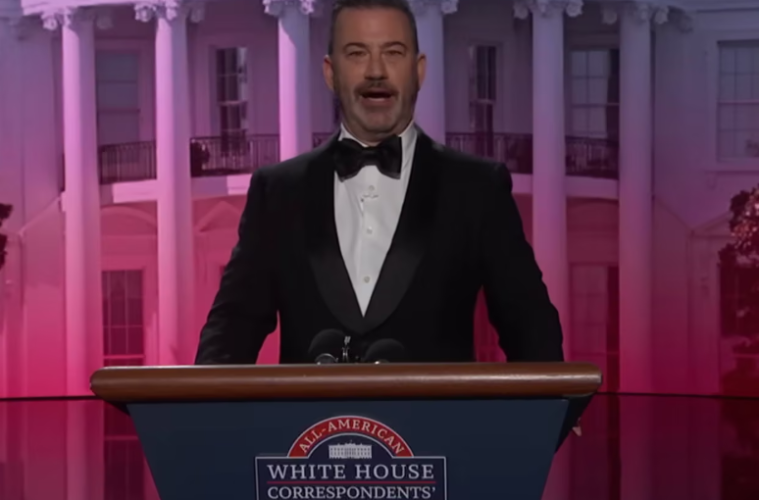
April 25, 2026 – Jimmy Kimmel once again stepped into the spotlight with a sharply worded monologue, calling Donald Trump “a delicate snowflake with the thinnest fat skin of any human being ever.” The remark, delivered during a late-night segment, quickly gained traction across social platforms, becoming one of the most widely shared clips from his show.
Kimmel’s comment is part of a broader tradition of political satire that has become central to late-night television. His ability to blend humor with critique continues to position him as a key voice in entertainment-driven commentary.

Image Credit: Getty Images
A continuation of Kimmel’s political commentary style
Over the years, Jimmy Kimmel has developed a distinct approach to political humor—one that combines sarcasm, exaggeration, and direct language. His segments often move beyond light jokes, incorporating pointed observations about public figures and their actions.
This latest remark aligns with that style, reflecting a pattern of commentary that resonates with audiences seeking both humor and perspective. Kimmel’s delivery, often framed with comedic timing and audience engagement, enhances the impact of such statements.
Donald Trump as a recurring target in satire
Donald Trump has long been a central figure in political satire, appearing frequently in late-night monologues and comedic sketches. His public persona, communication style, and political influence make him a consistent subject for commentary.
Kimmel’s description adds to a broader body of satirical takes, each contributing to how Trump is portrayed within entertainment media. The repetition of such commentary reflects both his continued relevance and the role of satire in interpreting public figures.
Why the comment resonated widely
The phrase “delicate snowflake” is designed to be both provocative and memorable, qualities that make it particularly effective in the digital age. Short, impactful statements are more likely to be shared, discussed, and debated across platforms.
The viral nature of Kimmel’s comment highlights how late-night television extends beyond its original broadcast. Clips and quotes circulate online, reaching audiences who may not watch the full program but engage with its most notable moments.
The role of satire in modern media
Satire serves as a bridge between entertainment and political discourse, allowing audiences to engage with complex topics in a more accessible format. Hosts like Jimmy Kimmel use humor to highlight contradictions, critique behavior, and spark conversation.
This approach can make political issues more relatable, particularly for viewers who prefer informal or comedic perspectives. At the same time, it raises questions about how satire influences public perception.

Image Credit: Getty Images
Balancing humor with criticism
One of the defining aspects of Kimmel’s commentary is the balance between humor and critique. While his language is intentionally exaggerated for comedic effect, it also conveys a clear perspective on the subject.
This balance is essential to the effectiveness of satire. Without humor, the commentary may feel overly direct; without substance, it risks being dismissed as trivial. Kimmel’s ability to navigate this balance contributes to his continued relevance.
Audience reactions and divided opinions
As with most politically charged content, reactions to the segment have been mixed. Supporters of Jimmy Kimmel’s approach view the comment as a humorous critique, while others see it as overly harsh or partisan.
This division reflects the broader landscape of political discourse, where entertainment and opinion often intersect. The varied responses also demonstrate how satire can both unite and divide audiences.
Late-night television’s expanding influence
Late-night shows have evolved significantly, becoming influential platforms for shaping public conversation. What was once primarily entertainment now often includes commentary on current events, politics, and culture.
Kimmel’s segment illustrates this shift, showing how a single remark can generate widespread discussion. The reach of these shows extends far beyond their original format, influencing how audiences engage with political topics.

Image Credit: Michael Kovac/Getty Images
The power of viral moments
In today’s media environment, moments like Kimmel’s comment can quickly become cultural touchpoints. Viral clips and quotes contribute to ongoing conversations, reinforcing the connection between entertainment and public discourse.
This dynamic highlights the importance of tone and messaging, as even brief statements can have a lasting impact.
What this means for political satire moving forward
The continued success of segments like this suggests that political satire will remain a significant part of the media landscape. As audiences seek engaging and accessible ways to understand current events, late-night hosts are likely to play an ongoing role.
For Jimmy Kimmel, this reinforces his position as a central figure in this space, capable of shaping conversations through humor.
Final Thoughts
Jimmy Kimmel’s description of Donald Trump as a “delicate snowflake” underscores the enduring role of satire in political discourse. By combining humor with pointed critique, he continues to engage audiences in a format that is both entertaining and thought-provoking.
As late-night television evolves, moments like this highlight how comedy remains a powerful tool for commentary, shaping how public figures are discussed and understood.
FAQs
Q1: What did Jimmy Kimmel say about Donald Trump?
He called him a “delicate snowflake with the thinnest fat skin.”
Q2: Where was this comment made?
It was delivered during a late-night monologue.
Q3: Why did it go viral?
Because of its sharp wording and shareable nature.
Q4: How have audiences reacted?
Reactions are mixed, with both support and criticism.
Q5: What does this highlight?
The growing influence of political satire in modern media.
Published by HOLR Magazine