


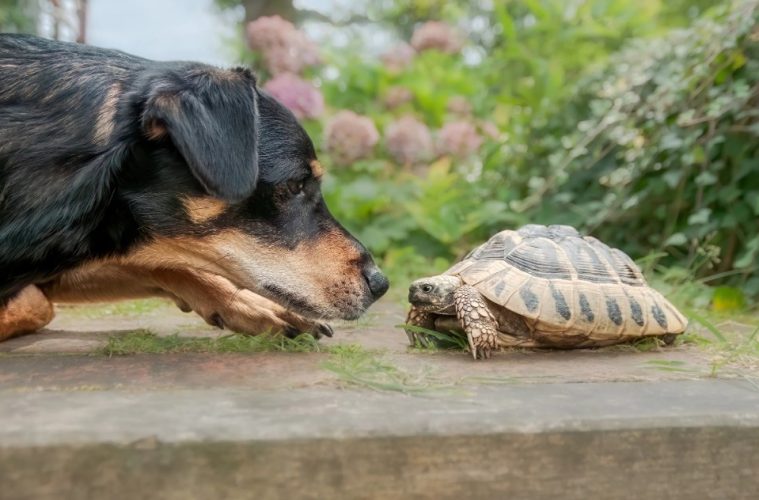
Meet the specially trained dogs tracking seals, finding turtles, and helping rescued bears return to the wild—one remarkable job at a time.
Dogs Are Doing Serious Conservation Work
August 26, 2026 – Dogs have long worked alongside people in roles that rely on their remarkable sense of smell, focus, and ability to follow clues that humans cannot easily detect. In wildlife conservation, those natural abilities can become valuable research tools, helping scientists locate animals, understand their behavior, and reduce dangerous encounters between wildlife and people.
Wildlife expert Peter Gros has worked with several conservation dogs over the years, including dogs trained to find seals beneath Arctic ice, locate turtles in dense vegetation, and help rehabilitated bears return safely to the wild. Each assignment is different, but the principle is the same: trained dogs can notice details that might otherwise go undetected.

Credit: Mutual of Omaha’s Wild Kingdom
Lil Could Find Seals Beneath the Ice
Lil, a black Labrador retriever, had one of the more unusual conservation jobs: finding ringed seals beneath snow and ice in the Arctic near Barrow, Alaska. While people traveling across the frozen landscape saw little more than miles of white, Lil could detect the musky scent of seals hidden below the surface.
When Lil caught a scent, she would leave the snowmobile and follow it, allowing researchers to locate seals that would have been extremely difficult to find by sight alone. Her work also helped researchers locate areas where polar bears might be hunting because ringed seals are an important source of food for the bears.
Gros spent six days traveling across the ice with Lil and remembered that she was completely focused when she was working. Once the day’s work ended, however, she behaved like any playful Labrador, running through the snow and looking for attention. That combination of affection and specialized skill made her especially memorable.

Credit: Mutual of Omaha’s Wild Kingdom
Newt Was a Turtle Detective
In Rhode Island, Labrador retriever Newt was trained to locate native turtles by scent. The state is home to seven native turtle species, some of which can be difficult for researchers to spot in their natural surroundings.
Newt’s job was to find turtles that researchers might otherwise overlook. His discoveries helped scientists understand where turtle populations were spending their time and identify habitats that could be especially important to protect.
When Newt found a turtle, he would lie down beside it to alert his handler. His reward was his favorite tennis ball, turning a game he loved into part of a valuable conservation program. The arrangement also illustrates how positive reinforcement can channel a dog’s natural drive into useful fieldwork.

Credit: Mutual of Omaha’s Wild Kingdom
Karelian Bear Dogs Help Keep Bears Wild
Karelian bear dogs perform a very different job. Rather than locating wildlife for researchers, these dogs can help wildlife professionals influence bear behavior and reduce conflicts between bears and people.
Bears are naturally wary of canids, and Karelian bear dogs use persistent barking to encourage bears to move away from populated areas. Research has shown that the dogs can influence bear behavior in ways that encourage animals to avoid people and become more active at night.
The goal is not to chase bears away for the sake of removing them from an area. It is to teach them, through their natural response to the dogs, that certain places are not safe or suitable to return to. That can help bears remain wild while reducing the likelihood of future human-wildlife conflict.

Credit: Mutual of Omaha’s Wild Kingdom
Dogs Helped Two Bear Cubs Return Home
Gros saw the work of Karelian bear dogs firsthand after a 2021 wildfire in Washington state left two black bear cubs badly injured. The cubs eventually went through rehabilitation, but returning an animal to the wild is not as simple as opening a cage and walking away.
The specially trained dogs helped encourage the cubs to leave their transport crates and move deeper into the forest. Their presence offered the bears a response they understood instinctively through scent, posture, movement, and sound.
That interaction can be valuable because the bears respond to the dogs differently than they would to humans. Instead of teaching the animals to become comfortable around people, the dogs help reinforce the distance that can keep wildlife and people safer.
Not Every Dog Is Built for This Work
Although some breeds are commonly associated with conservation work, breed alone does not determine whether a dog is suitable. Labradors, pointers, German shepherds, and Anatolian shepherds may have qualities that make them good candidates, but individual temperament matters most.
A successful conservation dog needs intelligence, physical ability, focus, drive, and a willingness to work closely with a handler. Depending on the assignment, the dog may also need to tolerate extreme temperatures or difficult terrain.
Training can be demanding, and the dog’s well-being has to remain the priority. Conservation work is specialized fieldwork, not simply an activity that can be improvised with a family pet.

Credit: Mutual of Omaha’s Wild Kingdom
The Handler Is Half of the Partnership
Behind every successful conservation dog is a handler who understands the animal as an individual. The handler needs to recognize when the dog is tired, thirsty, overwhelmed, or in need of a break while also understanding the signals that indicate the dog has found what it was trained to locate.
That relationship is particularly important in wildlife settings, where conditions can be unpredictable and the stakes are high. A dog may be working around ice, wild animals, difficult terrain, or long hours outdoors, making careful supervision essential.
The partnership also explains why an ordinary household dog should never be assumed to have the same abilities or training. Conservation dogs undergo specialized preparation, and their work is built around carefully controlled interactions with wildlife.
Some Dogs Have a Much Simpler Assignment
Not every dog needs an extraordinary conservation job. Gros also shared the story of his French bulldog Gracie, whose role is simply being a companion.
His point is a fitting reminder that dogs do not need to track endangered animals or work in extreme environments to make a difference in people’s lives. Living alongside a dog can teach people to pay attention to another creature’s needs, routines, and behavior.
For dogs such as Lil, Newt, and the Karelian bear dogs, those instincts become part of highly specialized conservation efforts. For Gracie, they simply make her a beloved pet. Both roles matter in their own way.

Credit: Mutual of Omaha’s Wild Kingdom
Why Conservation Dogs Matter
The animals these dogs help protect can be difficult to study without disturbing them. A dog’s ability to detect scent can allow researchers to find wildlife while minimizing the need for more invasive searches or prolonged human presence.
Their value is particularly clear in environments where visibility is limited or where animals need to maintain a healthy distance from people. Whether locating a seal beneath frozen ground or redirecting a bear away from a neighborhood, dogs can use abilities that humans simply do not possess.
Their contribution also demonstrates how conservation can depend on partnerships between very different species. The dogs do the work they have been trained to do, while their handlers and researchers interpret the information and use it to make better decisions for wildlife.
Final Thoughts
From Arctic ice to Rhode Island forests and Washington wilderness, specially trained dogs are proving that conservation work can take some remarkable forms. Their extraordinary noses and carefully developed skills help researchers locate wildlife and give vulnerable animals a better chance of surviving alongside people.
The stories of Lil, Newt, and the Karelian bear dogs also highlight the importance of the human-animal partnership behind the work. These dogs are not simply pets with impressive instincts; they are carefully trained working partners whose welfare remains central to everything they do.
FAQs
What do conservation dogs do?
Conservation dogs can locate wildlife, help researchers study animal populations, and assist with efforts to reduce conflict between people and wild animals.
How did Lil help researchers?
Lil was trained to detect the scent of ringed seals beneath Arctic snow and ice, helping researchers locate seals and identify areas that could also attract polar bears.
What did Newt do in Rhode Island?
Newt used his sense of smell to find turtles that could be difficult for researchers to spot, helping scientists study turtle populations and important habitats.
How do Karelian bear dogs help bears?
Their barking can encourage bears to avoid populated areas, helping reduce conflicts with people and reinforce natural avoidance behavior.
Can any pet dog become a conservation dog?
No. Successful conservation dogs need specific traits, specialized training, and handlers who understand their individual needs. Not every dog is suited to the work.
Published by HOLR Magazine