


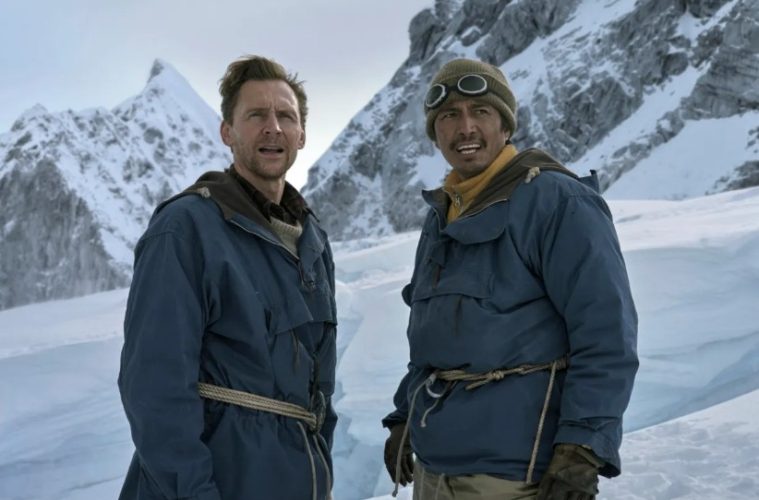
Genden Phuntsok brings quiet power to Jennifer Peedom’s Everest drama, with Tom Hiddleston offering strong support in a restrained epic.
September 08, 2026
A Different Perspective on Everest
Jennifer Peedom’s Tenzing approaches one of mountaineering’s most famous achievements through the person whose story has often been overshadowed. Rather than treating the 1953 conquest of Mount Everest as primarily a triumph of Western exploration, the film centers Tenzing Norgay and his journey toward becoming a climber who would finally stand on the summit.
That perspective gives the familiar story a more personal foundation. The mountain is important, but the film is equally interested in Tenzing’s determination, spirituality, relationships, and struggle to be recognized as an equal member of the expeditions he helped make possible.
Credit: AppleTV
Genden Phuntsok Commands the Film
Genden Phuntsok gives the movie its emotional center as Tenzing. His performance is deliberately understated, relying less on grand speeches than on facial expressions and a quiet sense of conviction.
That restraint works particularly well for a character whose strength comes from persistence rather than showmanship. Phuntsok communicates Tenzing’s contentment, frustration, vulnerability, and determination without turning him into a conventional heroic figure. The performance gives the film a human quality that remains effective even during its larger mountain sequences.
Tom Hiddleston Finds the Right Balance
Tom Hiddleston plays New Zealand mountaineer Edmund Hillary, giving the film a recognizable Western figure without allowing him to overshadow its central character. Hillary and Tenzing gradually develop a relationship based on trust and mutual respect, and Hiddleston plays that connection with welcome sincerity.
The role is supporting by design, which is ultimately the right decision for the movie. Hiddleston brings enough presence to make Hillary compelling while leaving Phuntsok’s Tenzing where he belongs: firmly at the heart of the story.
The Story Begins Long Before the Summit
One of the film’s more interesting choices is that it does not rush toward Everest. The narrative moves through different periods of Tenzing’s life, showing how his ambitions developed long before the 1953 expedition.
His relationship with Dawa is especially important, as is his gradual movement from farm work into the world of climbing expeditions. Tenzing repeatedly encounters rejection and social barriers, but his defining characteristic is his refusal to give up. That persistence becomes the emotional thread connecting the earlier portions of his life to the eventual climb.

Credit: AppleTV
Tenzing’s View of the Mountain Matters
The film also makes an effort to distinguish Tenzing’s relationship with Everest from the approach taken by many Western climbers. To him, the mountain is Chomolungma, a sacred mother goddess rather than simply a physical challenge waiting to be conquered.
That spiritual perspective gives the film some of its most thoughtful moments. Tenzing is not climbing simply to defeat nature or claim a record. His relationship with the mountain is rooted in reverence, making his eventual ascent feel like the culmination of a personal and spiritual calling rather than just an athletic achievement.
The Human Conflict Is Stronger Than the Historical One
Tenzing is most compelling when it focuses on the power dynamics within the climbing expedition. Tenzing has the skills necessary to reach the summit, yet he must still fight for recognition and a formal place on the team rather than being treated simply as someone who carries supplies.
The tensions between British climbers and the Sherpa team give the story an important layer. Questions of class, culture, hierarchy, and respect become nearly as significant as the physical dangers of Everest, providing the film with stakes that extend beyond whether the climbers will reach the top.
The Women Are Less Fully Developed
The film is less successful when it moves away from Tenzing and the expedition. Dawa and expedition secretary Jill Henderson both play meaningful roles in his journey, but the screenplay gives them comparatively limited interior lives.
Their importance to the story is clear, yet they sometimes feel more functional than fully developed characters. The contrast is noticeable because the film is otherwise so interested in the relationships that shape Tenzing’s identity and ambitions.
The Mountain Finally Takes Over
Once the expedition begins its final push, Tenzing becomes considerably more gripping. The physical danger of the climb finally takes center stage, and Peedom uses the landscape to create a growing sense of uncertainty.
The visual work is one of the film’s biggest strengths. Sweeping aerial shots of snow-covered peaks are paired with close attention to the physical experience of climbing, from exhausted breathing to the crunch of snow underfoot. The sound design adds to that immersion, making the mountain feel vast, beautiful, and genuinely threatening.
Jennifer Peedom Keeps the Film Grounded
Peedom’s direction reflects her familiarity with mountain storytelling, but Tenzing is not simply a spectacle-driven climbing movie. She balances the scale of Everest with quieter scenes that emphasize Tenzing’s emotional and spiritual life.
That balance helps the film avoid becoming another straightforward inspirational sports drama. Even when the story follows a familiar historical trajectory, the focus on Tenzing’s perspective gives it a reason to exist beyond simply recreating an iconic expedition.
A Traditional Epic With a Valuable Perspective
There are moments when Tenzing feels overly conventional. Its broad inspirational beats, interpersonal tensions, and eventual triumph follow a recognizable historical-adventure structure, and the film does not always find a surprising way through material whose ending is already known.
But that conventional framework is balanced by an important shift in perspective. Centering Tenzing rather than treating him as a supporting figure in someone else’s story gives the film real purpose, while Phuntsok’s performance adds the emotional weight needed to carry it.
Credit: AppleTV
Does Tenzing Reach the Summit?
As a piece of historical filmmaking, Tenzing is at its strongest when it connects the physical achievement to the personal journey behind it. The final ascent provides the expected thrills, but the more meaningful accomplishment is seeing how many years of rejection, hard work, love, and determination led Tenzing there.
Phuntsok and Hiddleston make the central partnership convincing, while Peedom gives the mountain an appropriately overwhelming presence. The result is not a radically reinvented Everest drama, but it is a sincere and visually accomplished one that finally gives Tenzing Norgay the central place his story deserves.
Final Thoughts
Tenzing may follow a familiar historical-adventure template, but its decision to place Tenzing Norgay at the center makes the journey feel worthwhile. Genden Phuntsok delivers the film’s standout performance, bringing quiet emotional force to a character defined by perseverance, while Tom Hiddleston provides an effective and respectful counterpart.
The movie is less successful when its supporting characters are underdeveloped, but its mountain photography, sound design, and final-act intensity give it genuine cinematic scale. Ultimately, Tenzing works best not as another story about conquering Everest, but as a portrait of the man who saw the mountain very differently.
FAQs
What is Tenzing about?
Tenzing tells the story of Himalayan climber Tenzing Norgay and his journey toward becoming a member of the 1953 British expedition that reached Mount Everest’s summit.
Who plays Tenzing Norgay in the film?
Genden Phuntsok plays Tenzing Norgay, delivering the film’s central performance.
Who does Tom Hiddleston play in Tenzing?
Tom Hiddleston plays New Zealand mountaineer Edmund Hillary, who develops a close bond with Tenzing during the expedition.
Who directed Tenzing?
Jennifer Peedom directed the film, with Luke Davies writing the screenplay.
When is Tenzing being released?
The film is scheduled for a limited theatrical release on October 9, 2026, followed by its Apple TV release on October 16.
Published by HOLR Magazine