


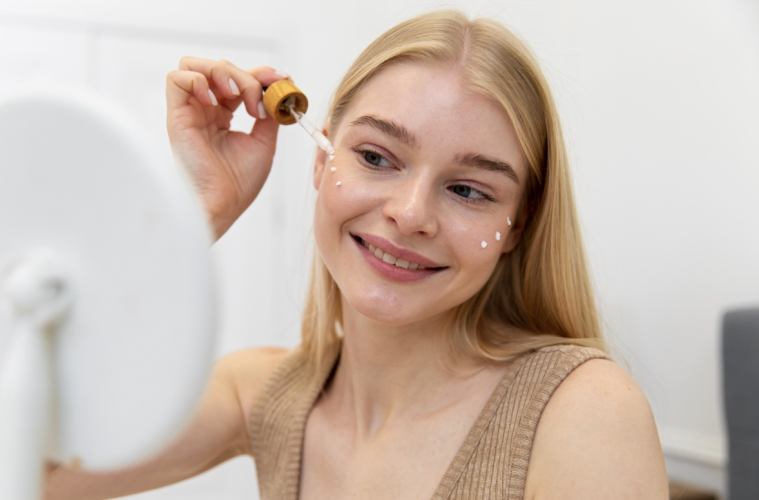
You’ve probably noticed it already… skincare isn’t just “creams and serums” anymore. It’s getting… scientific. A bit futuristic, honestly. And right in the middle of it all are peptides.
And yeah—peptides for beauty and skincare routines is one of those phrases that keeps popping up everywhere lately, almost like it snuck out of a lab and landed straight onto your bathroom shelf.
The first time you hear it, maybe it sounds overhyped. Or like something only dermatologists care about. I kind of thought that too at first. Then you start seeing it everywhere—serums, moisturizers, even “smart” skincare devices—and you’re like… okay, something is going on here.
Not magic. Not hype (well, not just hype). Something in-between.
So… what even are peptides?
Let’s keep it simple. Peptides are basically short chains of amino acids. Tiny protein fragments. Your skin already uses them naturally to signal things like “hey, repair this” or “make more collagen.”
Dr. Leslie Baumann (a well-known cosmetic dermatologist) once explained it like this:
“Peptides act as messengers in the skin, telling cells to perform specific functions like healing or collagen production.”
That’s the part that sticks with you. Messengers. Like little texts being sent inside your skin.
And honestly… that’s kind of wild when you think about it.
The idea that a cream on your face is trying to talk to your cells?
Why beauty tech suddenly cares so much
Here’s where things get interesting. Beauty used to be about covering, hydrating, smoothing. Now it’s about communication with your skin.
Peptides for beauty and skincare routines are becoming the bridge between biology and technology. Like skincare 2.0, maybe even 3.0 if we’re being dramatic.
A review in the Journal of Cosmetic Dermatology put it pretty directly:
“Bioactive peptides have demonstrated significant potential in improving skin elasticity and reducing visible signs of aging.”
That sounds clinical, sure. But translate it into normal human language and it’s basically saying: your skin can actually respond to these things.
Not instantly. Not dramatically overnight. But gradually… like your skin is being coached instead of just coated.
And brands love that idea. Because “coaching your skin” sounds a lot better than “slapping lotion on and hoping for the best.”
How peptides actually work
Okay, imagine your skin is a messy office.
Cells are the workers. Collagen is the structure holding everything together. Over time, the office gets… tired. Slow emails. Fewer updates. Things start sagging (literally).
Peptides are like reminder notes:
- “Make more collagen.”
- “Repair this area.”
- “Calm inflammation.”
Simple instructions.
A Harvard Health review basically summed it up like this:
“Peptides may help stimulate collagen production and support skin repair mechanisms.”
Nothing flashy. Just biological nudging.
But here’s the catch—you don’t always see results immediately. And that’s where people get impatient. Or confused. Or they think it’s not working.
Well… actually, skincare is rarely instant. That’s the annoying truth.
Types of peptides you’ll actually see in products
Not all peptides are doing the same job. Some are repair-focused, others are more like anti-aging assistants.
Here’s a quick breakdown (because otherwise it gets overwhelming fast):
| Type | What it does | Where you’ll see it |
| Signal peptides | Boost collagen production | Anti-aging serums |
| Carrier peptides | Deliver trace minerals to skin | Healing creams |
| Enzyme-inhibitor peptides | Slow collagen breakdown | Firming products |
| Neuro peptides | Relax facial tension | “Botox-like” creams (sort of…) |
That last one always feels a bit sci-fi. Like… relax your wrinkles without touching them?
Maybe. Sort of. Results vary a lot.
The beauty tech angle
Now here’s the twist. It’s not just about creams anymore.
We’re seeing devices, LED masks, microcurrent tools—all trying to enhance peptide absorption. Beauty tech companies are basically asking: what if we could “deliver” peptides deeper, faster, smarter?
A study in Dermatologic Surgery Journal noted:
“Combination therapies involving peptides and energy-based devices may enhance dermal remodeling outcomes.”
That’s a fancy way of saying: skincare + tech = better results than either alone.
And yeah, it’s kind of believable when you see those LED masks glowing in people’s bathrooms at night. (The first time I saw one, I honestly thought it was a gaming headset for your face… no joke.)
The real-world experience
Here’s where it gets less perfect.
Peptides don’t always feel dramatic. You don’t wake up overnight looking “lifted” or “restructured.” It’s subtle. Sometimes frustratingly subtle.
You might think:
- “Is this doing anything?”
- “Or am I just moisturizing expensively?”
And honestly… sometimes you can’t tell right away.
But over weeks? Skin texture can smooth out. Fine lines soften a bit. Not erased. Just… less loud.
And that’s the word I keep coming back to—less loud.
Pro Tips
Pro Tip #1:
Don’t stack 10 peptide products together thinking it’ll speed things up. It won’t. Your skin isn’t a buffet.
Pro Tip #2:
Look for formulas combined with hydration agents (like hyaluronic acid). Peptides work better in a supported environment.
Pro Tip #3:
Give it time. Like… at least 4–8 weeks. Anything sooner is just wishful thinking.
The part nobody talks about
There’s also this weird emotional side to skincare tech.
Because when you start using things like peptides for beauty and skincare routines, you kind of start paying more attention to your skin in a different way. Not judgmental exactly… but observant.
Like noticing tiny changes you ignored before. Texture. Glow. Fatigue.
And sometimes that’s good. Sometimes it’s a bit much.
I think about it like this: skincare used to be simple maintenance. Now it’s almost like… monitoring. Tracking. Improving.
Not sure if that’s empowering or exhausting. Maybe both.
Pros and cons
Pros:
- Supports natural collagen production
- Works gradually and gently
- Compatible with most skin types
- Plays well with modern skincare tech
Cons:
- Slow results (no instant glow-up)
- Expensive in high-end formulations
- Hard to measure effectiveness
- Easy to overhype
No miracle here. Just biology doing its thing… slowly.
A quiet shift in beauty culture
What’s interesting is how peptides represent a bigger shift. Skincare is no longer just cosmetic. It’s becoming biochemical, even semi-technological.
And maybe that’s why people are so drawn to it. Because it feels like control. Like you’re not just covering skin issues—you’re communicating with them.
A recent cosmetic science commentary put it simply:
“Peptides represent a shift toward functional skincare rather than purely aesthetic treatment.”
That line kind of sticks, doesn’t it?
Functional skincare. Not just beauty, but behavior change in the skin itself.
Final thoughts
Peptides are transforming modern skincare by helping improve firmness, hydration, and overall skin health. Using the best peptide moisturizers can support a smoother, more youthful-looking complexion while embracing the latest beauty innovations.
So where does that leave you?
Peptides aren’t magic. They’re not going to replace sleep, water, or basic care. But they are quietly changing how skincare works—less surface-level, more internal dialogue.
And maybe that’s the real story here.
Not hype. Not miracle claims.
Just a slow shift toward skincare that talks back.
And you’re somewhere in the middle of it… figuring out if that’s exciting or slightly overwhelming. Or both.
Published by HOLR Magazine.