



If you have a gold bar, or a few, tucked away and you live in or near London, turning it into cash does not need to be stressful. The main thing to understand is that the price you see on a gold chart is not the exact amount you will be paid. Dealers work from a live buyback rate, and your job is to prepare well, get a few quotes on the same day, and choose the option that balances safety, speed, and value.
How your payout is actually calculated
Four things drive a dealer’s offer. Understanding them helps you compare quotes properly rather than chasing a headline figure.
- Weight: More metal means more value, usually measured in grams or troy ounces.
- Purity (fineness): Investment bars are usually 999.9 fine. Higher purity supports a cleaner valuation.
- Recognised brand and condition: Bars from refiners accredited by the London Bullion Market Association (LBMA) are familiar to buyers, and a sealed assay card can help.
- The live gold price: In London, reference pricing is set at the LBMA Gold Price auctions twice a day, at 10:30 and 15:00 London time, administered by ICE Benchmark Administration.
Dealers apply a buyback rate below the screen price because they need a margin to operate. Suttons & Robertsons lists purity, weight, condition, and the live spot price as the key drivers of a resale valuation, which is a useful checklist to keep in mind. Rates can change during the day, so treat any figure as a snapshot rather than a guarantee.
Pricing prep you can do at home
A little preparation makes every conversation with a dealer easier and more transparent.
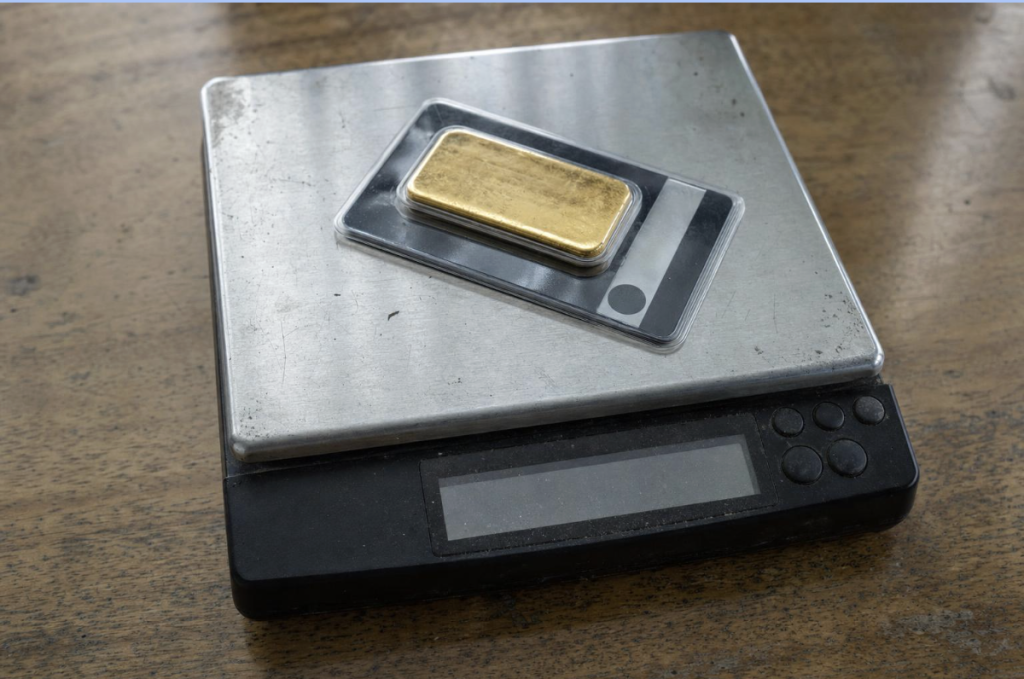
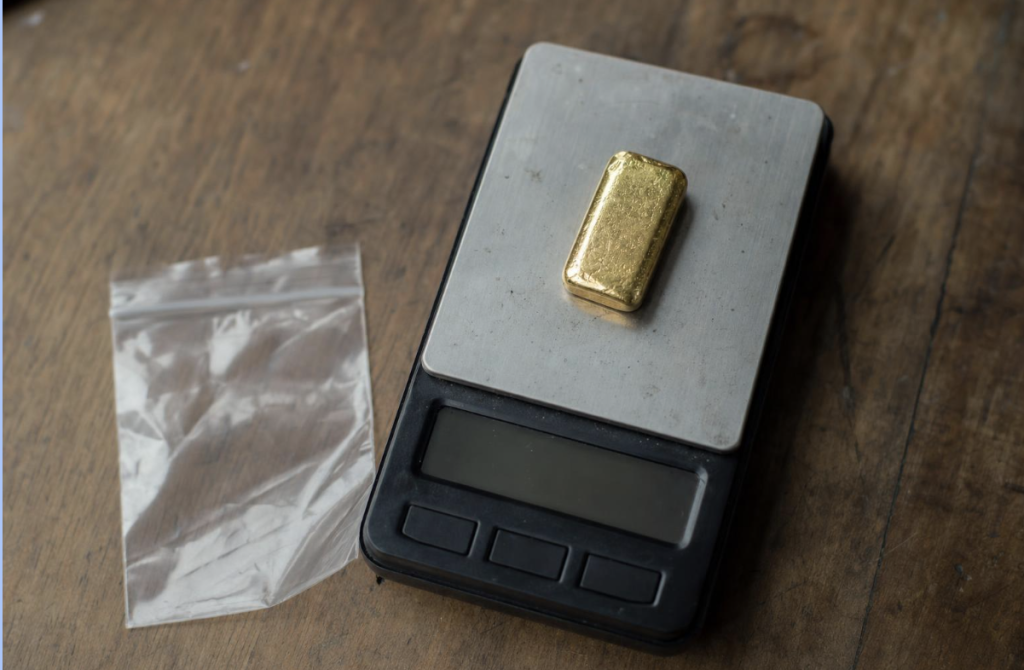
- Weigh your bars on a digital scale so you know roughly what you are holding.
- Note the fineness and refiner, such as 999.9 gold from an LBMA-accredited producer.
- Check today’s reference price through the LBMA or World Gold Council, remembering that your payout is based on a dealer buyback rate, not the screen figure.
- Decide what matters more to you: speed, such as a showroom visit, or convenience, such as an insured courier.
Where to sell in London: walk-in versus insured courier
You broadly have two routes, and both can be legitimate. The right one depends on whether you value a face-to-face conversation or the convenience of not travelling with valuables.
Walk-in showrooms
Hatton Garden and other central London bullion showrooms let you get a quote in person. Expect to show identification, wait while your item is tested, and receive payment by bank transfer. At London dealer Sharps Pixley, for example, sellers provide one photo ID and one recent proof of address, and payment is normally made by bank transfer within 24 hours after authentication. Sharps Pixley accepts bars from LBMA-accredited refiners such as PAMP, Credit Suisse, Umicore, Metalor, Valcambi, Heraeus, and Argor Heraeus.
Insured courier or post
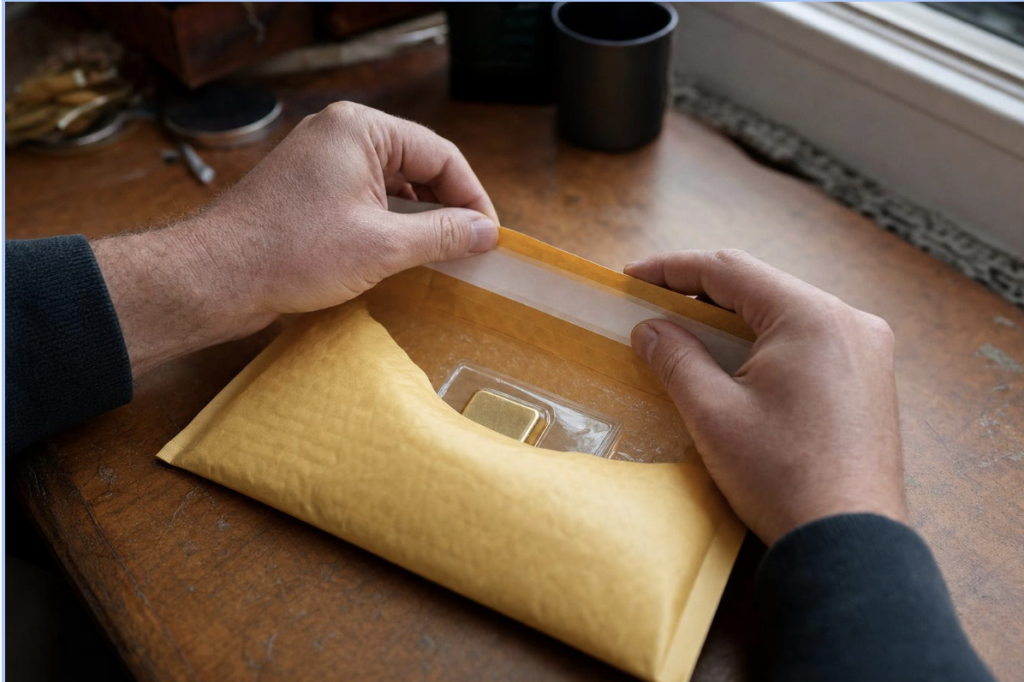
If you would rather not carry valuables across the city, an insured postal or courier option can work well. Royal Mail advises using Special Delivery Guaranteed for valuables, and notes that Signed For services do not include compensation for items like jewellery. Standard consumer cover on Special Delivery Guaranteed by 1pm typically reaches 750 pounds, while business Special Delivery allows higher limits, up to 2,500 pounds, with options for greater cover. Because those caps can be low for bullion, many dealers provide their own insured labels with higher protection.
If you prefer a central London quote with same-day bank transfer or a secure courier option, compare providers directly. Suttons & Robertsons offers both in-person valuations and an insured courier route; the Suttons & Robertsons page titled sell gold bars London sets out the current process and contact details. As a point of comparison on cover, the Suttons & Robertsons insured courier option covers items in transit up to 20,000 pounds and stores them in a vault on arrival, which is well beyond typical postal limits.
A step-by-step selling flow for first-timers
- Get two or three quotes on the same day. Ask whether the price is fixed when you book or only after receipt and testing, since live prices move.
- Ask what testing is used. Non-destructive methods such as XRF or ultrasound are common. Avoid irreversible acid tests on sealed bars.
- Confirm ID requirements and payment. Most dealers pay by bank transfer. Cash payments can be limited by anti-money-laundering rules.
- If posting, protect yourself. Photograph the packaging, use tamper-evident bags, keep proof of postage and tracking, and stay within your insurance limit, or use a dealer courier with higher cover.
- Review the final valuation calmly. Once your item is received and tested, you can accept or decline. You should never feel pressured to complete a sale.
Taxes and paperwork in plain English
Tax rules vary by person, so treat this as general signposting rather than advice. When in doubt, check the official HMRC and Royal Mint pages or speak to a qualified adviser.
- Capital Gains Tax (CGT): The annual exempt amount for individuals is 3,000 pounds for the 2024/25, 2025/26, and 2026/27 tax years. Only gains above that allowance may be taxable, so keep records of purchase dates, costs, and your sale price.
- Coins versus bars: UK legal-tender bullion coins such as Britannias and Sovereigns are exempt from UK Capital Gains Tax for UK residents. Bars do not share that exemption.
- VAT: In the UK, supplies of investment gold are exempt from VAT, with an option to tax in certain business cases.
- Cash limits: Any business accepting high-value cash payments of 10,000 euros or more for goods is treated as a high value dealer and must register for HMRC supervision. This is one reason many dealers prefer bank transfer over large cash payouts.
Getting the best achievable price, without the hype
There is no magic trick to a higher payout, but a few sensible habits can help you avoid leaving money on the table.
- Book quotes while markets are open and close to your appointment or dispatch time, so the price you discuss reflects current conditions.
- Present bars in their original sealed assay packaging where possible. Buyer familiarity with LBMA-accredited brands can support tighter, more confident pricing.
- Avoid common pitfalls: selling to unverified buyers, shipping uninsured, or breaking the seal on packaging you did not need to open.
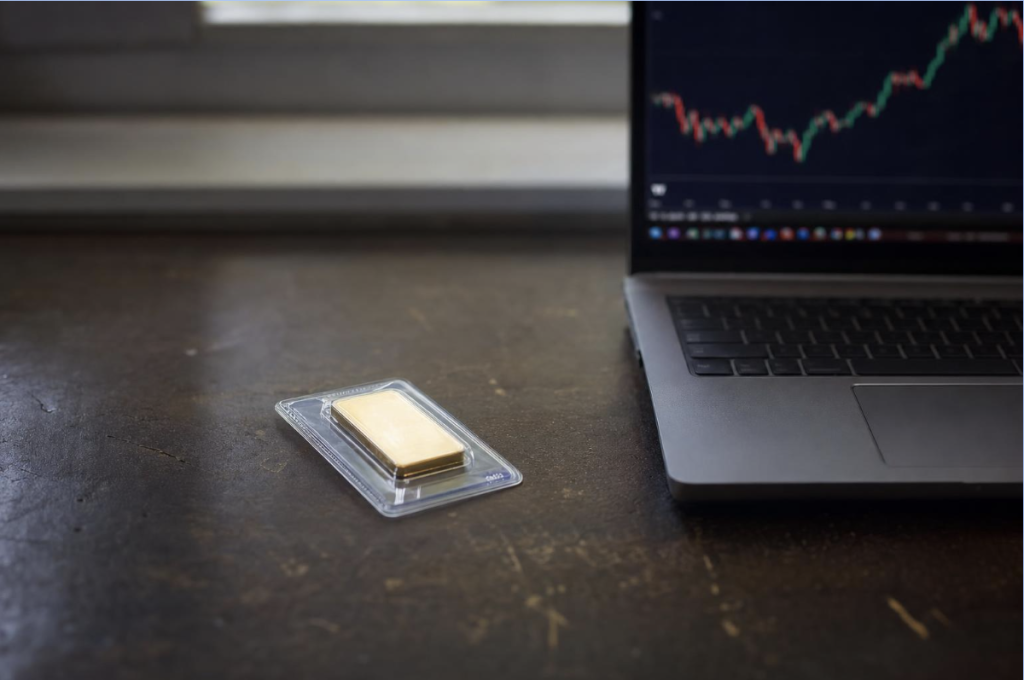
Comparing offers fairly means looking past the top-line figure. Check whether the quote is spot-linked, what fees apply, the testing policy, and how quickly you will be paid. For a refresher on spot price and premiums, review how pricing inputs affect the final offer.
London-specific tips
Hatton Garden remains the traditional hub for walk-in bullion sales, and many dealers are within a short walk of each other. That makes gathering same-day quotes practical. A few habits keep the experience smooth:
- Book appointments where you can. It reduces waiting and gives the dealer time to test properly.
- Compare like with like. Line up each offer on the same basis: spot-linked buyback rate, any fees, testing method, and payment speed.
- Keep safety simple. Visit during business hours, bring your ID, and expect know-your-customer questions. These checks are normal and protect both sides.
Wrapping up
Selling gold in London comes down to a calm, repeatable process: know how your payout is built, prepare your bars and paperwork, gather two or three same-day quotes, and choose between a walk-in showroom or an insured courier based on what you value most. Market prices and dealer rates move constantly, so no single quote is the final word. Whether you visit a Hatton Garden showroom or arrange an insured collection with a provider like Suttons & Robertsons, the sellers who do best are the ones who compare fairly and do not feel rushed into accepting an offer.
Published by HOLR Magazine.