


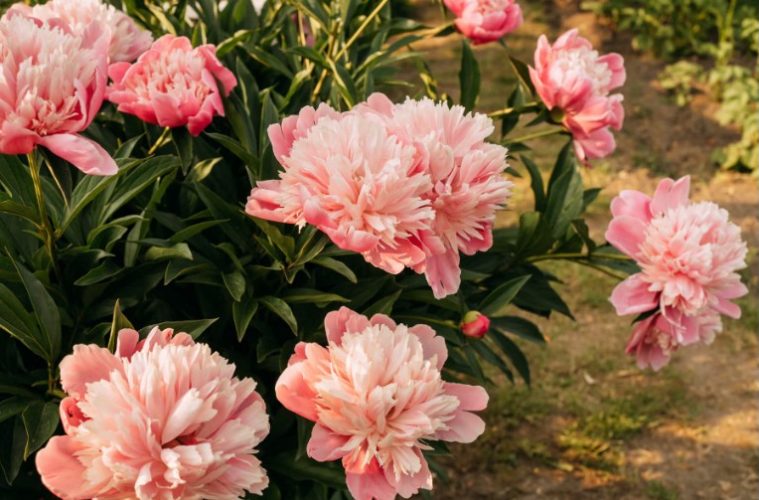
That late-summer cleanup can cost you next year’s flowers. Here’s when to prune peonies and what to do while the foliage is still green.
Wait Until the Foliage Naturally Dies Back
August 25, 2026 – Once peony flowers have faded, it is tempting to cut the whole plant down and clear the bed for fall. For herbaceous and intersectional peonies, that is one gardening task worth postponing.
Green, healthy leaves are still working after flowering. Through photosynthesis, they help the plant replenish energy reserves stored in its roots and crown, which support the following year’s growth and flowers. Cutting that foliage off in midsummer can weaken the plant and potentially mean fewer blooms next spring.
The simplest rule is to let the plant tell you when it is ready. As long as the foliage remains green and healthy, leave it in place.

Credit: Charlyne Mattox for Country Living
Diseased Leaves Are the Exception
Waiting to prune does not mean you need to leave unhealthy foliage untouched. If a peony develops disease, heavily affected leaves can be removed as needed.
The important part is to preserve as much healthy green growth as possible. Removing only the damaged foliage lets the plant continue photosynthesizing while addressing the immediate problem.
Use clean, sharp pruners when cutting affected growth. Cleaning tools between plants is also a sensible precaution when dealing with visibly diseased material.
Herbaceous Peonies Get Their Full Cutback in Fall
For herbaceous peonies, wait until fall, when the foliage has naturally turned yellow or brown and begun dying back. By then, the plant has largely finished storing the energy it needs for the following season and is preparing to enter dormancy.
Once the foliage has died back, cut the stems close to the ground with clean, sharp pruning shears. Take care around the crown, which sits just below the soil surface, so you do not accidentally damage it.
Removing the old foliage also clears away plant material where certain pests and diseases could overwinter, giving the garden a cleaner start when the next growing season arrives.
Itoh Peonies Follow a Similar Schedule
Intersectional, or Itoh, peonies should also be pruned in fall after their foliage has naturally died back.
These hybrids can develop somewhat woody lower stems, so the exact amount to remove depends partly on your climate. In mild areas, a few inches of healthy woody stem can remain. In colder climates, those stems may die back and can be cut closer to the ground.
As with herbaceous peonies, avoid cutting into the crown while removing the old growth.

Credit: Charlyne Mattox for Country Living
Tree Peonies Need Different Treatment
Tree peonies are the important exception. Their woody stems remain above ground from year to year, so they should not be cut back to the ground like herbaceous varieties.
Instead, tree peonies generally need only light pruning. Remove dead, damaged or poorly positioned branches, while leaving healthy woody growth intact.
Knowing which type of peony you have is therefore essential before making a major cut. A pruning method that is appropriate for one type can be harmful to another.
You Can Still Deadhead Spent Flowers
Leaving the foliage alone does not mean the plant has to look untidy. Once flowers have faded, you can remove the spent blooms without cutting away the healthy leaves.
Follow each finished flower stem down to a healthy set of leaves and make your cut just above them. Deadheading keeps the plant looking neater and can prevent it from directing energy toward seed production.
This gives you a useful middle ground during the months between flowering and fall cleanup: remove what is finished, but keep the foliage that is still feeding the plant.
Let the Plant Finish Its Job
The temptation to tidy the garden immediately is understandable, particularly when other summer perennials are already being cut back. Peonies, however, benefit from a little patience.
The green foliage may no longer have flowers to show off, but it is still doing important work underground. By leaving it intact until it naturally declines, you give the plant time to build the reserves needed for the next growing season.
That means a less tidy-looking plant in late summer can actually be a better investment in next year’s flower display.

Credit: Charlyne Mattox for Country Living
A Little Patience Can Protect Next Year’s Blooms
Peonies are long-lived perennials, and their impressive spring flowers depend partly on what happens after this year’s blooms are finished. Cutting healthy foliage simply because the flowers are gone interrupts that process.
Instead, deadhead the spent flowers, remove diseased leaves when necessary and leave healthy foliage in place until fall. Once it has yellowed or browned and started dying back naturally, you can complete the seasonal cleanup.
It is a small timing change, but one that can make a difference to the plant’s long-term performance.
Final Thoughts
The biggest late-summer peony mistake is cutting healthy foliage too early. Herbaceous and Itoh peonies need their leaves after flowering to continue producing and storing energy for next year’s growth.
Wait until the foliage naturally dies back before making the full cut, while removing spent flowers and heavily diseased leaves as needed. And remember that tree peonies are different: their woody stems should remain rather than being cut to the ground.
FAQs
When should I cut back peonies?
Cut herbaceous and Itoh peonies in fall, after their foliage has naturally turned yellow or brown and begun to die back.
Can I cut peonies back in late summer?
Avoid cutting back healthy green foliage in late summer. The leaves are still photosynthesizing and helping the plant store energy for next year’s flowers.
Should I remove dead peony flowers?
Yes. You can deadhead faded flowers by cutting the stem just above a healthy set of leaves.
How are tree peonies different?
Tree peonies have woody stems that remain above ground, so they generally need only light pruning to remove dead, damaged or poorly placed branches.
What should I do if my peony has diseased leaves?
Remove heavily affected foliage while leaving as much healthy green growth as possible. Use clean, sharp pruning tools when making the cuts.
Published by HOLR Magazine