


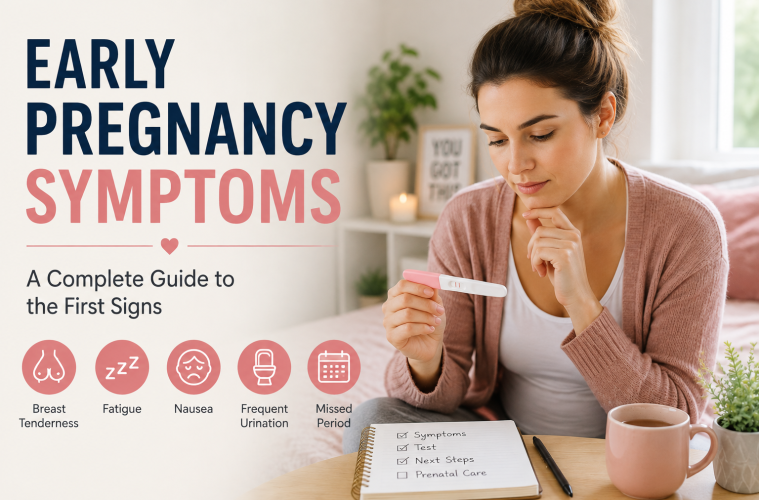
Wondering if changes in your body could mean pregnancy? Here is what early pregnancy symptoms can look like, when they may begin, and when a pregnancy test can give you a clearer answer.
August 20, 2026: The days between ovulation and a missed period can feel surprisingly long when you are wondering whether you might be pregnant. A little breast tenderness can suddenly seem significant. Mild cramps can make you question whether your period is coming. Feeling unusually tired or slightly dizzy may have you searching for answers.
The confusing part is that early pregnancy symptoms are not always obvious, and many of them can feel very similar to premenstrual symptoms. Some people notice changes before their period is due, while others have virtually no symptoms at all during the first few weeks.
So, what should you actually look for?
A missed period remains one of the most recognizable early signs of pregnancy, but symptoms such as breast tenderness, fatigue, nausea, increased urination, bloating, and mild cramping can also occur. However, symptoms alone cannot confirm pregnancy because many can have other causes. A pregnancy test is the more reliable way to find out.

Image Credit: Pregnancy, Birth and Baby
How Early Do Pregnancy Symptoms Start?
There is no exact day when pregnancy symptoms begin for everyone.
Some people notice subtle changes before their missed period, while others do not feel different until several weeks into pregnancy. The timing is influenced by when ovulation and implantation occur and how quickly pregnancy hormone levels rise.
The Office on Women’s Health notes that symptoms such as fatigue, headache, and breast tenderness can occur before a missed period. At the same time, having no symptoms does not mean that you are not pregnant.
This is one reason early pregnancy can be confusing. Your body may be changing before you have enough information to know exactly what is happening.
Early Pregnancy Symptoms Before a Missed Period
If you are paying close attention to your body after possible conception, you may notice symptoms before your expected period. Some common possibilities include:
Breast Tenderness
Hormonal changes can make the breasts feel sore, swollen, heavy or unusually sensitive. You may notice that your bra feels tighter or that your nipples are more sensitive than usual.
The NHS notes that breasts can become larger and tender during early pregnancy, with tingling, more visible veins and changes around the nipples also possible.
However, breast tenderness can also happen before a period, so this symptom by itself does not confirm pregnancy.
Fatigue
Feeling unusually tired is another common early pregnancy symptom.
Rising progesterone levels and the physical changes taking place in the body can contribute to tiredness during the first trimester. Some people describe the fatigue as more intense than their usual premenstrual tiredness, although there is no specific type of fatigue that proves pregnancy.
Mild Cramping
Some people experience mild, period-like cramping during early pregnancy.
This can be unsettling, particularly if you are expecting your period. Mild cramps can occur during early pregnancy, but cramping can also happen for many other reasons, including normal menstrual-cycle changes.
Severe, persistent or one-sided pain should not be assumed to be a normal pregnancy symptom and deserves medical attention.
Light Spotting
Some people experience light spotting in early pregnancy.
Spotting can occur around the time a period would normally be expected, although not everyone experiences it. It should not be treated as proof of pregnancy, and bleeding during pregnancy should be discussed with a healthcare professional when there are concerns.
Bloating
Hormonal changes can cause bloating during early pregnancy.
The sensation can be very similar to the bloating many people experience before their period, which is another reason symptoms can be difficult to interpret.
Changes in Taste and Smell
Some people notice that foods or drinks they normally enjoy suddenly seem unappealing. Others may develop new cravings or notice that certain smells become much stronger than before.
A metallic taste in the mouth and increased sensitivity to smells are also reported early pregnancy symptoms.
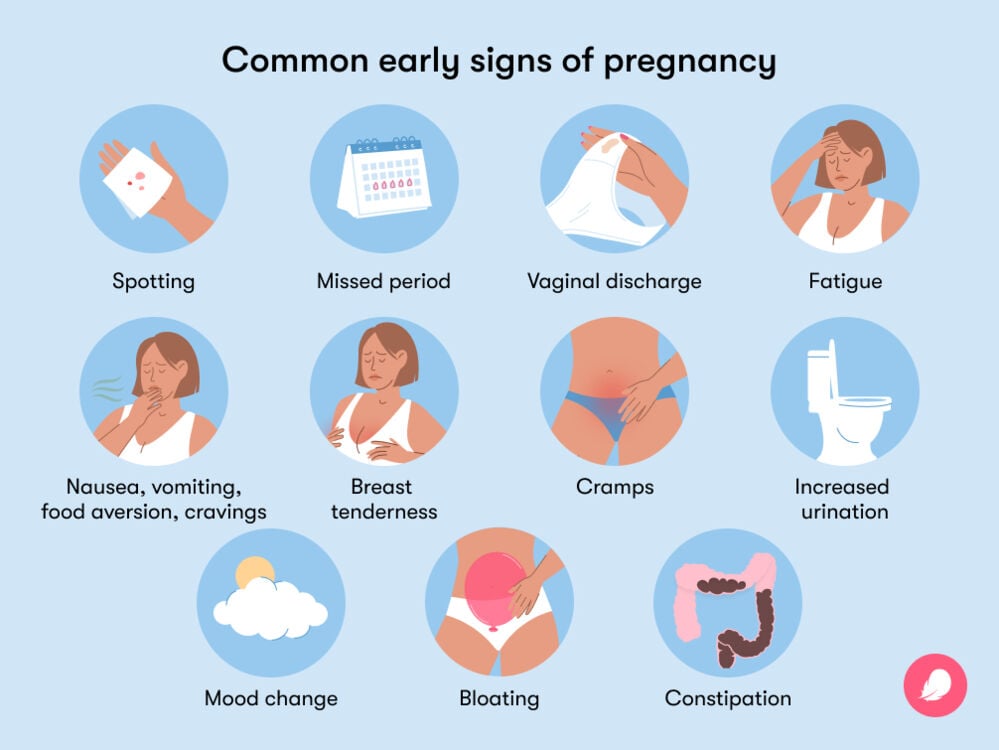
Image Credit: Flo App
3 Weeks Pregnant: What Symptoms Can You Expect?
The phrase “3 weeks pregnant” can be confusing because pregnancy is generally dated from the first day of the last menstrual period, rather than from the actual day of conception.
At around three weeks of pregnancy, conception may have only recently occurred. That means it can be far too early for noticeable symptoms in many people.
The NHS explains that pregnancy dating starts from the first day of the last period, and during the first few weeks many people may not yet realize they are pregnant.
Some people may notice mild cramping, bloating, breast tenderness or fatigue around this stage, but having no symptoms is also completely possible.
This is important because people sometimes assume that being pregnant automatically means feeling different immediately. It does not.
You can be pregnant and feel completely normal.
When Does Morning Sickness Start in Pregnancy?
Despite the name, morning sickness is not limited to the morning.
Pregnancy-related nausea can happen at any time of day or night. According to the NHS, nausea and vomiting commonly begin around four to six weeks of pregnancy.
Mayo Clinic similarly notes that nausea often begins one to two months after becoming pregnant, although some people experience it earlier and others never experience it.
So if you are three weeks pregnant and do not feel nauseous, there is no reason to assume something is wrong.
And if you are already feeling sick before your expected period, nausea alone still cannot confirm pregnancy.
Image Credit: Dr. Thais Aliabadi
More Frequent Urination
Another symptom that can appear during early pregnancy is needing to urinate more often.
Pregnancy-related changes increase blood flow and affect how the kidneys process fluid, which can result in more frequent trips to the bathroom.
Again, this is not exclusive to pregnancy. Increased urination can have many other causes, so it should be considered alongside other symptoms rather than treated as proof.
Mood Changes
Hormonal changes during early pregnancy can affect mood.
You might feel more emotional than usual, become irritated more easily or notice that your feelings seem to shift quickly. These changes can also happen around the time of a period, making them difficult to interpret on their own.
Dizziness and Headaches
Some people experience headaches or lightheadedness during early pregnancy.
The Office on Women’s Health explains that pregnancy-related changes, including increased blood vessels and the body’s increased nutritional needs, can contribute to dizziness and lightheadedness.
However, dizziness can also result from dehydration, not eating enough, illness, low blood pressure and other causes.
If dizziness is severe, persistent or accompanied by abdominal pain or vaginal bleeding, seek medical advice promptly.
Image Credit: Medical news Today
Is Diarrhea a Sign of Early Pregnancy?
Diarrhea is not considered one of the classic early signs of pregnancy.
Pregnancy can affect the digestive system, but constipation is more commonly listed among early pregnancy symptoms.
Diarrhea can have many causes, including an infection, food-related illness, dietary changes, stress or medication. It should not be used as an indication that you are pregnant.
If diarrhea is persistent or severe, particularly if it is accompanied by vomiting, fever, significant abdominal pain or signs of dehydration, contact a healthcare professional.
How Can You Tell if Early Symptoms Are Pregnancy or PMS?
This is one of the hardest questions because there is considerable overlap.
Both pregnancy and premenstrual changes can cause:
- Breast tenderness
- Bloating
- Mood changes
- Fatigue
- Mild cramping
- Headaches
- Changes in appetite
That means you cannot reliably distinguish pregnancy from PMS based on symptoms alone.
A missed period may provide a stronger clue, particularly if your menstrual cycles are usually predictable. But the most reliable next step is a pregnancy test.
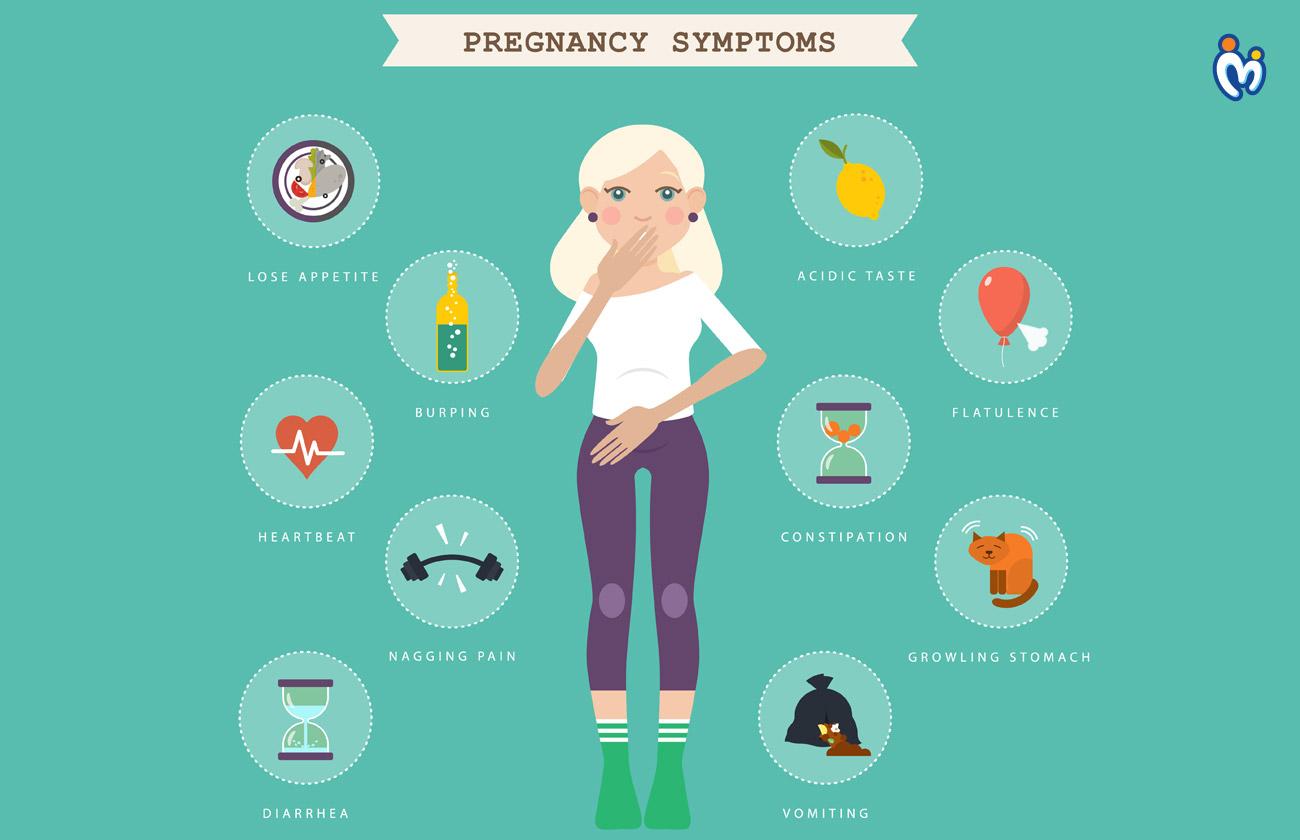
Image Credit: Mamy Poko Pants
When Should You Take a Pregnancy Test?
Home pregnancy tests detect human chorionic gonadotropin, commonly called hCG, in urine.
The hormone begins being produced after implantation, and its levels generally rise quickly during early pregnancy. Testing too early can result in a false negative because there may not yet be enough hCG for the test to detect.
For many people, testing after the first day of a missed period provides a more reliable result. Mayo Clinic notes that home pregnancy tests are more likely to be accurate after the first day of a missed period than when taken earlier.
If the test is negative but your period still does not arrive, repeating the test later may be appropriate. If you continue getting negative results and your period does not come, speak with a healthcare professional.
What If You Have Pregnancy Symptoms but a Negative Test?
A negative test does not always mean pregnancy is impossible.
Testing too early is one of the most common reasons for a false-negative result. Ovulation and implantation do not happen on precisely the same schedule for everyone, so the timing of hCG production can vary.
If you tested before or around the expected date of your period and still think you may be pregnant, consider repeating the test according to the test manufacturer’s instructions or speaking with a healthcare professional.
When Early Pregnancy Symptoms Need Medical Attention
Most early pregnancy symptoms are mild, but certain symptoms should not be ignored.
Seek prompt medical advice if you experience significant abdominal or pelvic pain, particularly if it is severe or concentrated on one side, or if you have concerning bleeding, fainting or severe dizziness.
Cleveland Clinic specifically advises contacting a healthcare provider for severe or one-sided cramping, while the Office on Women’s Health recommends medical attention for symptoms such as abdominal pain, bleeding or dizziness during pregnancy.
Persistent vomiting or diarrhea can also lead to dehydration and may require medical attention.
The important thing is not to diagnose yourself based on a symptom search. If something feels significantly different or concerning, it is better to speak with a qualified healthcare professional.
The Bottom Line
Early pregnancy does not look or feel exactly the same for everyone.
Some people notice breast tenderness, fatigue, mild cramps, bloating or changes in taste and smell before they even miss a period. Others may have no noticeable symptoms at all. Nausea often develops later, commonly around weeks four to six, while symptoms such as diarrhea are not considered reliable signs of early pregnancy.
The most important thing to remember is that symptoms can suggest pregnancy, but they cannot confirm it.
If pregnancy is possible, a properly timed home pregnancy test is a much better way to get an answer. And if you receive a positive result, arranging pregnancy care with a qualified healthcare professional is an important next step.
HOLR breaks down the story here: there is no single “right” way to feel during the earliest days of pregnancy. Your body may give you several clues, a few subtle changes or no obvious signs at all.
FAQs
What part of the breast hurts in early pregnancy?
Early pregnancy can cause tenderness, soreness, swelling or a heavy feeling throughout the breasts. The nipples and the area around them can also become more sensitive. There is no specific part of the breast that must hurt for pregnancy to be present.
Is dizziness a sign of pregnancy?
Dizziness or lightheadedness can occur during pregnancy, including early pregnancy, but it is not specific to pregnancy. Hormonal and circulatory changes can contribute to it, but dehydration, low blood sugar and other conditions can also cause dizziness.
When does morning sickness start in pregnancy?
Morning sickness commonly begins around four to six weeks of pregnancy, although timing varies. Despite its name, nausea and vomiting can occur at any time of day or night.
Is diarrhea a sign of early pregnancy?
Diarrhea is not considered a reliable early pregnancy symptom. Digestive changes can occur during pregnancy, but constipation is more commonly associated with early pregnancy. Persistent or severe diarrhea should be discussed with a healthcare professional.
Why do I have lower cramps but no period?
Lower abdominal cramps can happen for several reasons, including an approaching period, ovulation, digestive issues or early pregnancy. Mild cramping can occur during early pregnancy, but cramps alone cannot confirm pregnancy. Severe, persistent or one-sided pain—especially with bleeding or dizziness—requires prompt medical attention.
Can you have pregnancy symptoms before a missed period?
Yes. Some people experience symptoms such as breast tenderness, fatigue or headaches before a missed period. However, these symptoms can also occur for reasons unrelated to pregnancy, so a pregnancy test is needed for confirmation.
Can you be pregnant without having any symptoms?
Yes. Not everyone experiences noticeable symptoms during the first few weeks of pregnancy. Some people may not feel different until after a positive pregnancy test or later in the first trimester.
What is the earliest reliable sign of pregnancy?
For someone with regular menstrual cycles, a missed period is often the earliest recognizable sign. However, the most reliable way to determine whether you are pregnant is to take a pregnancy test at the appropriate time.
Published by HOLR Magazine