


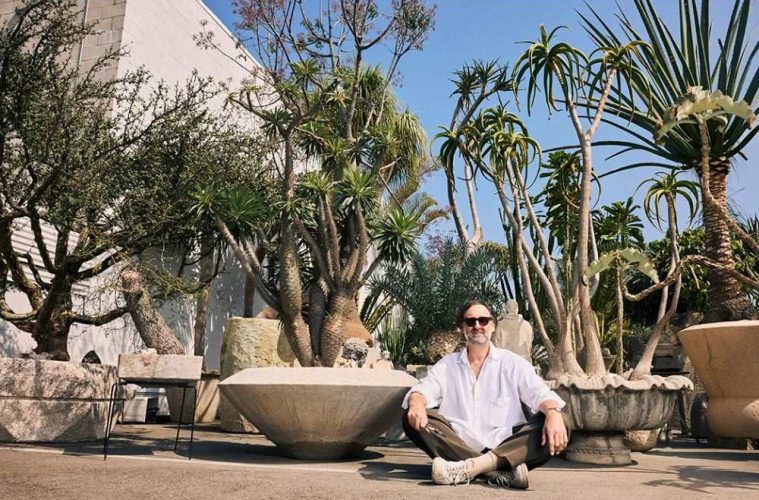
The comedian and creative reveals his fascination with rare botanical specimens, turning his love of unusual plants into an artistic and deeply personal collection.
Eric Wareheim Has a Green Thumb
August 14, 2026 – Eric Wareheim is known for his unconventional comedy, distinctive visual style, and creative projects, but one of his more unexpected passions is found much closer to home: plants.
The comedian has developed an extensive interest in rare and unusual botanical specimens, collecting plants that are often as visually striking as they are difficult to find.
For Wareheim, the appeal goes beyond simply adding greenery to an interior. His collection reflects an appreciation for plants as living objects with unusual shapes, textures, colors, and personalities.
That fascination has also become connected to his broader interest in art and design, creating a space where botanical collecting and creative expression naturally overlap.

Credit: Daniel Prakopcyk
His Collection Goes Beyond Ordinary Houseplants
While common houseplants have become staples of contemporary interiors, Wareheim’s tastes lean considerably more unusual.
Rare specimens can have bizarre silhouettes, unusual leaves, intricate structures, or growth patterns that make them look almost otherworldly. These characteristics are part of what makes them attractive to dedicated collectors.
Finding such plants can also become an adventure in itself. Unlike common varieties available at almost every garden center, rare specimens can require extensive searching and connections within specialist plant communities.
For a collector, discovering something unusual can be just as satisfying as watching it grow.
Plants as Living Works of Art
Wareheim’s interest in botanical specimens also highlights an increasingly popular way of thinking about plants: as living works of art.
Unlike a painting or sculpture, a plant is never completely finished. It grows, changes direction, produces new leaves, and can look dramatically different over time.
That constant evolution makes plants particularly interesting for people with an artistic eye.
A rare plant can become part of an interior’s composition, with its shape and texture complementing furniture, architecture, and other objects around it. The plant isn’t simply placed in a room; it becomes part of the room’s visual identity.
A Natural Connection to His Creative Work
Wareheim’s interest in unusual plants feels consistent with the unconventional aesthetic associated with his creative career.
His work has frequently embraced strange imagery, unexpected combinations, and an appreciation for things that don’t necessarily fit conventional definitions of beauty.
Rare plants can offer exactly that kind of visual intrigue.
A twisted stem, enormous leaf, unusual flower, or strange growth pattern can be fascinating precisely because it looks different from what people expect a plant to look like.
That makes botanical collecting an unexpectedly natural extension of a creative personality.

Credit: Daniel Prakopcyk
Why Rare Plants Can Become Addictive to Collect
For serious enthusiasts, collecting plants can quickly become more than a decorating project.
Every new specimen can introduce another species, growing technique, habitat, or care requirement to learn about. Collectors may become interested in the origins of individual plants, how they were propagated, and why certain specimens are considerably harder to obtain than others.
That discovery process can keep the hobby constantly evolving.
There is also a satisfaction in caring for something that requires attention over a long period. Unlike buying a decorative object, purchasing a plant begins an ongoing relationship with a living thing.
The Appeal of Botanical Rarity
Rarity is an important part of the fascination. A plant that is difficult to find can carry a different emotional value for a collector than something that is widely available. The process of locating a particular specimen can involve specialist growers, plant shows, collectors, and dedicated communities.
But rarity isn’t necessarily about price. For many enthusiasts, the attraction comes from discovering something unusual and learning how to keep it healthy. A relatively modest plant with an extraordinary shape can be more exciting than an expensive specimen that simply looks familiar.
A Passion That Blends Nature and Design
Wareheim’s interest in rare plants fits naturally into a broader appreciation for visual design. Unusual botanical specimens can change the atmosphere of a room, introducing shapes and textures that aren’t easily replicated by conventional décor.
Some plants can appear almost sculptural, with dramatic leaves or distinctive growth patterns that make them stand out even when surrounded by other objects.
That makes collecting partly an exercise in composition. Where a plant is placed, what it is displayed in, and how it interacts with its surroundings can all affect how it is perceived.
For someone with a strong visual sensibility, the process can become just as creative as arranging artwork or furniture.

Credit: Daniel Prakopcyk
Rare Plants Require More Than Good Looks
The unusual appearance of a rare plant can be what initially attracts a collector, but keeping it healthy requires considerably more attention.
Different species have different requirements for light, humidity, temperature, watering, soil, and airflow. Some can be surprisingly sensitive to changes in their environment.
That means serious plant collecting involves plenty of observation.
A collector has to notice how a plant responds to its surroundings and adjust its care accordingly. New growth, changes in leaves, or signs of stress can all provide clues about what the plant needs.
The process can be demanding, but it is also part of the appeal.
The Joy of Watching Something Grow
One of the biggest differences between collecting plants and collecting conventional objects is that plants never remain exactly the same.
A rare specimen purchased for its unusual appearance may look completely different months or years later. New leaves can change its proportions, while natural growth can reveal characteristics that weren’t immediately visible when it was acquired.
That slow transformation gives the hobby a sense of anticipation.
For collectors, caring for plants can therefore become a long-term creative project rather than a one-time purchase. The reward comes not only from owning an unusual specimen but from helping it thrive.
Botanical Collecting Can Become a Personal Archive
Over time, a collection can also become a record of a person’s interests and experiences.
Each plant can represent a discovery, a particular period, or an especially memorable search. Some specimens may be difficult to replace, giving them sentimental value beyond their appearance.
This is one reason serious collectors can become deeply attached to individual plants.
The collection effectively becomes a living archive—one that changes constantly but still reflects the collector’s evolving taste.

Credit: Daniel Prakopcyk
The Appeal of Plants That Don’t Look Ordinary
Perhaps the biggest attraction of rare botanical collecting is the opportunity to find beauty in things that are unconventional.
Plants don’t need to have perfectly symmetrical leaves or familiar flowers to be visually compelling. Twisted growth, unusual textures, dramatic proportions, and unexpected colors can make a specimen memorable.
That perspective is particularly suited to someone like Wareheim, whose creative work has often embraced the strange and unexpected.
His interest in rare plants demonstrates that collecting doesn’t always have to be about traditional luxury or obvious beauty. Sometimes, the most interesting objects are the ones that make you stop and look twice.
Final Thoughts
Eric Wareheim’s fascination with rare plants offers an unusual glimpse into the creative world behind his public persona.
What might initially seem like a simple gardening hobby becomes something much more layered when viewed through the lens of collecting, design, and artistic expression. Rare plants offer unusual forms, evolving textures, and a sense of discovery that conventional décor cannot easily provide.
They also demand patience. A plant has to be cared for, observed, and allowed to develop naturally, making the relationship between collector and collection very different from simply purchasing an object.
For Wareheim, that combination of rarity, beauty, unpredictability, and ongoing growth appears to make botanical collecting a particularly fitting creative pursuit.
FAQs
What is Eric Wareheim known for besides comedy?
Wareheim is also involved in television, food, visual arts, and other creative projects, alongside his interest in collecting unusual plants.
Why are rare plants appealing to collectors?
Their unusual appearance, scarcity, distinctive growth patterns, and the challenge of caring for them can make them especially attractive to dedicated collectors.
Can rare plants be used as interior décor?
Yes. Their distinctive shapes and textures can make them effective natural design elements and can complement furniture, architecture, and artwork.
Are rare plants difficult to maintain?
Some can be. Their care requirements vary considerably, and certain species may need specific levels of light, humidity, temperature, soil, and watering.
Why do plant collectors become attached to individual specimens?
Plants grow and change over time, so caring for a particular specimen can create a long-term connection that goes beyond its decorative value.
Published by HOLR Magazine