


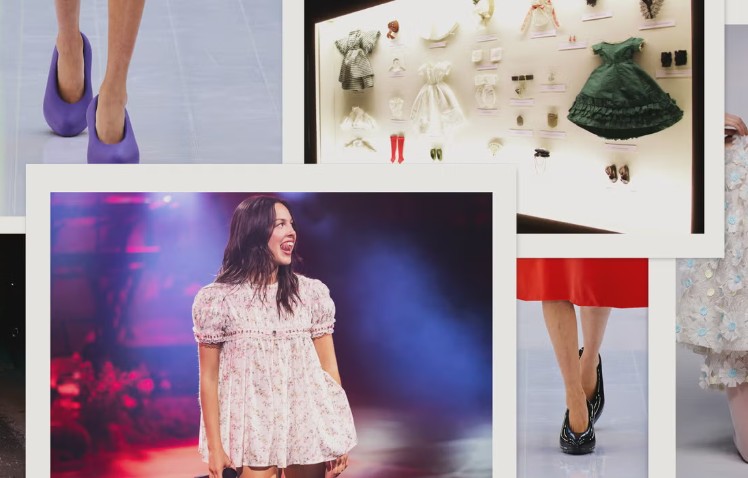
From historic fashion mannequins to Barbie-inspired runways, dolls have long influenced how designers imagine clothing, identity, fantasy, and personal style.
September 07, 2026
Dolls Have Always Had a Place in Fashion
Dolls may be associated with childhood, but their relationship with fashion is much older and more complicated. Long before runway shows and social media made new collections instantly visible, dressed dolls were already being used to communicate ideas about clothing and style.
That history is at the center of Doll Dressing, a new exhibition opening September 16 at The Museum at the Fashion Institute of Technology in New York. Curated by Dr. Colleen Hill, the exhibition brings together more than 170 dolls, garments, accessories, artworks, and videos to explore how these miniature figures have influenced fashion from the 18th century through today.

Credit: Penske Media
Fashion’s Original Miniature Messengers
The connection between dolls and fashion goes back centuries. As early as the late 14th century, elaborately dressed dolls were exchanged among European courts as a way of showing clothing and style in three-dimensional form.
These figures were not simply toys. They allowed people to study silhouettes, fabrics, and details from a distance and gave fashion a way to travel beyond the person actually wearing the clothes. In many ways, they functioned as an early version of the fashion image or lookbook.
Designers Still Look to Their Toy-Box Favorites
Today’s designers may have access to global runways, digital archives, and endless imagery, but dolls continue to provide a different kind of inspiration. Their miniature proportions and highly stylized wardrobes allow designers to approach clothing with a sense of fantasy and experimentation.
For many creatives, that connection is also personal. Paper dolls, Barbie, and other fashion dolls were often some of the earliest places where young people encountered the idea that clothing could transform a character, create a mood, or communicate personality.
When Dolls Become Fashion in Their Own Right
Some designers have taken the idea much further by directly translating doll clothing into full-size fashion. Martin Margiela famously enlarged Ken, Barbie, and G.I. Joe garments and accessories to 5.2 times their original size for his fall/winter 1994 collection.
Prada also played with the concept through trompe l’oeil doll boots for fall 2011. At Moschino, Jeremy Scott repeatedly explored doll references, including his spring/summer 2017 collection in which models appeared to become life-size paper dolls.

Credit: Ethan Miller
Anna Sui Has Made Dolls Part of Her Visual Language
Few designers have a longer-standing relationship with dolls than Anna Sui. Her childhood fascination has repeatedly appeared throughout her work, making dolls feel less like a passing trend and more like part of her creative vocabulary.
Sui’s connection to Barbie became even more literal when she was given her own signature Barbie. Her work illustrates why dolls remain so useful to fashion: they can represent an entire fantasy world in miniature, from clothing and accessories to hair, makeup, and attitude.
Barbie Is More Than a Childhood Icon
Barbie naturally occupies a major place in the conversation because of the sheer volume of fashion attached to her. According to the exhibition’s curator, Barbie’s creators estimate that she has worn more than one billion outfits since her introduction in 1959.
That enormous wardrobe has made the doll a kind of permanent fashion archive. Over decades, Barbie has reflected changing ideas about femininity, careers, beauty, trends, and aspiration, while also becoming a reference point for designers and artists who use her recognizable image in new ways.
The Exhibit Goes Beyond Whimsy
Doll Dressing is not simply a celebration of cute or nostalgic fashion. One section, titled “Broken Dolls,” examines the darker side of doll imagery, including horror, the work of German artist Hans Bellmer, and the aesthetics of the 1990s kinderwhore movement.
That section highlights how dolls can represent more complicated ideas around femininity and the body. Their polished, childlike appearance can be playful and empowering, but it can also raise questions about infantilization, control, and how women are expected to present themselves.

Credit: Ron Davis
The Kinderwhore Aesthetic Still Echoes Today
The influence of dolls can also be seen in subcultures that deliberately played with conventional ideas of femininity. During the 1990s, musicians including Courtney Love and Kat Bjelland helped popularize the kinderwhore aesthetic, combining babydoll dresses and Peter Pan collars with ripped tights, messy makeup, and punk attitude.
That look has recently returned to the conversation through Olivia Rodrigo, whose adoption of babydoll-inspired styling sparked debate about how women dress and how their clothing is interpreted. The renewed interest demonstrates how doll-like fashion can move between sweetness, rebellion, nostalgia, and self-expression.
Ruby Bailey Used Dolls to Express Identity
One of the exhibition’s particularly personal stories comes from Harlem dressmaker Ruby Bailey. Beginning in the 1960s, Bailey altered Barbie dolls and changed their appearance to reflect darker skin tones and natural hairstyles, connecting the miniature figures to Afrocentric pride.
She later created her own soft-sculpture dolls dressed in miniature versions of her clothing. Displaying those dolls alongside an adult-sized ensemble demonstrates another way fashion and dolls can interact: not simply by copying trends, but by using clothing to express culture, identity, and representation.
Why Doll Dressing Still Feels Relevant
The enduring appeal of doll-inspired fashion may come down to its ability to make dressing feel playful again. Clothing can become a costume, a character, or an opportunity to experiment with a version of yourself that feels different from everyday reality.
That idea feels especially relevant at a time when fashion can sometimes seem driven by algorithms and the pressure to constantly follow trends. Dolls offer another possibility: dressing for imagination, curiosity, and personal pleasure rather than simply trying to look current.

Credit: Xavi Torrent
Fashion Can Still Benefit From a Little Play
The history of dolls and fashion shows that the relationship has never been one-directional. Dolls have displayed clothing, preserved fashion ideas, inspired designers, challenged ideas about femininity, and provided a canvas for cultural expression.
That may be why the subject continues to resonate. A doll is small, but the possibilities represented by that miniature wardrobe can be enormous—and fashion has repeatedly found ways to bring those possibilities into the real world.
Final Thoughts
Dolls have been influencing fashion for centuries, evolving from miniature vehicles for sharing clothing ideas into sources of design inspiration, cultural commentary, and personal expression. The new Doll Dressing exhibition makes that history visible while showing how often fashion returns to the world of dolls for fresh ideas.
What began as a seemingly simple act of dressing a toy has become a surprisingly powerful creative language. From Barbie and paper dolls to couture runways and subcultural style, dolls continue to remind fashion that getting dressed can be about far more than simply putting on clothes.
FAQs
When does the Doll Dressing exhibition open?
Doll Dressing opens September 16, 2026, at The Museum at the Fashion Institute of Technology in New York and runs through January 3, 2027.
What is the Doll Dressing exhibition about?
The exhibition explores the relationship between dolls and fashion, showing how dolls have influenced clothing, design, identity, and dressed appearance across centuries.
Which fashion designers are featured in Doll Dressing?
The exhibition includes work associated with designers and labels including Martin Margiela, Prada, Moschino, Anna Sui, Marc Jacobs, Loewe, Louis Vuitton, Balenciaga, and Comme des Garçons.
Why has Barbie been influential in fashion?
Barbie has had an enormous wardrobe since her 1959 debut, allowing the doll to reflect changing trends and ideas about beauty, femininity, careers, and style.
What is the kinderwhore fashion trend?
Kinderwhore is a 1990s aesthetic that mixed childlike pieces such as babydoll dresses and Peter Pan collars with punk elements including ripped tights and deliberately messy makeup.
Published by HOLR Magazine