


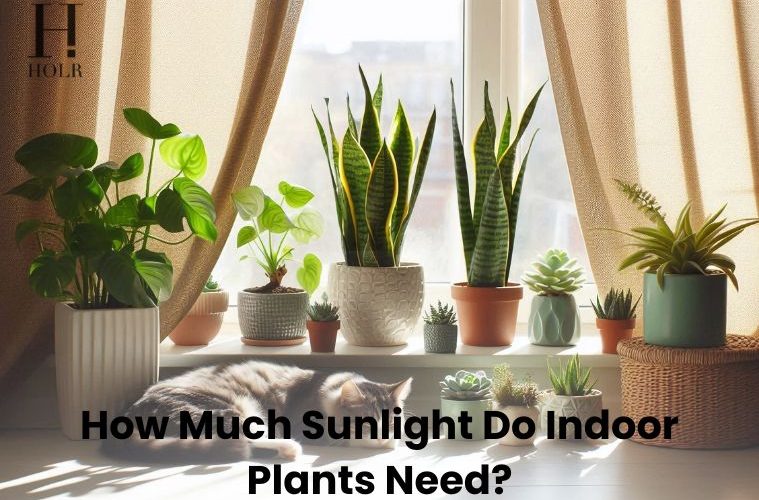
Understanding light levels can help you choose the right spot for your plants and avoid one of the most common causes of indoor plant problems.
August 26, 2026: Bringing plants indoors can make a room feel more inviting, but keeping them healthy is about more than remembering to water them. One of the most important things to understand is how much light a plant actually needs.
A plant sitting beside a bright window may receive completely different amounts of light from one placed several feet away. Even rooms that look bright to us can be relatively low-light environments for plants.
This is why choosing the right location can make such a noticeable difference.
Some indoor plants can handle several hours of direct sunlight, while others prefer bright but indirect light. There are also plants that can tolerate lower-light conditions, although “low light” does not usually mean no light.
HOLR breaks down how much sunlight indoor plants need, how to tell whether your plant is getting too much or too little light, and how to find the right spot in your home.
Why Light Matters So Much for Indoor Plants
Plants need light for photosynthesis, the process through which they use light energy to produce food.
When an indoor plant does not receive enough light, it may struggle to produce healthy new growth. Its leaves may become smaller, growth may slow and stems can become unusually long or stretched as the plant grows toward a light source.
On the other hand, too much intense direct sunlight can cause problems for plants that are not adapted to it.
This is why there is no single answer to the question of how much sunlight every indoor plant needs.
The right amount depends on the plant species, the type of light available and the conditions inside your home.
Image Credit: Facebook
What Does “Bright Indirect Light” Mean?
“Bright indirect light” is one of the most common phrases you will see on indoor plant care labels, but it can be confusing.
It generally means a location where the plant receives plenty of natural light without sitting in strong, direct sunlight for long periods.
A spot near a bright window can work well, particularly if sunlight is filtered through a sheer curtain.
You can also place the plant slightly away from the window rather than directly against the glass.
The exact distance matters because light intensity decreases quickly as you move farther away from a window.
What Is Direct Sunlight?
Direct sunlight means sunlight reaches the plant’s leaves without being significantly filtered by a curtain, another building, or other obstacles.
A south-facing or west-facing window can receive strong sunlight in many homes, although the actual amount and intensity vary depending on your location, season, window size, nearby buildings and other factors.
Plants that naturally grow in sunny environments may appreciate this kind of exposure.
However, a plant that has been growing in a lower-light environment may need time to adjust before being exposed to strong direct sunlight.
What Does Low Light Mean for Indoor Plants?
Low light does not mean complete darkness.
A low-light location might be several feet away from a window or in a room that receives limited natural light.
Some plants can tolerate these conditions better than others.
Popular plants often described as relatively tolerant of lower light include snake plants, ZZ plants, and some pothos varieties.
But even plants known for tolerating low light still need some light to survive and grow.
A common mistake is putting a plant in a dark corner simply because it is marketed as a “low-light plant.”
Low light means less light, not no light.
How Much Light Do Common Indoor Plants Need?
Different plants have different preferences.
| Plant | Typical Light Preference |
|---|---|
| Snake Plant | Low to bright indirect light; can tolerate some direct light |
| ZZ Plant | Low to bright indirect light |
| Pothos | Low to bright indirect light |
| Spider Plant | Bright indirect light |
| Peace Lily | Medium to bright indirect light |
| Monstera | Bright indirect light |
| Rubber Plant | Bright indirect light |
| Fiddle Leaf Fig | Bright indirect light |
| Aloe Vera | Bright light and several hours of direct sunlight |
| Jade Plant | Bright light with some direct sunlight |
| Cactus | Very bright light and direct sunlight |
These are general guidelines rather than strict rules. Different varieties and growing conditions can have different requirements, so checking the care recommendations for your specific plant is always useful.
How to Tell if Your Plant Needs More Light
Your plant may be telling you that it needs more light.
One common sign is leggy growth.
If new stems become unusually long and the spaces between leaves increase, the plant may be stretching toward a light source.
You may also notice:
- Slower growth
- Smaller new leaves
- Pale or less vibrant foliage
- Leaves growing primarily toward a window
- Fewer flowers on flowering plants
- Lower leaves dropping in some species
These signs can have other causes too, so do not automatically assume that light is the problem.
Watering, temperature, pests, nutrition, and root health can also affect plant growth.
But if a plant is sitting in a very dark location and showing several of these signs, moving it closer to a suitable light source may help.
How to Tell if Your Plant Is Getting Too Much Sun
Too much intense sunlight can also cause visible changes.
Leaves may develop:
- Brown or crispy patches
- Bleached-looking areas
- Scorched edges
- Faded color
Some plants may also wilt when exposed to intense heat and sunlight.
If you notice signs of sun stress after moving a plant directly into strong sunlight, consider moving it to a location with bright filtered light instead.
Avoid making dramatic changes whenever possible.
A plant that has adapted to indoor, lower-light conditions may need time to adjust to significantly brighter conditions.
Can Indoor Plants Survive Without a Window?
Plants need light, but they do not necessarily need to sit directly beside a window.
If your home has limited natural light, grow lights can provide another option.
Grow lights are designed to provide artificial light that can support plant growth.
They can be particularly useful for rooms with small windows, darker corners, or long periods of limited natural daylight.
If you use a grow light, follow the manufacturer’s recommendations regarding distance and duration rather than assuming that more light is always better.
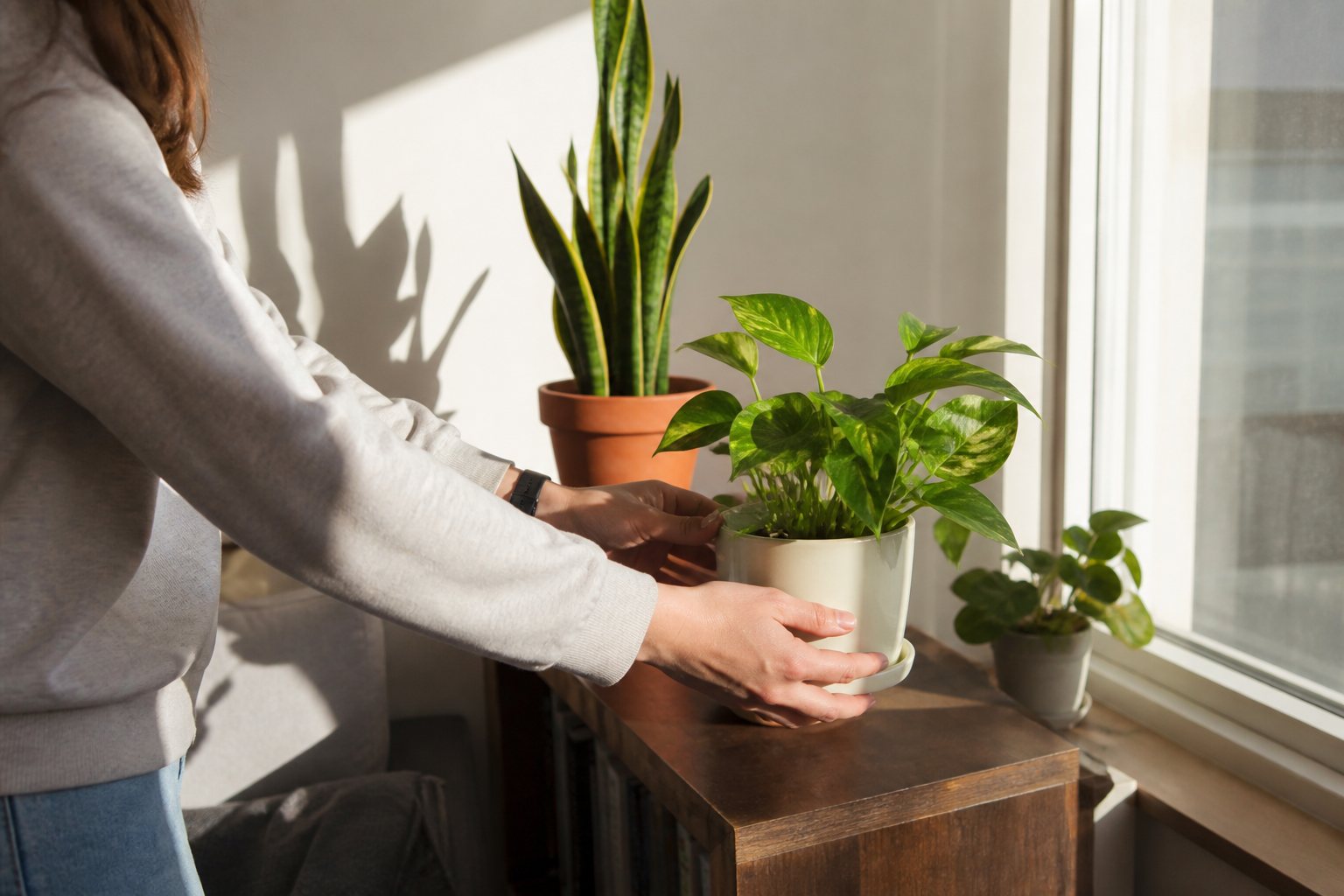
Image Credit: LeafRoutine
How Long Should Indoor Plants Get Light?
There is no universal number of hours that works for every plant.
Different species have different light requirements, and natural daylight varies throughout the year.
Instead of thinking only about the number of hours, consider the intensity and quality of light your plant receives.
A plant receiving weak light for many hours is not necessarily receiving the same amount of usable light as a plant receiving several hours of strong, appropriate light.
This is one reason why location matters so much.
Does Window Direction Matter?
Yes.
The direction your window faces can influence the intensity and duration of sunlight entering a room.
In general, south-facing windows often receive substantial sunlight, while east-facing windows tend to receive gentler morning light. West-facing windows can receive stronger afternoon and evening sunlight.
North-facing windows often provide lower-intensity light in the Northern Hemisphere.
However, these are broad guidelines rather than guarantees.
Buildings, trees, curtains, balconies, and neighboring structures can significantly change how much light actually reaches your plants.
Should You Move Your Plants During the Year?
Sometimes.
The amount of natural light entering your home changes throughout the year because of seasonal changes, the angle of the sun and weather conditions.
A location that provides excellent light during one season may become significantly darker during another.
Pay attention to how your plants respond.
If growth slows dramatically or the plant begins stretching toward a window, it may need a brighter location or supplemental lighting.
Likewise, a plant that is comfortable during winter may suddenly receive much stronger direct sunlight when seasonal conditions change.
Do Curtains Help Indoor Plants?
Curtains can be useful for plants that need bright light but are sensitive to strong direct sunlight.
A sheer curtain can soften sunlight while still allowing plenty of natural light into the room.
This can be particularly helpful near windows that receive intense afternoon sun.
Thicker curtains, however, can reduce light considerably.
If you keep your curtains closed most of the day, a plant that needs bright light may struggle even if it is sitting close to the window.
Can You Put Plants Directly on a Windowsill?
That depends on the plant and the window.
Some plants enjoy the bright conditions of a windowsill, while others may find the direct sunlight too intense.
Windowsills can also experience temperature changes that are different from the rest of the room, particularly during very hot or cold weather.
Before placing a plant directly against a window, consider its light requirements and observe how its leaves respond.
If the leaves begin showing signs of sun damage, move it slightly farther away or filter the light.
How to Choose the Right Spot for Your Plant
Instead of choosing a location based only on appearance, think about the plant’s needs first.
Ask yourself:
How much natural light does this room receive?
Observe the room throughout the day rather than judging it based on a single moment.
Does direct sunlight reach the plant?
Notice whether the sun actually touches the leaves or whether the light is filtered.
How far is the plant from the window?
A location that looks bright to you may provide significantly less usable light several feet away from the window.
Does the plant show signs of stress?
Watch new growth and leaves over time.
Your plant can give you useful clues about whether its location is working.
What About Bathrooms and Darker Rooms?
Bathrooms can be excellent environments for some tropical plants because of their humidity, but humidity does not replace light.
A bathroom with a large window may provide suitable conditions for certain plants.
A windowless bathroom, on the other hand, will generally require artificial lighting if you want to keep plants there long-term.
The same applies to hallways, basements, and rooms with very little natural light.
Do not choose a plant solely because it is labelled low-light tolerant. Consider how much actual light the space receives.
Don’t Confuse Low Light With Easy Care
A plant that tolerates lower light is not necessarily impossible to kill.
Light affects other parts of plant care, including how quickly the plant uses water.
A plant in a low-light location may grow more slowly and use water more slowly than the same plant in bright light.
This means you should not automatically water a low-light plant on a fixed schedule.
Instead, check the soil and follow the care needs of the particular species.
Give Your Plant Time to Adjust
If you bring a plant home from a bright nursery or garden centre and immediately place it in a very different environment, it may experience some adjustment stress.
The same can happen when moving a plant from low light to strong direct sunlight.
Whenever possible, make significant changes gradually.
Watch the plant’s response rather than assuming that the brightest possible location is always the best.
The Bottom Line
Indoor plants need light to grow, but the amount they need depends heavily on the species.
Some plants can tolerate lower-light conditions, while others need bright indirect light or several hours of direct sunlight. Understanding the difference between these light levels can help you choose better locations and avoid many common indoor plant problems.
HOLR breaks down the story here: the brightest spot in your home is not automatically the best spot for every plant. The goal is to match the plant with the type and intensity of light it naturally prefers.
Start by observing your space throughout the day, learn what your particular plant needs and watch how it responds after you move it.
With the right amount of light, even a simple corner of your home can become a healthy growing space.
FAQs
How many hours of sunlight do indoor plants need?
There is no universal number of hours for every indoor plant. Light requirements vary by species, and both the intensity and duration of light matter. Check the specific needs of your plant rather than relying on one general number.
Can indoor plants survive without direct sunlight?
Yes. Many indoor plants prefer bright indirect light rather than direct sunlight. Some can also tolerate lower-light environments, although they still need some usable light to grow.
Which indoor plants need the least sunlight?
Snake plants, ZZ plants and some pothos varieties are commonly considered more tolerant of lower-light conditions. However, low-light tolerance does not mean these plants can survive in complete darkness.
How do I know if my plant is getting too much sunlight?
Brown or crispy patches, bleached areas, faded leaves and scorched edges can indicate excessive direct sunlight. However, similar symptoms can have other causes, so consider the plant’s overall care conditions.
Can I use a grow light for indoor plants?
Yes. Grow lights can provide supplemental light for plants in homes with limited natural sunlight. Follow the manufacturer’s recommendations for placement and duration, and choose a light appropriate for your plant’s needs.
Published by HOLR Magazine