


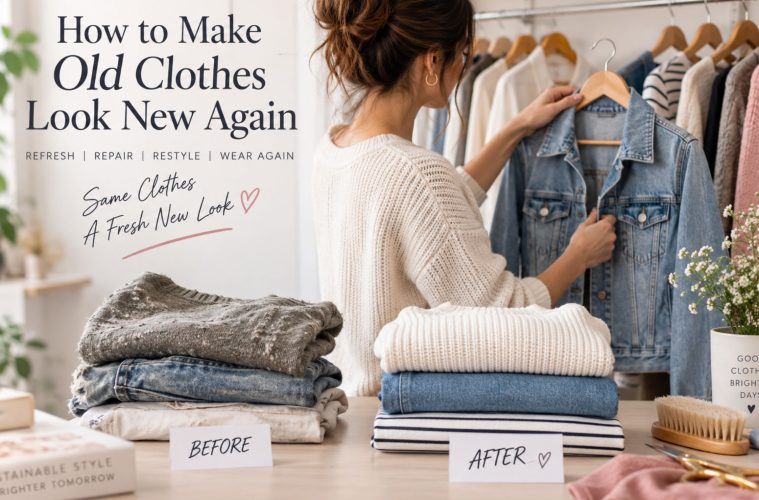
Give your favorite clothes a second life with simple cleaning, repair, and styling tricks that can make worn pieces look fresh again.
September 9, 2026: There is something satisfying about bringing an old favorite piece of clothing back to life. Maybe it’s a sweater you’ve had for years, a pair of jeans that have lost their original color, or a T-shirt that has started looking a little tired. Before you decide to replace it, a few simple tricks can make a surprising difference.
Making old clothes look new again doesn’t always require expensive products or professional services. With proper washing, small repairs, fabric care, and a little creativity, you can refresh your wardrobe while getting more wear out of the pieces you already own.

Image Credit: thefashiontag.com
Start With a Proper Wash
One of the easiest ways to refresh old clothes is to wash them correctly.
Overwashing can contribute to fading, stretching, and fabric wear, so always check the care label before putting a garment in the machine.
For most washable clothing, turning pieces inside out before washing can help protect colors and surface details. Using cold or cool water can also help reduce unnecessary fading.
Avoid using more detergent than recommended. Too much detergent can leave residue behind, which may make fabrics look dull or feel stiff.
For delicate pieces, hand washing or using a gentle cycle may be a better option.
Remove Stains Carefully
Old stains can make an otherwise good piece of clothing look much older than it actually is.
Treat stains as soon as possible when you can, but even older stains may sometimes be improved with the right approach.
Apply a suitable stain remover to the affected area and allow it to work according to the product instructions before washing. Avoid aggressively scrubbing delicate fabrics, as this can damage the fibers.
Most importantly, check the stain before putting the garment in the dryer. Heat can make some stains more difficult to remove.

Image Credit: thefashiontag.com
Bring Back the Color
Faded clothing doesn’t necessarily need to be thrown away.
For dark clothes that have lost some of their richness, washing them inside out in cool water and avoiding excessive heat can help preserve the remaining color.
If a garment is significantly faded, fabric dye can be another option. Dyeing an old black T-shirt, pair of jeans, or cotton dress can give it an entirely different appearance.
Always check whether the fabric is suitable for dyeing and follow the dye manufacturer’s instructions.
Get Rid of Fabric Pilling
Small fabric balls, known as pills, can make sweaters, leggings, coats, and other garments look worn out.
A fabric shaver can quickly remove surface pills and restore a cleaner appearance. Use it gently and avoid pressing too hard against the fabric.
For delicate materials, test the tool on a hidden area first.
Once the pills are removed, the garment can look noticeably smoother and fresher.

Image Credit: thefashiontag.com
Refresh Sweaters and Knitwear
Sweaters often show their age through pilling, stretched areas, loose threads, or a loss of shape.
Instead of automatically putting an old sweater in the donation pile, carefully remove pills and loose threads. Wash it according to its care instructions and reshape it while it dries if the fabric allows.
Avoid hanging heavy knitwear for long periods because the weight can stretch the shoulders. Folding sweaters is generally a better storage option.
Repair Small Imperfections
Sometimes a garment doesn’t need a makeover — it simply needs a little repair.
Loose buttons, small holes, missing hooks, and loose hems can often be fixed at home with basic sewing supplies.
Replace missing buttons with similar ones or deliberately choose contrasting buttons for a more customized look.
For larger repairs or expensive garments, consider taking the piece to a tailor rather than attempting a repair that could cause further damage.
Give Jeans a Refresh
Jeans can become faded and lose their shape after years of wear, but that doesn’t mean they’re finished.
Wash jeans less frequently when appropriate, turn them inside out before washing, and use cooler water to help protect the denim.
If your jeans have become loose, washing and drying according to the care label may temporarily change their fit, but avoid relying on excessive heat because it can contribute to long-term fabric damage.
You can also transform an old pair with a new hem, different styling, patches, embroidery, or tailoring.
Steam or Iron Your Clothes
Wrinkles can instantly make clothing look older and less polished.
A steamer is an easy way to remove wrinkles from many fabrics without the direct heat of an iron. For garments that can be safely ironed, use the appropriate temperature setting for the fabric.
Pay attention to collars, cuffs, hems, and seams. These small details can make a significant difference in how polished an outfit looks.
Freshen Up White Clothes
White clothing can gradually become dull or lose its brightness because of body oils, product buildup, stains, and repeated washing.
Check the care label and use a laundry product designed for whites when appropriate.
Avoid automatically reaching for harsh bleaching products. Some fabrics can be damaged or yellowed by improper bleach use, so always follow the garment and product instructions.
Keeping white clothing separate from darker colors can also help maintain its appearance.
Replace Worn-Out Details
Sometimes the fabric itself is fine, but the small details make a garment look dated.
Consider replacing:
- Old buttons
- Broken zippers
- Worn shoelace-style ties
- Loose hooks and eyes
- Damaged drawstrings
- Missing snaps
- Worn patches
These inexpensive changes can make an older item feel much more polished.
Try Simple Alterations
If you no longer love the fit of an old garment, tailoring could give it a second life.
A dress can be shortened, trousers can be hemmed, and an oversized shirt can be adjusted for a more modern silhouette.
You don’t necessarily have to follow the original design either. An old shirt could become a cropped top, while worn jeans could be turned into shorts.
Before cutting anything, make sure you’re confident about the change. For valuable or sentimental clothing, professional tailoring is usually the safer choice.
Restyle It Instead of Replacing It
Sometimes clothes only feel old because you’ve been wearing them the same way for years.
Try pairing an old dress with a new belt, wearing a vintage shirt underneath a blazer, adding a statement necklace, or styling an older pair of jeans with a completely different shoe.
Layering can also completely change the appearance of a familiar piece.
A garment you’ve stopped noticing might suddenly feel exciting again when styled differently.
Store Your Clothes Properly
Keeping clothes looking new isn’t only about cleaning them. Storage matters, too.
Make sure clothes are completely dry before putting them away, give delicate pieces enough space, and fold items that can stretch easily.
Use suitable hangers for structured garments and avoid overcrowding your closet. Too much pressure between clothes can contribute to wrinkles and make it harder to see what you actually own.
For seasonal clothing, clean and dry everything before long-term storage.
Know When It’s Time to Let Go
Not every piece of clothing can be saved.
If fabric has extensive damage, severe discoloration, major structural problems, or an unpleasant odor that won’t go away, replacing it may be the better option.
However, before throwing something away, consider whether it can be repurposed, recycled through a suitable textile program, or used for another purpose around the home.
The goal isn’t to keep everything forever. It’s to get more useful life from the clothes that are still worth wearing.
Give Your Wardrobe a Second Chance
Making old clothes look new again is often less about buying something new and more about taking better care of what you already have.
A good wash, some stain treatment, a fabric shaver, a quick repair, or a simple alteration can completely change how an old garment looks and feels.
And sometimes, all a forgotten favorite needs is a little creativity.
HOLR has more fashion, beauty, and lifestyle tips to help you make the most of your wardrobe.
FAQs
How can I make old clothes look new again?
Start by washing them according to their care labels, treating stains, removing fabric pills, repairing small damage, steaming or ironing wrinkles, and improving the fit through styling or tailoring.
How do you make faded clothes look fresh again?
Wash them in cool water, turn them inside out, avoid excessive heat, and consider using fabric dye when the material is suitable.
How can I remove pilling from old clothes?
A fabric shaver can remove surface pills from many garments. Use it gently and test it on a hidden section first, particularly with delicate fabrics.
Published by HOLR Magazine