


Rest is not a break from your fitness routine—it is one of the most important parts of it. Here’s why recovery matters for stronger muscles, better performance, and overall well-being.
September 9, 2026: When you’re working toward a fitness goal, it can be tempting to believe that exercising more will automatically lead to better results. But your body needs time to recover between workouts. Rest gives your muscles an opportunity to repair, helps replenish energy stores, and can help you return to your next workout feeling stronger and ready to move.
Recovery is considered a key part of effective training, alongside exercise, nutrition, hydration, and sleep.
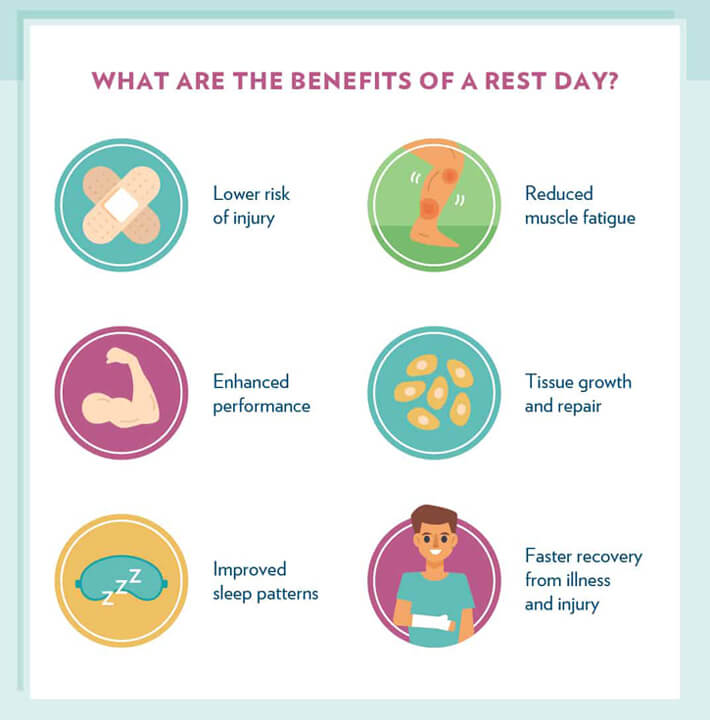
Image Credit: getfitnow.com
Your Muscles Need Time to Recover
Exercise places stress on your muscles. During challenging workouts, particularly resistance training, muscle tissue experiences small amounts of damage. Your body then works to repair and adapt to that stress.
That process is part of how muscles become stronger over time.
Giving the same muscle group enough recovery time can therefore be just as important as completing the workout itself. Mayo Clinic recommends allowing a full day between strength-training sessions for the same muscle group.
Rest Can Help Prevent Overtraining
More exercise isn’t always better.
Repeatedly training hard without giving your body enough time to recover can leave you feeling unusually tired, sore, or unmotivated. It may also make it harder to maintain good exercise form.
Rest days provide an opportunity to step back from intense training and allow your body to recover before you challenge it again.
For people following demanding training schedules, ACSM recommends incorporating both active recovery and true rest days, particularly when fatigue or high training volume becomes an issue.
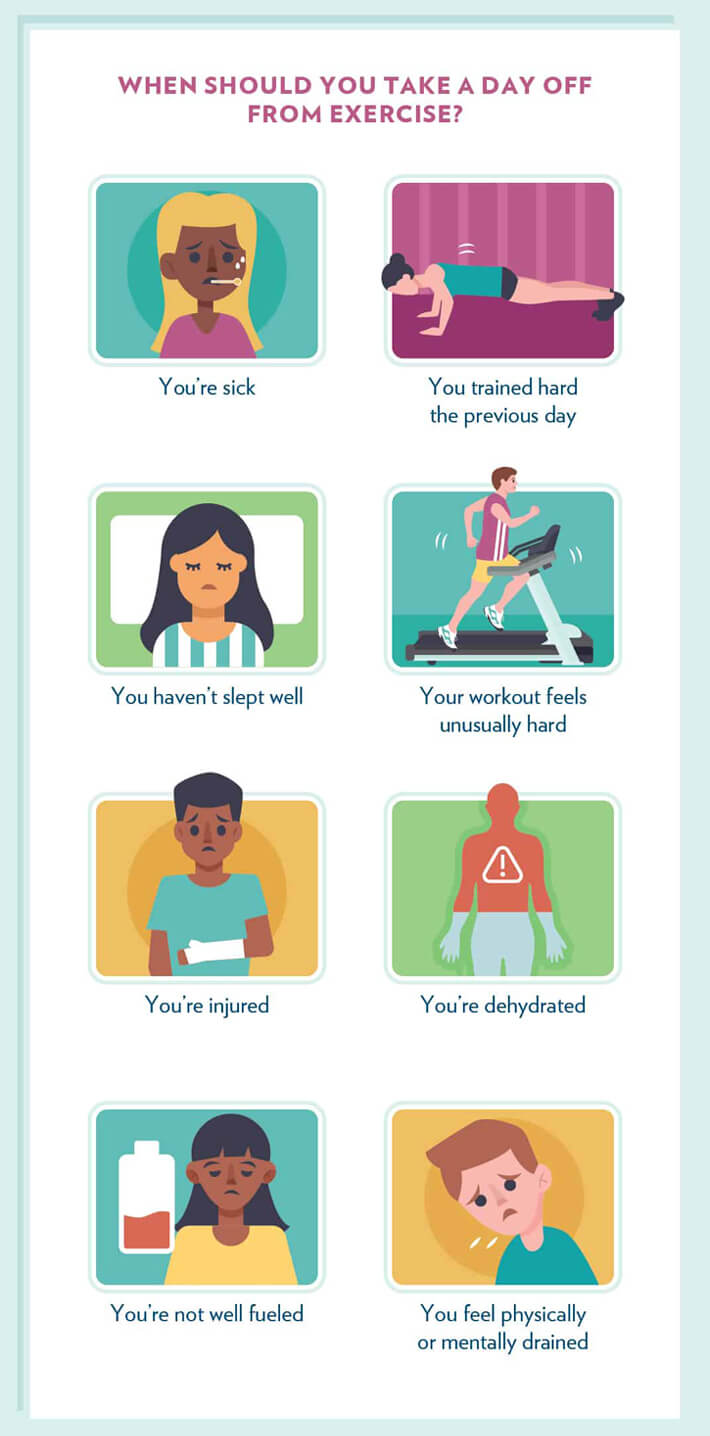
Image Credit: getfitnow.com
Recovery Can Support Better Performance
If you constantly exercise while fatigued, you may find it difficult to perform at your best.
Rest allows your body to recover from the previous workout so you can return with more energy and focus. Over time, balancing training and recovery can help you build consistency rather than repeatedly pushing yourself to exhaustion.
Think of your fitness routine as a cycle:
Train → Recover → Adapt → Train again.
Skipping the recovery part can make the entire cycle less effective.
Sleep Is a Major Part of Recovery
Rest doesn’t only mean spending a day away from the gym. Sleep is one of the most important forms of recovery.
During sleep, the body carries out important restorative processes, and adequate sleep can support physical recovery after exercise. ACSM notes that sleep helps with exercise recovery, immune function, and cognitive performance.
For adults, getting enough sleep on a regular basis should therefore be part of your fitness routine—not something you sacrifice to fit in another workout.
Your Energy Stores Need Replenishing
Exercise uses energy, particularly during longer or more intense sessions.
Recovery gives your body time to replenish those energy stores. What you eat and drink after exercising also matters.
Mayo Clinic recommends including carbohydrates and protein in a post-workout meal when possible. Carbohydrates help replace muscle glycogen, while protein supports muscle repair and growth.
Hydration is also an important part of recovery, especially after exercise that causes significant sweating.
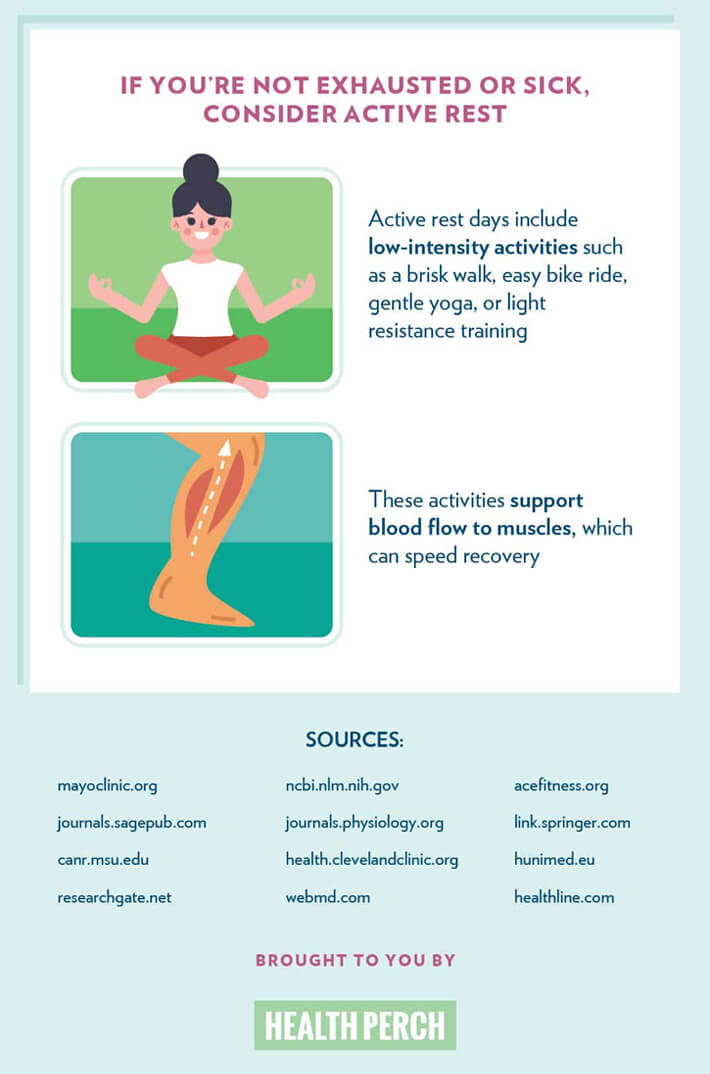
Image Credit: getfitnow.com
Rest Doesn’t Always Mean Doing Nothing
A rest day doesn’t necessarily have to mean spending the entire day on the couch.
Active recovery can involve low-intensity movement that doesn’t place the same demands on your body as a hard workout. Depending on your fitness level and routine, that could include:
- An easy walk
- Gentle cycling
- Light stretching
- Yoga
- Mobility exercises
- Relaxed swimming
ACSM describes active recovery as lower-intensity movement that can be incorporated between harder training sessions.
The key is keeping the activity easy enough that it feels restorative rather than like another demanding workout.
Rest Can Help You Listen to Your Body
One of the most useful habits you can develop is learning to recognize when your body needs a break.
Feeling some muscle soreness after an unfamiliar or challenging workout can be normal. However, persistent or significant pain shouldn’t simply be pushed through.
If exercise causes pain, Mayo Clinic recommends stopping the activity and considering a lower intensity or giving yourself additional recovery time.
Severe muscle pain, extreme weakness, trouble breathing, dizziness, or other concerning symptoms warrant medical attention.
How Many Rest Days Do You Need?
There isn’t one perfect number of rest days for everyone.
Your needs depend on factors such as:
- The type of exercise you do
- Workout intensity
- Training frequency
- Your current fitness level
- Sleep
- Nutrition
- Stress
- Age and recovery capacity
Someone doing gentle walking may need very little structured recovery, while someone doing intense strength training or preparing for an athletic event may need considerably more.
Rather than following a rigid number, pay attention to how your body responds to your training schedule.
Signs You May Need More Recovery
Your body may be telling you to slow down if you notice:
- Persistent muscle soreness
- Unusual fatigue
- Declining workout performance
- Lack of motivation to exercise
- Difficulty sleeping
- Feeling unusually run-down
- Needing longer than usual to recover
These signs don’t automatically mean you’re overtraining, but they can be useful reminders to reassess your workout and recovery schedule.
Make Recovery Part of Your Routine
Rest shouldn’t be something you only think about when you’re exhausted.
Instead, build recovery into your weekly fitness schedule. Alternate demanding workouts with easier sessions, avoid repeatedly training the same muscle groups on consecutive days, prioritize sleep, stay hydrated, and eat enough nutritious food to support your activity.
You don’t lose progress by taking a rest day.
In many cases, you’re giving your body the time it needs to turn the work you’ve already done into future progress.
The Bottom Line
Exercise challenges your body, but recovery allows it to adapt.
Whether your goal is building strength, improving endurance, staying active, or simply feeling healthier, rest deserves a place alongside your workouts. A sustainable fitness routine isn’t about pushing yourself every single day. It’s about finding the right balance between movement and recovery.
So the next time you have a rest day, don’t feel guilty about taking it.
Your body is still doing important work.
FAQs
Why is rest important after exercise?
Rest gives your body time to recover from exercise-related stress, repair muscle tissue, replenish energy, and prepare for your next workout.
How long should I rest after exercising?
Recovery needs vary depending on the workout and individual. For strength training, Mayo Clinic recommends resting a specific muscle group for a full day before training it again.
Can I exercise on a rest day?
Yes. Light activities such as walking, gentle yoga, stretching, or easy cycling can be used as active recovery if they don’t add significant fatigue.
Published by HOLR Magazine