


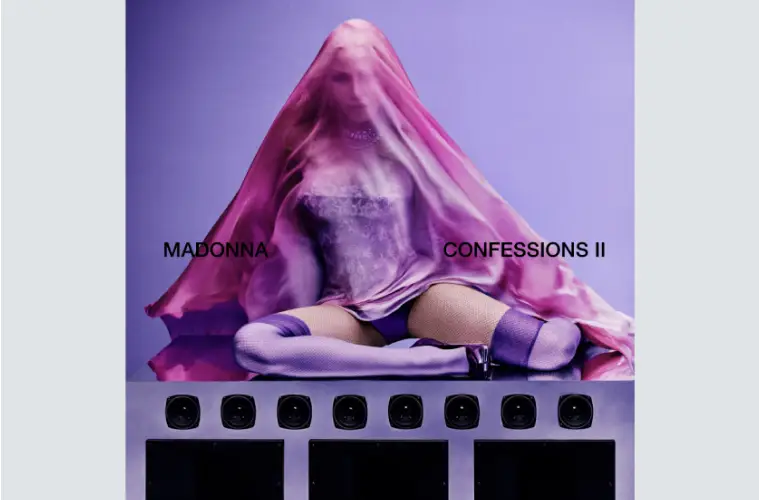
Madonna’s long-awaited Confessions II proves the Queen of Pop still knows how to command the dance floor, delivering her strongest and most cohesive album in more than two decades.
Madonna Revisits a Defining Era
July 04, 2026 – More than 20 years after Confessions on a Dance Floor became one of the defining pop albums of the 2000s, Madonna returns with Confessions II, a sequel that embraces her dance music roots while reflecting on the experiences that have shaped her life and career.
Released on July 3, 2026, the album reunites Madonna with longtime collaborator Stuart Price, whose production helped make the original record a global success. Rather than simply recreating the past, the pair build on that foundation with a collection of tracks that balance energetic club anthems with more introspective moments.
The result is an album that feels both nostalgic and refreshingly current, reminding listeners why Madonna has remained one of pop music’s most influential artists for over four decades.
Dance Music Takes Center Stage Again
From its opening moments, Confessions II makes its intentions clear. Pulsing house beats, shimmering synths, and seamless transitions between songs echo the continuous mix style that made its predecessor so memorable.
Tracks like “I Feel So Free” immediately establish the album’s dance-floor energy, while songs including “Love Sensation” and “Everything” maintain that momentum through infectious rhythms and polished electronic production. Rather than chasing the latest musical trends, Madonna leans into timeless dance music, creating an album that feels confident instead of nostalgic for nostalgia’s sake.
The production remains sleek throughout, allowing each track to flow naturally into the next while giving the album a cohesive identity.
Personal Stories Add Emotional Weight
Although dance music drives much of the record, Confessions II also reveals a more reflective side of Madonna. Several songs explore themes of love, loss, forgiveness, family, and personal growth, giving the project emotional depth beyond its club-ready sound.
One of the album’s most talked-about moments comes with “The Test,” a collaboration featuring Madonna’s daughter, Lourdes Leon. The heartfelt duet explores the evolving relationship between mother and daughter while showcasing a quieter, more intimate side of the album. Other tracks examine grief, resilience, and self-discovery, offering a balance between celebration and vulnerability.
Those personal moments prevent the album from becoming a straightforward collection of dance tracks, adding substance to its energetic production.
Stuart Price Helps Capture the Magic Again
A major reason the album succeeds is the reunion between Madonna and producer Stuart Price. Their creative partnership helped define Confessions on a Dance Floor, and that chemistry remains evident throughout the sequel.
Price blends house music, disco influences, techno, and modern electronic production into a sound that feels polished without sacrificing personality. Instead of overwhelming Madonna’s vocals, the production allows her voice to remain the emotional center of each track.
The collaboration demonstrates that both artists understand what made their earlier work so successful while still finding room to evolve creatively.
Critics Call It Her Best Album in Years
Early reviews have been overwhelmingly positive, with many critics describing Confessions II as Madonna’s strongest release in more than two decades. Reviewers have praised its confident songwriting, cohesive production, and willingness to embrace dance music without feeling dated.
Several critics have also noted that the album avoids relying solely on nostalgia. Instead, it acknowledges Madonna’s past while presenting a mature artist still capable of creating music that feels relevant and emotionally engaging. Although some reviewers believe the album could have been slightly shorter, the overall critical response has been highly enthusiastic.
Credit: Rafael Pavarotti
How Confessions II Honors the Original
Rather than attempting to recreate every element of Confessions on a Dance Floor, Madonna uses Confessions II to revisit the spirit of the earlier album while allowing her music to evolve. The sequel embraces continuous dance grooves and polished electronic production but also reflects the perspective of an artist with decades of experience behind her.
Longtime fans will recognize subtle musical callbacks throughout the album, yet the songs remain focused on the present rather than relying entirely on nostalgia. That balance gives Confessions II its own identity while paying tribute to one of the most celebrated records in Madonna’s catalog.
For listeners who grew up with the original album, the sequel feels both familiar and refreshingly new.
A Celebration of Reinvention
One of Madonna’s greatest strengths has always been her ability to reinvent herself. Across more than four decades, she has continually adapted to changing musical landscapes while maintaining a distinctive artistic identity.
Confessions II continues that tradition. Instead of following current pop trends, Madonna embraces the dance music that has defined many of her biggest hits, proving that authenticity can be just as compelling as constant reinvention. The album feels confident, self-assured, and unconcerned with chasing chart formulas.
That creative freedom gives the record an energy that reflects an artist making music on her own terms.
Will Confessions II Become Another Classic?
Whether Confessions II reaches the iconic status of its predecessor will ultimately depend on how audiences connect with the music over time. However, early reactions suggest the album has already struck a chord with critics and longtime fans alike.
Its combination of infectious dance tracks, emotional songwriting, and polished production positions it as one of Madonna’s strongest releases in recent memory. The reunion with Stuart Price has also been widely praised, with many listeners welcoming the return of a creative partnership that previously produced one of her defining albums.
While only time will determine its long-term legacy, Confessions II has already re-established Madonna as a powerful force in contemporary pop music.
Final Thoughts
Confessions II is more than a sequel to one of Madonna’s most beloved albums. It is a confident reminder of why she remains one of pop music’s most influential artists. By blending irresistible dance music with thoughtful songwriting and polished production, the album captures the essence of what has made her career so enduring.
Rather than simply revisiting the past, Madonna uses Confessions II to celebrate where she is today—an artist still capable of surprising audiences while staying true to her creative instincts.
For fans of dance-pop, electronic music, and Madonna’s extensive catalog, Confessions II stands out as one of the year’s most rewarding releases.
FAQs
What is Confessions II?
Confessions II is Madonna’s 15th studio album and a follow-up to her 2005 album Confessions on a Dance Floor.
Who produced Confessions II?
The album reunites Madonna with producer Stuart Price, who also worked on Confessions on a Dance Floor.
When was Confessions II released?
The album was released on July 3, 2026.
Does Confessions II feature any guest artists?
Yes. The album includes a collaboration with Madonna’s daughter, Lourdes Leon, on the track “The Test.”
Is Confessions II receiving positive reviews?
Yes. Early reviews have praised the album’s dance-focused production, cohesive sound, and described it as one of Madonna’s strongest releases in decades.
Published by HOLR Magazine