


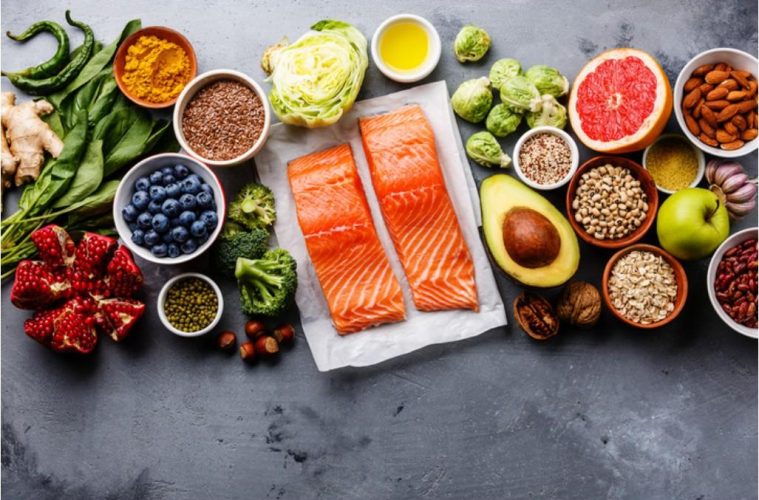
New research suggests the MIND diet may be particularly beneficial for people with higher levels of Alzheimer’s-related biomarkers, though more research is needed.
Why the MIND Diet Is Getting Attention
August 14, 2026 – What we eat can play an important role in long-term health, and researchers are increasingly interested in how dietary patterns may influence brain aging. A new study is adding another layer to that conversation by suggesting that the MIND diet may be especially helpful for people who begin with higher levels of certain Alzheimer’s-related biomarkers.
The MIND diet stands for Mediterranean-DASH Diet Intervention for Neurodegenerative Delay. It combines elements of the Mediterranean and DASH eating patterns while placing particular emphasis on foods associated with healthy cognitive aging.
The latest findings do not mean that following the MIND diet prevents Alzheimer’s disease or guarantees protection against cognitive decline. Instead, they suggest that a person’s baseline biological risk may influence how much they benefit from this particular eating pattern.

Credit: Jacoblund/WireImage
What Is the MIND Diet?
The MIND diet was developed by researchers as a dietary pattern specifically focused on foods associated with brain health. It combines principles from the Mediterranean diet and DASH diet, both of which emphasize nutrient-rich whole foods and have been associated with cardiovascular health.
Rather than requiring strict calorie counting or eliminating entire food groups, the MIND approach encourages people to eat more of certain foods while limiting others.
The pattern emphasizes vegetables, berries, beans, whole grains, nuts, olive oil, and fish. Foods higher in saturated fat, added sugar, and sodium are limited rather than necessarily banned altogether.
That flexibility may make the diet easier to incorporate into everyday life than highly restrictive eating plans.
The Foods at the Center of the Diet
The MIND diet is largely plant-focused, with several food categories appearing regularly in its recommendations.
Leafy green vegetables and other vegetables are important components, while berries receive particular attention among fruits. Beans, whole grains, and nuts provide additional sources of fiber and nutrients.
Olive oil is another important feature, while fish provides a source of healthy fats. Together, these foods create an eating pattern that emphasizes variety rather than relying on a single so-called superfood.
The approach also encourages reducing foods that are typically high in saturated fat, added sugar, or excessive sodium.
What the New Research Examined
The latest findings came from an analysis of data from a previous randomized clinical trial involving 604 adults between the ages of 65 and 84 who did not have cognitive impairment when they entered the study.
During the three-year trial, roughly half of the participants followed the MIND diet, while the remainder followed a control diet. Participants in both groups also received support aimed at weight loss.
Researchers assessed cognitive performance using a collection of tests that examined areas including memory and executive function. Blood samples were also used to examine levels of two Alzheimer’s-related biomarkers: amyloid-beta 40 and phosphorylated tau, commonly referred to as p-tau181.
These biomarkers are associated with biological processes involved in Alzheimer’s disease, making them useful for studying how underlying risk may relate to cognitive changes.
Higher Biomarker Levels May Matter
The researchers found an interesting difference when participants were considered according to their baseline biomarker levels.
Among people in the control group, higher levels of the Alzheimer’s-related biomarkers were associated with lower cognitive scores. That relationship wasn’t observed in the same way among participants following the MIND diet.
The relative cognitive advantage associated with the MIND intervention was more pronounced among participants who started the study with higher levels of amyloid-beta 40 or p-tau181.
That finding is important because it suggests that people may not all respond to a dietary intervention in exactly the same way.
The Overall Trial Was More Complicated
There is an important qualification to the findings.
When researchers looked at the entire study population, people following the MIND diet showed slightly greater cognitive improvement, but the difference was not statistically significant compared with the control group. Both groups also lost roughly 11 pounds during the three-year study.
That means the results shouldn’t be interpreted as proof that the MIND diet alone improves cognition.
Instead, the newer analysis suggests that the effects may be different among people with certain baseline biomarker profiles. The researchers emphasized that these are group-level findings from a research setting rather than individual medical advice.
How to Follow the MIND Diet in Everyday Life
Following the MIND diet doesn’t require completely changing the way you eat overnight. The approach is built around adding more nutrient-dense foods to regular meals while gradually reducing foods that are less supportive of overall health.
Leafy greens can be incorporated into salads, soups, sandwiches, omelets, or cooked vegetable dishes. Berries can be added to breakfast bowls or eaten as a snack, while beans can replace some meat in soups, curries, salads, and grain-based meals.
Whole grains can also become a regular part of meals through foods such as oatmeal, brown rice, whole-grain bread, and other minimally processed grain options.
The emphasis is on an overall eating pattern rather than one particular food.
Healthy Fats Play an Important Role
The MIND diet also places emphasis on sources of unsaturated fats, particularly olive oil and nuts.
Extra-virgin olive oil can be used as a cooking fat or dressing, while nuts can provide a convenient snack or addition to oatmeal, yogurt, salads, and other meals.
Fish is another important component of the eating pattern. Including fish as part of a balanced diet can provide omega-3 fatty acids and other nutrients, although the MIND diet isn’t intended to suggest that any single nutrient or food can independently prevent Alzheimer’s disease.
The broader goal is to create a dietary pattern rich in a variety of foods associated with cardiovascular and overall health.
Foods the MIND Diet Encourages Limiting
The MIND diet doesn’t simply focus on what to add. It also recommends limiting several categories of foods.
These include red meat, butter and margarine, cheese, pastries and sweets, and fried or fast foods. Foods high in saturated fat and added sugar are generally kept to smaller amounts.
That doesn’t necessarily mean these foods need to disappear completely.
For many people, a sustainable approach is to make nutrient-rich foods the foundation of most meals while treating less nutritious choices as occasional foods rather than everyday staples.
Why Heart Health and Brain Health Are Connected
One reason dietary patterns such as MIND continue to attract scientific interest is the relationship between cardiovascular and brain health.
Blood vessels supply the brain with oxygen and nutrients, so factors that affect cardiovascular health can also influence brain health over time.
The MIND diet’s emphasis on vegetables, whole grains, beans, nuts, fish, and unsaturated fats fits broadly within dietary approaches that support cardiovascular health.
However, maintaining brain health involves much more than diet. Physical activity, sleep, blood pressure management, social engagement, and other lifestyle and medical factors can also play important roles.
Credit: Shutterstock
What the Research Does—and Doesn’t—Show
The latest research is interesting because it raises the possibility that baseline Alzheimer’s-related biomarkers could help identify people who may respond differently to a dietary intervention.
But the findings should be interpreted carefully.
The study involved older adults without cognitive impairment at the beginning, and the researchers analyzed biomarker data in relation to cognitive outcomes. That does not establish that changing your diet will lower your personal Alzheimer’s risk.
It also doesn’t mean that someone with elevated biomarkers should independently start a particular diet as a treatment.
Instead, the findings add to a growing body of research examining how lifestyle factors may interact with biological risk.
A Sustainable Approach May Be More Important Than Perfection
For people interested in trying the MIND diet, consistency may be more practical than attempting to follow every recommendation perfectly.
Adding an extra serving of vegetables, choosing whole grains more frequently, eating berries and nuts, using olive oil, and including fish when appropriate can gradually shift the overall pattern of eating.
At the same time, reducing highly processed foods, sweets, fried foods, and foods high in saturated fat can help move meals closer to the MIND approach.
Small changes can be easier to maintain than an extremely restrictive eating plan.
Who Should Talk to a Doctor or Dietitian?
Anyone with concerns about memory, cognitive changes, Alzheimer’s disease, or their individual risk should discuss those concerns with a qualified healthcare professional.
People with medical conditions, food allergies, nutritional deficiencies, or medications that affect diet may also need individualized advice before making significant dietary changes.
A registered dietitian can help adapt the MIND diet to a person’s nutritional requirements, cultural food preferences, budget, and existing eating habits.
The research may be encouraging, but it is not a substitute for individualized medical care.
Final Thoughts
The MIND diet continues to attract attention because it offers a practical approach to eating that emphasizes vegetables, berries, whole grains, beans, nuts, olive oil, and fish while limiting foods higher in saturated fat and added sugar.
The newest findings add an intriguing possibility: people with higher levels of certain Alzheimer’s-related biomarkers may experience different cognitive outcomes when following the diet.
Still, the research does not establish the MIND diet as a treatment or guarantee protection against Alzheimer’s disease. More research is needed to understand who may benefit most and why.
For now, the strongest takeaway is that a balanced, nutrient-rich eating pattern can be one part of a broader approach to healthy aging. Anyone considering major dietary changes—particularly people with existing health concerns—should discuss them with a healthcare professional.
FAQs
What is the MIND diet?
The MIND diet combines elements of the Mediterranean and DASH diets, emphasizing foods such as leafy greens, vegetables, berries, whole grains, beans, nuts, olive oil, and fish.
Can the MIND diet prevent Alzheimer’s disease?
Current research does not establish that the MIND diet can prevent Alzheimer’s disease. Studies are investigating whether the dietary pattern may be associated with cognitive health and whether certain people may benefit more than others.
What foods are limited on the MIND diet?
The diet recommends limiting foods such as butter and margarine, red meat, cheese, pastries and sweets, and fried or fast foods.
Is the MIND diet suitable for everyone?
Not necessarily. Individual nutritional needs vary, particularly for people with medical conditions, allergies, dietary restrictions, or specific nutritional requirements. A healthcare professional can provide personalized guidance.
What is the most important thing to remember about the MIND diet?
It is an overall eating pattern rather than a single-food solution. Building meals around nutrient-rich whole foods and maintaining a balanced lifestyle are more important than following any diet perfectly.