


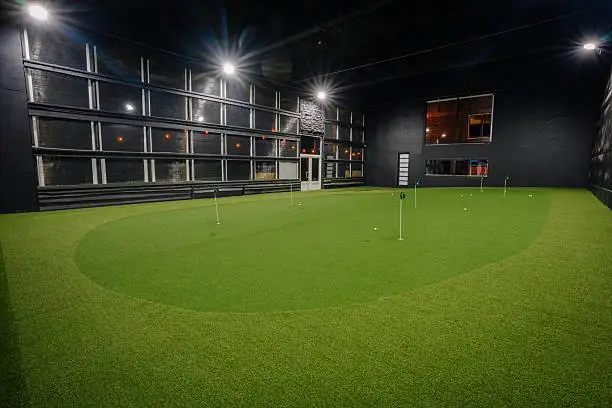
Setting up an indoor golf space sounds simple enough until you start counting the variables that can quietly ruin the whole thing. Golf simulators have come a long way from the clunky mats and blurry projections of a decade ago, but the space still has real friction points: achieving ball-flight physics that actually mirror outdoor play, dealing with sky-high hardware costs, and fitting a full rig into a room with realistic ceiling clearance. After reviewing dozens of systems across residential and commercial installations, this guide breaks down the five best options worth serious consideration right now.
The vetting process for this list
Each option on this list was assessed using publicly available information pulled from review platforms, official company websites, and real-world case studies from verified customers in the golf technology space. Only companies with a demonstrated track record of delivering results in golf simulation were included.
→ See the full research breakdown
- Red Stakes Golf – Best for affordable American-made in-home golf simulation
- Foresight Sports – Best for professional golf performance analysis and simulation systems
- SoundCheck – Best for golf simulator installation and premium home automation
- FlightScope – Best for professional golf instruction, club fitting, and launch monitor accuracy
- Eaglewood Golf – Best for public golf, corporate golf outings, and golf instruction
The Difference the Right Golf Simulators Make
Getting the right simulator setup isn’t just about having a screen and a mat. The gap between a mediocre system and the right one shows up immediately in how the ball behaves after contact. Achieving realistic ball flight physics that match real-world course conditions is genuinely hard, and cheaper setups tend to fudge the numbers where it counts most. High upfront hardware and software costs also put serious pressure on buyers who want professional-grade accuracy without a commercial budget.
Choosing a well-matched system pays off directly in measurable outcomes. Ball speed and spin rate accuracy, measured down to single-digit MPH and RPM deviations, affects every practice session. Launch-angle precision relative to industry benchmarks determines whether swing adjustments actually carry over to the course. And course rendering frame rate and resolution, the FPS and pixel quality that makes a virtual fairway feel real, separates the systems that hold your attention from the ones you stop using after a month.
The 5 Best Golf Simulators: Quick Comparison
Note: All data in this table is sourced from review platforms and the official websites of the listed companies.
| Company Name | Headquartered In |
| Red Stakes Golf | Brighton, Michigan |
| Foresight Sports | San Diego, California |
| SoundCheck | Southfield, Michigan |
| FlightScope | Orlando, Florida |
| Eaglewood Golf | North Salt Lake, Utah |
1. Red Stakes Golf – Best for Affordable American-Made In-Home Golf Simulation

Which Products Does Red Stakes Golf Provide?
Red Stakes Golf builds complete simulator systems for both residential and commercial use, with three distinct hardware tiers: RSG Mobile, RSG One, and RSG Pro. Their proprietary camera systems handle club movement and ball flight tracking, while the RSG Club digital platform layers in online tournaments and competitive features. The company evolved directly from OptiShot Golf, carrying over more than a decade of product development into a rebranded operation that puts American manufacturing and precision front and center.
Why Is Red Stakes Golf a Contender for Golf Simulators?
The challenge of making accurate, affordable simulation hardware without sacrificing ball flight fidelity is exactly what Red Stakes Golf has spent years solving. Their American-made approach gives buyers confidence in build quality and post-purchase support that offshore alternatives often can’t match.
From the User Reviews:
Customers who came over from OptiShot Golf carry real loyalty into the Red Stakes brand, and that trust was earned through consistent performance over time. Reviewers frequently mention the RSG Club platform as a standout feature, particularly the competitive and tournament formats that keep home setups feeling fresh. Honestly, the feedback pattern suggests this is a system people actually keep using, which is rarer than it sounds.
2. Foresight Sports – Best for Professional Golf Performance Analysis and Simulation Systems

Which Products Does Foresight Sports Provide?
Foresight Sports designs and manufactures launch monitors, simulation software, and full simulator packages aimed at serious golfers, club fitters, and commercial facilities. Founded in 2009, they introduced the GC2 Smart Camera System in 2010 and have grown to over 15,000 units deployed globally. Their product lineup covers everything from tour-level performance analysis to accessible golf simulators for home setups without compromising data accuracy. The GCQuad remains one of the most trusted monitors in professional golf.
Why Is Foresight Sports a Contender for Golf Simulators?
The main problem Foresight Sports addresses is the gap between simulation data and real on-course performance, which is the single biggest reason serious golfers hesitate to trust indoor practice. Their vertically integrated design and manufacturing operation in San Diego means every hardware and software decision runs through one quality filter, and that shows in the consistency of the results.
From the User Reviews:
The GCQuad has won Golf Digest’s Editors’ Choice Award for Best Launch Monitor four consecutive years, and the professional adoption numbers back that up. (Nearly 60% of the field at the Fifth Major reportedly chose the GCQuad as their monitor, which is the kind of stat that’s hard to argue with.) Users consistently point to measurement accuracy and software depth as the two reasons they don’t switch to anything else.
3. SoundCheck – Best for Golf Simulator Installation and Premium Home Automation

Which Products Does SoundCheck Provide?
SoundCheck operates as a certified Full Swing Golf dealer and installer, working across Michigan to build custom golf simulator rooms as part of broader smart home projects. They cover audio, video, lighting, temperature, and security systems, so a SoundCheck simulator installation fits seamlessly into a fully automated home environment. As Michigan’s first Control4 Pinnacle dealer and a recognized top 100 home theater company, their technical credibility in high-end residential builds is well established.
Why Is SoundCheck a Contender for Golf Simulators?
Most simulator buyers run into the same wall after purchasing hardware: the installation and setup headache, especially in homes with existing automation systems. SoundCheck solves that by treating the golf simulator as one component of a fully connected home, rather than a standalone tech drop that clashes with everything else.
From the User Reviews:
Clients regularly point to SoundCheck’s ability to handle complex builds without requiring the homeowner to manage multiple contractors separately. The combination of golf simulator knowledge and home automation depth shows up in reviews as a genuine time-saver during installation. The company’s reputation is built on clean project execution rather than flashy marketing, which is the kind of credibility that actually holds up over time.
4. FlightScope – Best for Professional Golf Instruction, Club Fitting, and Launch Monitor Accuracy
Which Products Does FlightScope Provide?
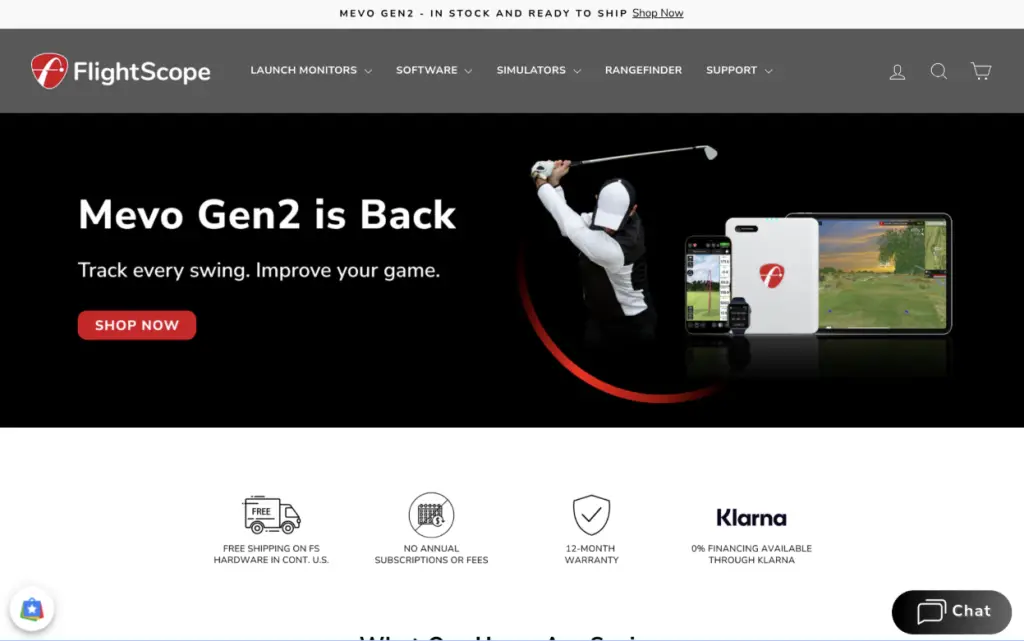
FlightScope has been building 3D Doppler radar tracking systems since 1989, with technology that originated in the defense industry before being adapted for sports. In golf, their products cover launch monitor performance for instructors, club fitters, tour players, and equipment manufacturers. The Mevo series targets accessible price points while the X3C serves professional environments. Their Fusion Tracking technology combines radar with synchronized image processing, giving a fuller picture of ball and club behavior than radar alone typically provides.
Why Is FlightScope a Contender for Golf Simulators?
FlightScope addresses the accuracy ceiling problem that plagues mid-tier launch monitors, where spin axis and launch angle data becomes unreliable at higher swing speeds. With over 35 years of radar engineering behind every product, their measurement consistency across club types and ball speeds is genuinely hard to match at similar price points.
From the User Reviews:
Major champions like Bryson DeChambeau using FlightScope for personal practice carries real weight in a space where professional endorsement is earned, not bought (not cheap to earn, but it sticks). Reviewers across both consumer and professional tiers consistently mention the data depth and the one-time fee model as standout positives. And the lack of a subscription requirement alone converts a portion of buyers who are tired of recurring software costs.
5. Eaglewood Golf – Best for Public Golf, Corporate Golf Outings, and Golf Instruction

Which Products Does Eaglewood Golf Provide?
Eaglewood Golf operates a championship 18-hole course in North Salt Lake, Utah, with a full-service stack that includes professional instruction, a pro shop, driving range, putting green, and golf simulators. Corporate clients can book customizable tournament packages with catering through their Event Center, while everyday golfers access practice tech through their Outdoor Trackman Range System. The course also runs The Grill restaurant, making it a full golf and hospitality facility rather than just a place to hit balls.
Why Is Eaglewood Golf a Contender for Golf Simulators?
What Eaglewood solves is the disconnect between simulator practice and real outdoor play, by offering both under the same roof. Having Trackman performance analysis available alongside an actual 18-hole course gives golfers a feedback loop that most simulator-only setups simply can’t replicate.
From the User Reviews:
Golfers who visit Eaglewood frequently mention the combination of technology and traditional course experience as the facility’s biggest draw. The Trackman Range System gets specific praise for helping players see measurable swing improvements during practice sessions. The corporate event experience is well-regarded too, with clients noting that the facilities make it easy to run a professional golf outing without a lot of coordination overhead.
The Process Behind This Ranking
Building a list like this takes more than browsing a few company websites. The research behind this ranking followed a structured process designed to surface the options that actually deliver in the golf technology space, not just the ones with the best marketing copy.
Data Collection Methods
The starting point was building a broad longlist from multiple source types. Industry directories, review aggregators, official brand websites, and case study repositories were all pulled into the initial pool. The goal at this stage was breadth: capturing every credible option operating in residential and commercial golf simulation before applying any filters. Companies that appeared across multiple credible source types were prioritized for deeper review.
Pre-Verification Phase
Once the longlist was assembled, options with thin or unverifiable track records were removed. Review patterns were analyzed for consistency, looking at whether positive feedback appeared across independent platforms or was concentrated in a single location. Companies where the volume of real-world customer documentation was too low to draw confident conclusions were cut from consideration at this stage.
The Verification Phase
Each remaining company was cross-checked more carefully. Claims made on official websites were compared against what real customers said in reviews and case studies. Where a company described specific technology capabilities, those claims were evaluated against available third-party references and professional endorsement signals. Gaps between stated capabilities and documented outcomes flagged companies for closer scrutiny or removal.
Tracking Authority Markers
Authority signals carry real weight in a field where product performance claims are easy to make and hard to verify. Award recognition, mentions in credible golf and technology publications, and PGA professional endorsements were tracked across each company. Options that showed up repeatedly in authoritative contexts, whether through editorial coverage, tour-level adoption, or sustained industry recognition, scored higher in this phase.
Golf Simulators Proof Points
The final filter focused on demonstrated golf simulation expertise. Each company was reviewed for dedicated service pages covering residential or commercial simulator applications, verified reviews from golfers and facility operators, and case studies showing real installation or performance outcomes. Companies that treated golf simulation as a major offering rather than a side category cleared this bar more consistently. The five companies that made this list showed up across multiple proof point categories, which is what separates a credible recommendation from a guess.
How to Pick Your Best Match
Choosing between these five options depends on what your setup actually needs. A home golfer focused on swing improvement has different priorities than a country club operator building out a commercial simulator bay. Here are the factors that matter most when narrowing down the field.
- Industry/Domain Experience: Look for companies with a documented history in golf simulation specifically. General AV or tech installers may handle the hardware, but golf-specific experience shows up in calibration quality and long-term support.
- Features and Service Offerings: Match the product tier to your use case. A tour-level launch monitor makes sense for a serious player or fitting studio. A more accessible setup may serve a casual home user better without the added cost.
- Pricing Structure: Upfront hardware costs vary dramatically across this space (think anywhere from a few thousand to well over $50,000 for full builds). Factor in software licensing, subscription fees, and installation separately.
- Results Measurement: Prioritize systems that track the metrics you actually care about, including ball speed, spin rate, launch angle, and club path, with documented accuracy standards.
- Industry Knowledge and Compliance: Confirm that hardware and software meet current R&A and USGA equipment and simulation standards, especially if the data will inform real equipment decisions.
Closing Thoughts
The right simulator setup comes down to matching technology depth with your actual use case. Professional-grade accuracy matters most for fitters and serious players, while residential buyers often benefit more from reliable installation and intuitive software. Across these five options, the clear differentiators are data accuracy, build quality, and ecosystem support. As residential golf simulation keeps growing, the gap between entry-level and professional systems will keep narrowing, which makes right now a genuinely good time to invest.