


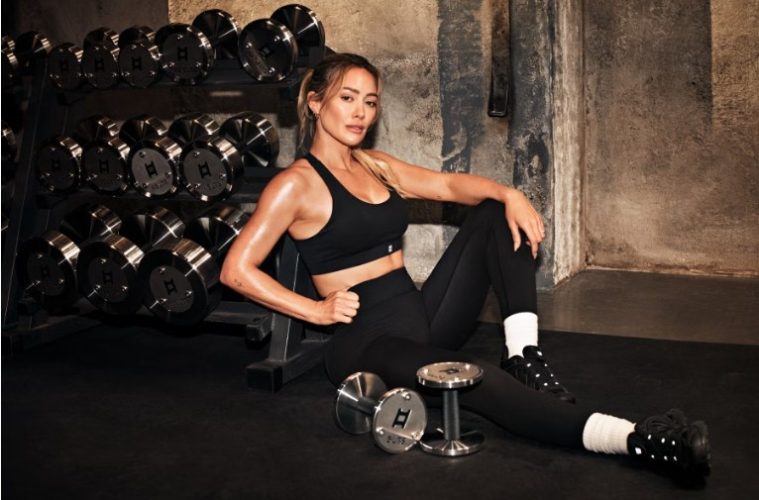
Hilary Duff reflects on the response to “Stronger, Not Smaller” and explains how strength training reshaped her mindset, movement, sleep, and performance.
Hilary Duff’s Message Goes Beyond Fitness
August 17, 2026 – Hilary Duff is reflecting on the response to her “Stronger, Not Smaller” campaign and the larger conversation it sparked around how women think about fitness and their bodies.
The actor and performer partnered with fitness platform Ladder earlier this year while preparing for the demanding schedule of her Lucky Me world tour. Rather than centering her training around becoming smaller, Duff embraced a strength-focused approach built around feeling capable and powerful.
The message resonated with women who shared their own experiences with strength, body image and changing attitudes toward exercise.
For Duff, the response appears to have reinforced why the message mattered in the first place: fitness does not have to be about taking up less space.

Credit: Ladder
Her Approach To Training Has Changed
Duff’s relationship with exercise has evolved considerably over time. As she prepared for her tour, her training shifted more heavily toward strength work, an approach she says changed how she felt and functioned in everyday life.
She has described noticing differences not only in her physical strength but also in how she moved, slept and performed.
That broader perspective is central to the campaign. Instead of treating exercise primarily as a way to change appearance, Duff has embraced training as something that can support energy, physical capability and confidence.
It is a shift that can feel particularly relevant in a fitness culture where weight and body size have historically received much of the attention.
What “Stronger, Not Smaller” Means To Duff
For Duff, the phrase is about changing the goal itself. She has spoken openly about enjoying lifting weights and feeling strong, while emphasizing that strength can look different from one person to another.
That distinction is important. Strength training does not produce one universal body type, and pursuing strength does not require someone to look a particular way.
Duff’s message instead places the focus on what the body can do. Whether someone is lifting weights, carrying groceries, climbing stairs, playing with their children or simply feeling more capable during everyday activities, physical strength can have meaning beyond aesthetics.
The campaign’s response suggests that this framing connected with women who were ready to think about exercise differently.
Preparing For A Demanding World Tour
Duff’s fitness journey was also connected to a very practical challenge: preparing her body for the demands of performing on tour.
Training for a world tour can involve long days, rehearsals, movement and repeated performances, making physical conditioning an important part of preparation. For Duff, strength work became a way to build the physical foundation she needed for that schedule.
She initially trained with Ladder coach Kelly Matthews while preparing for the tour. Once she was on the road, Duff switched to coach Elise Young’s Team Elevate, a setup that required less equipment and was better suited to the realities of touring.
That transition illustrates how fitness routines can change depending on circumstances. A workout plan does not have to look identical throughout the year to remain useful.

Credit: Ladder
The Response From Women Made An Impact
The campaign was Ladder’s first celebrity partnership, but its reach extended beyond the promotional material itself. Women responded by sharing their own strength stories on social media, turning the campaign into a broader conversation.
Duff says she appreciated that reaction, particularly because the message was never intended to be about one specific appearance or body type.
Instead, the idea was to encourage women to recognize strength as something worth pursuing in its own right.
That response also highlights why celebrity fitness conversations can sometimes resonate beyond celebrity culture. When public figures talk about changing their relationship with exercise, it can give audiences an opportunity to reconsider their own goals and expectations.
Strength Training Changed More Than Her Workouts
Duff has described the impact of strength training as extending well beyond what happens inside a gym.
She has credited her shift toward strength with changing how she feels, moves and sleeps, as well as how she performs in other areas of her life.
That perspective reflects a broader understanding of exercise. Resistance training can be used to build muscular strength and support physical function, while regular movement can contribute to overall health and well-being.
For someone with a physically demanding career, those benefits can be especially meaningful. But Duff’s experience also offers a relatable reminder that exercise does not have to be reserved for major fitness goals.
Sometimes the most valuable outcome is simply feeling stronger in everyday life.
Why The Message Resonates Right Now
The appeal of “Stronger, Not Smaller” comes from its rejection of the idea that women should exercise primarily to reduce their size.
Duff’s message does not suggest that wanting to change body composition is inherently wrong. Instead, it encourages a broader definition of what success in fitness can look like.
For some people, that may mean becoming stronger. For others, it could mean improving endurance, mobility, balance or simply finding a form of movement they genuinely enjoy.
The important shift is making fitness about personal capability rather than feeling pressured to meet an external physical ideal.

Credit: Ladder
Final Thoughts
Hilary Duff’s “Stronger, Not Smaller” message has clearly struck a chord because it speaks to a familiar tension in fitness culture: the difference between exercising to punish or shrink the body and exercising to help it become stronger and more capable.
Her own experience with strength training, particularly while preparing for a demanding tour, has changed how she approaches movement and how she thinks about what fitness can provide.
Ultimately, Duff’s message is less about following her exact workout routine and more about reconsidering the reason behind exercise. Feeling strong, capable and comfortable in your body can be a worthwhile goal all on its own.
FAQs
What is Hilary Duff’s “Stronger, Not Smaller” campaign about?
The campaign encourages women to view strength training through the lens of capability and strength rather than focusing primarily on becoming smaller or changing their appearance.
Why did Hilary Duff start focusing more on strength training?
Duff shifted toward strength training while preparing for the physical demands of her world tour. She has said the change affected how she felt, moved, slept and performed.
Who trained Hilary Duff for her tour?
Duff worked with Ladder coach Kelly Matthews during her pre-tour preparation. Once she began touring, she switched to Elise Young’s Team Elevate because the program required less equipment.
Does strength training have to be about changing your body size?
No. Strength training can be pursued for many reasons, including improving muscular strength, physical function and confidence. People can have different goals and bodies while benefiting from resistance exercise.
What is the main message behind “Stronger, Not Smaller”?
The message encourages people to focus on what their bodies can do rather than treating smaller body size as the primary measure of fitness success.
Published by HOLR Magazine