


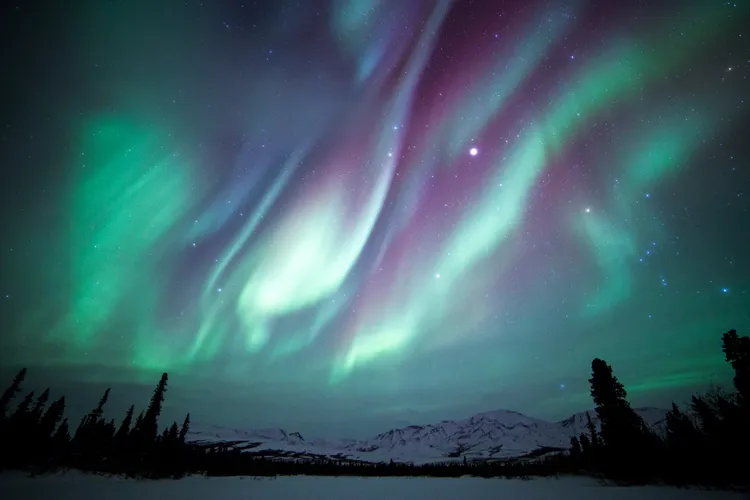
Skywatchers may witness the Northern Lights tonight as strong solar activity boosts aurora visibility across several regions.
Why the Northern Lights Are Trending Tonight
May 27, 2026-: The possibility of seeing the Northern Lights tonight has generated major excitement among skywatchers and astronomy communities worldwide.
Recent solar activity has increased the chances of visible auroras across multiple regions, especially in areas with dark skies and low light pollution. Forecasts suggest that geomagnetic conditions may become strong enough for the aurora borealis to appear farther south than usual.
Many astronomy enthusiasts are closely monitoring updates from organizations like NOAA Space Weather Prediction Centre and NASA for real-time aurora forecasts.

Image Credit: Yahoo
What Causes the Northern Lights
The Northern Lights, also known as the aurora borealis, occur when charged particles from the sun collide with gases in Earth’s atmosphere.
These interactions create colourful waves of light that appear across the night sky, usually in shades of green, purple, pink, and blue. Strong solar storms can intensify these displays, making them visible in regions where auroras are not normally seen.
Geomagnetic storms caused by solar flares and coronal mass ejections often increase visibility significantly.
That scientific process transforms solar activity into one of nature’s most visually stunning nighttime phenomena.
Best Time to Watch the Northern Lights Tonight
Experts say the best time to watch the Northern Lights tonight will likely fall between late evening and the early morning hours.
The strongest visibility typically occurs between 10 p.m. and 2 a.m., depending on local weather conditions and geomagnetic activity levels.
Dark, cloud-free skies are essential for a successful viewing experience. Areas away from city lights provide the clearest visibility because artificial lighting can reduce aurora brightness dramatically.
Skywatchers are encouraged to monitor updated forecasts throughout the night because aurora intensity can change quickly.
Real-time sky conditions are also being discussed actively on Space Weather Live and astronomy-focused communities online.
:max_bytes(150000):strip_icc():focal(749x0:751x2)/Northern-lights-sweden-051226jpg-f4f751d9f4084fb3a2ec26c486a9eb6c.jpg)
Image Credit: people.com
Best Places to See the Northern Lights
The best viewing locations are typically areas with minimal light pollution and clear northern horizons.
Northern regions of Canada, Alaska, Iceland, Norway, Finland, and parts of Scotland remain among the most reliable destinations for aurora sightings. However, stronger geomagnetic storms occasionally allow visibility farther south.
Some areas in northern parts of the United States and Europe may also experience temporary visibility tonight if solar activity intensifies further.
Rural landscapes, mountains, lakesides, and open fields often provide ideal viewing environments.
Travelers frequently rely on tools like Aurora Forecast Maps to track visibility zones.
Weather Conditions Could Affect Visibility
Even during strong aurora activity, local weather remains one of the biggest factors influencing visibility.
Cloud cover, rain, fog, and urban light pollution can significantly reduce the chances of seeing the Northern Lights clearly. Experts recommend checking local weather updates before heading outdoors.
Cold nighttime temperatures in northern regions also mean viewers should dress appropriately for extended outdoor observation.
Many experienced skywatchers recommend arriving early and remaining patient because auroras can appear suddenly and shift rapidly across the sky.
Social Media Is Fuelling Aurora Excitement
The Northern Lights have become a major digital trend because visually dramatic sky events spread rapidly online.
Photos and videos of auroras frequently go viral across platforms like Instagram, TikTok, and YouTube.
Many travellers now plan entire trips around aurora forecasts, combining tourism with astrophotography and outdoor experiences.
Social media has also introduced the phenomenon to younger audiences who may not have previously followed astronomy-related events closely.
The emotional and visual appeal of the Northern Lights continues making them one of the world’s most photographed natural wonders.
:max_bytes(150000):strip_icc()/lofoten-islands-norway-aurora-borealis-northern-lights-NORWAYLIGHTS1017-20d82f5331f342099cdb418e95809dad.jpg)
Image Credit: Travel +Leisure
Tips for Photographing the Northern Lights
Capturing the Northern Lights requires more preparation than standard nighttime photography.
Experts recommend using a tripod, long exposure settings, and low-light camera modes to maximize visibility. Smartphone night modes can also produce surprisingly strong results under ideal conditions.
Photographers often prefer remote locations because darker environments improve image clarity and colour contrast.
Patience is equally important because aurora intensity can shift dramatically over short periods.
Many first-time viewers are surprised that cameras sometimes capture colours more vividly than the human eye can naturally detect.
Why Aurora Tourism Continues Growing
Interest in aurora tourism has increased significantly in recent years as travellers seek unique outdoor experiences connected to nature.
Countries known for Northern Lights visibility continue expanding tourism infrastructure around guided tours, glass igloos, remote cabins, and nighttime photography experiences.
Streaming culture and social media visibility have played a major role in this growth by turning aurora photography into a global travel trend.
Many travellers now consider seeing the Northern Lights a major bucket-list experience.
That growing fascination continues boosting interest in astronomy and environmental tourism worldwide.
Scientists Continue Monitoring Solar Activity
Space weather experts remain closely focused on solar activity because strong geomagnetic storms can influence more than aurora visibility alone.
Major solar events can occasionally affect satellite communication, GPS systems, radio signals, and power infrastructure.
Organizations including NOAA and NASA continuously monitor solar conditions and provide updated forecasts to both researchers and the public.
The current excitement surrounding tonight’s Northern Lights is directly connected to those ongoing observations and space weather predictions.
As solar activity continues fluctuating, additional aurora opportunities may appear in the coming months.
:max_bytes(150000):strip_icc():focal(749x0:751x2)/northern-lights-3-052925-9f3ddabbbda5431988bd58a8e94ba00f.jpg)
Image Credit: People.com
Final Thoughts on Watching the Northern Lights Tonight
The possibility of witnessing the Northern Lights tonight has created excitement among skywatchers, photographers, and travellers worldwide.
With favourable solar conditions increasing the chances of visible auroras, many viewers are preparing for what could become one of the season’s most memorable nighttime events.
Whether seen through photography, travel experiences, or spontaneous backyard observation, the aurora borealis continues reminding audiences of the extraordinary beauty found within Earth’s connection to space weather.
For many viewers, tonight may offer a rare opportunity to experience one of nature’s most breathtaking spectacles firsthand.
FAQs
Q1. What causes the Northern Lights?
They are caused by solar particles interacting with Earth’s atmosphere.
Q2. What time are the Northern Lights most visible tonight?
Visibility is usually strongest between 10 p.m. and 2 a.m.
Q3. Where can the Northern Lights be seen best?
Dark areas with low light pollution offer the clearest views.
Q4. Can smartphones capture the Northern Lights?
Yes, modern night-mode cameras can photograph auroras under good conditions.
Q5. Why are the Northern Lights trending tonight?
Increased solar activity may make auroras visible across more regions than usual.
What are the biggest stories trending online today? Read the latest here
Published by HOLR Magazine
Image Credit: Instagram @ norwaytravelers