


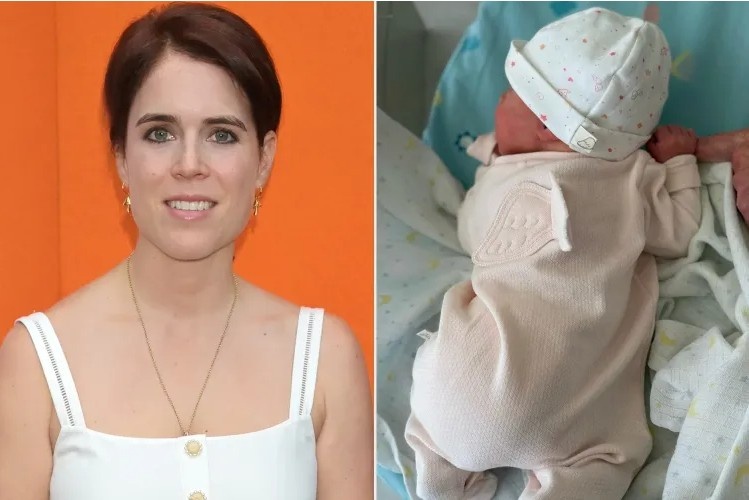
Princess Eugenie’s newborn daughter has officially joined the British line of succession, shifting several royals down one place.
Princess Eugenie Welcomes Her First Daughter
August 06, 2026 – Princess Eugenie and her husband, Jack Brooksbank, have welcomed their third child, a baby girl, marking a joyful new chapter for their growing family. Born on August 3 in Lisbon, Portugal, the newborn joins older brothers August and Ernest. Although the couple has not yet publicly revealed her name, her arrival has already made an impact on the British royal family’s line of succession.
Despite being born outside the United Kingdom, the baby automatically enters the line of succession to the British throne. Under current succession laws, her place is determined by her relationship to the monarch rather than her birthplace, meaning her birth in Portugal does not affect her royal status.
:max_bytes(150000):strip_icc():focal(749x0:751x2):format(webp)/princess-eugenie-jack-brooksbank-festival-cheltenham-050426-3cd6561a99be46d68a209c9348c3473a.jpg)
Credit: Max Mumby/Indigo
Where She Now Stands in the Line of Succession
With her birth, Princess Eugenie’s daughter becomes 15th in line to the British throne. She is positioned directly behind her mother, Princess Eugenie, and her two older brothers, August and Ernest Brooksbank.
Her addition causes everyone previously behind that position to move down by one place. Prince Edward, Duke of Edinburgh, shifts from 15th to 16th in line, while his children, James, Earl of Wessex, and Lady Louise Mountbatten-Windsor, also each move down one position.
Modern Succession Rules Protect Her Place
The birth also highlights how Britain’s succession laws have changed in recent years. Under the Succession to the Crown Act 2013, royal succession is based on absolute primogeniture for those born after October 28, 2011. This means birth order—not gender—determines a child’s place in the line of succession.
As a result, Princess Eugenie’s daughter would keep her position even if the couple were to have another child who is a boy. Under previous rules, a younger brother would have taken precedence over an older sister, but the current law ensures sons and daughters are treated equally.
No Royal Title Expected
Although she holds a place in the line of succession, Princess Eugenie’s daughter is not expected to receive a royal title. As the child of Princess Eugenie and Jack Brooksbank, she does not automatically qualify to be styled as a prince or princess under existing royal protocols.
Like her brothers, she is expected to grow up largely outside the spotlight while maintaining a place within the extended royal family. Princess Eugenie and Jack have largely balanced public responsibilities with private family life, splitting their time between the U.K. and Portugal.
View this post on Instagram
A Growing Royal Family
The arrival of Princess Eugenie’s daughter has been warmly celebrated by members of the royal family, with Buckingham Palace confirming that King Charles III and Queen Camilla were delighted by the news. Eugenie also shared her excitement publicly, expressing how thrilled she and Jack are to welcome their baby girl.
While the newest royal’s name has yet to be announced, her arrival has already become a significant moment for the family, subtly reshaping the line of succession while adding another member to the next generation of the monarchy.
Why the Succession Order Matters
Although Princess Eugenie’s daughter is unlikely to ever inherit the throne, every royal birth officially updates the line of succession. The order determines who would become monarch if those ahead in line were unable to succeed, making each addition to the royal family an important constitutional event.
While changes lower in the succession rarely affect the monarchy’s immediate future, they reflect the continued growth of the royal family and ensure that the official order accurately represents each eligible family member.
A Modern Royal Childhood
Like her older brothers, Princess Eugenie’s daughter is expected to enjoy a relatively private upbringing. Eugenie and Jack Brooksbank have consistently sought to give their children as normal a childhood as possible while balancing public interest in the royal family.
The couple has occasionally shared family milestones with the public but generally keeps their children’s daily lives away from the spotlight. Their approach reflects a broader trend among younger members of the royal family, who have increasingly prioritized privacy while remaining connected to royal traditions.

Credit: Samir Hussein/WireImage
Looking Ahead for the Royal Family
The arrival of Princess Eugenie’s daughter marks another joyful milestone for the House of Windsor as a new generation continues to grow. While her place in the line of succession has already been established, her future is expected to be shaped more by family life than official royal duties.
As the royal family continues to evolve under King Charles III’s reign, moments like these serve as reminders of both the continuity of the monarchy and the modern changes that have shaped it. The newest addition may have shifted the succession order by one place, but she also represents another chapter in the family’s ongoing story.
Final Thoughts
Princess Eugenie’s newborn daughter has officially taken her place in the British line of succession, moving several members of the royal family down by one position while reflecting the monarchy’s modern succession rules. Although she is not expected to hold a royal title or undertake official duties, her birth represents another significant milestone for the growing royal family and highlights how succession laws have evolved to treat sons and daughters equally.
FAQs
Where is Princess Eugenie’s daughter in the line of succession?
She is 15th in line to the British throne following her birth.
Does Princess Eugenie’s daughter have a royal title?
No. She is not expected to receive the title of princess under current royal protocols.
Why did the line of succession change?
Every eligible royal birth adds a new person to the succession order, causing those behind them to move down one place.
Does being born in Portugal affect her place in the succession?
No. Her birthplace does not affect her eligibility or position in the British line of succession.
Why won’t a future younger brother move ahead of her?
The Succession to the Crown Act 2013 established absolute primogeniture, meaning birth order—not gender—determines succession for those born after October 28, 2011.
Published by HOLR Magazine