


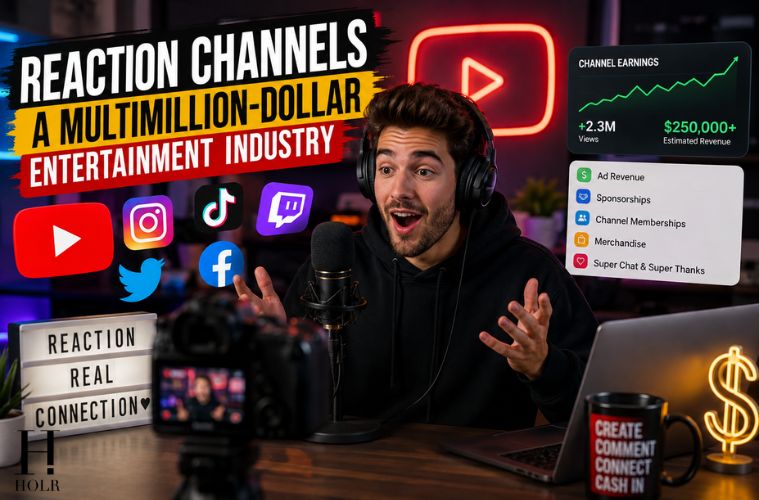
How Reaction Channels Became a Multimillion-Dollar Entertainment Industry
August 12, 2026—What started as people watching videos on camera has evolved into a powerful form of digital entertainment, fueled by fandom, personality, advertising, and the surprisingly valuable business of simply having something to say.
There was a time when watching someone else watch a video would have sounded almost absurd.
Today, it is a serious entertainment business.
Across YouTube, Twitch and membership platforms, reaction creators have turned everything from music videos and movie trailers to reality-TV moments, internet drama and viral clips into programming of their own. Some channels attract millions of views, while established creators can build businesses around advertising, sponsorships, memberships, merchandise, affiliate sales and fan-supported platforms.

Credit-blog.youtube
There is no audited figure showing that “reaction channels” as a standalone category are worth a specific number of millions or billions. But the money flowing through the ecosystem is real. YouTube says it has paid more than $100 billion to creators, artists and media companies over the four years through 2025, while Patreon announced in August 2025 that fans had collectively sent $10 billion to creators since the platform was founded.
Reaction creators occupy an especially interesting corner of that economy because their raw material is often something the audience already knows.
The product isn’t simply the clip.
It’s the person watching it.
The Audience Isn’t Just Watching the Video Anymore
The basic appeal of a reaction video is remarkably human: people like experiencing things together.
Andrew Best-Medium
A new song can be exciting on its own, but watching another person hear it for the first time creates a second layer of entertainment. A shocking television moment becomes a conversation. A bizarre internet clip becomes a joke shared between a creator and thousands of viewers who feel as though they are sitting in the same room.
That helps explain why reaction content has become particularly visible in music and pop culture.

Creator Handbook
Music-reaction channels, for example, can serve very different audiences. Some creators bring professional knowledge, breaking down vocals, production or songwriting. Others are essentially enthusiastic fans whose value comes from an emotional response. Both approaches give viewers a reason to watch something they may already have seen.
That dynamic is closely tied to the psychology of social viewing.
Highly trusted domain like psychologytoday.com regarding social connection, shared experiences, and why people enjoy watching content with others
The creator becomes part commentator, part entertainer, and, in many cases, part host.
That distinction matters.
A successful reaction video isn’t necessarily successful because the audience wants to watch the original material again. It succeeds because viewers want to know what this particular person thinks about it.
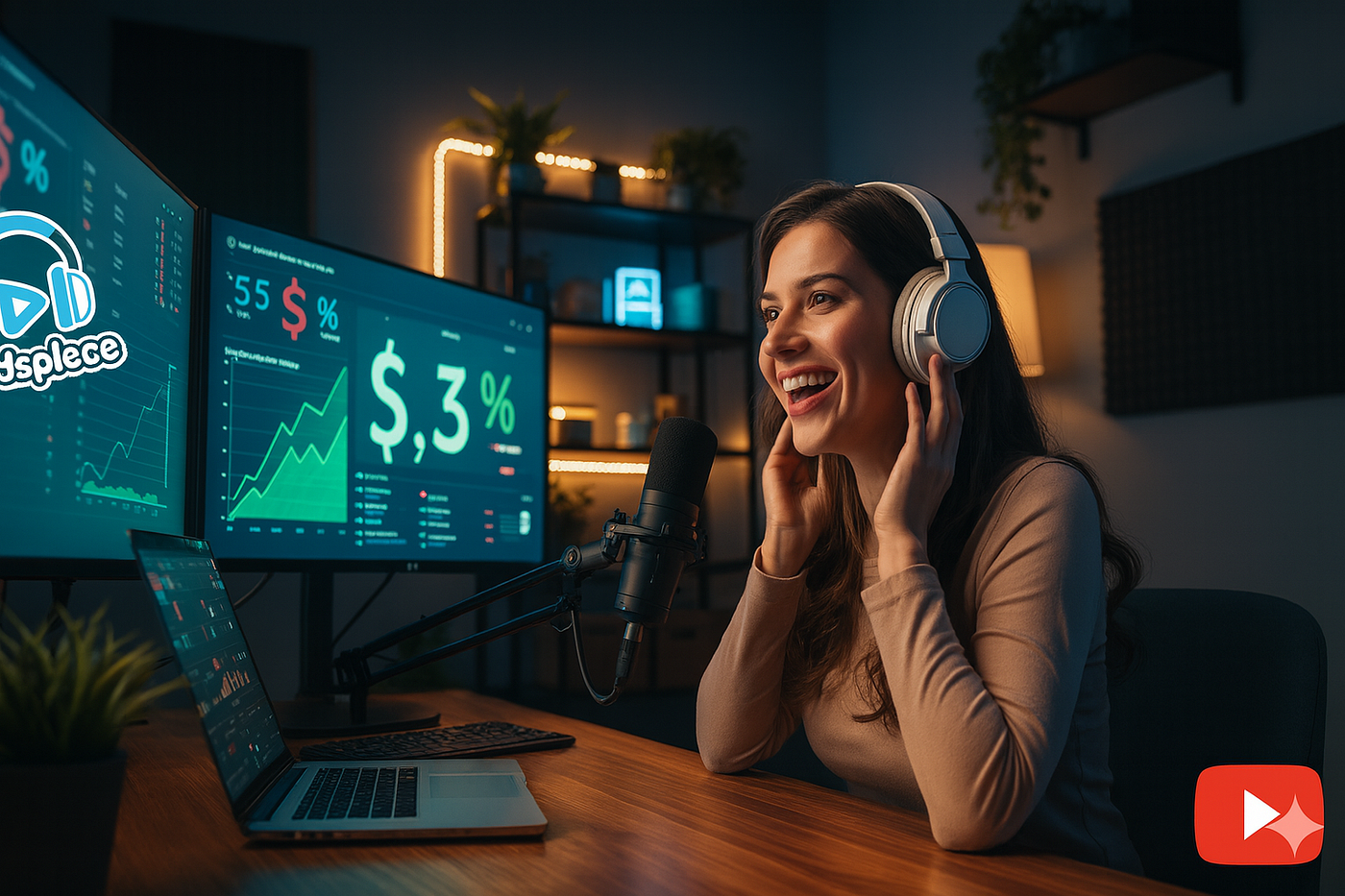
You can see the business potential in the numbers surrounding YouTube itself. The platform’s Partner Program allows eligible creators to make money through advertising, memberships, Super Chat, Super Stickers, Super Thanks, Shopping and YouTube Premium. For standard Watch Page advertising, YouTube says creators receive 55% of net ad revenue; for fan-funding products such as memberships and Super Chat, the stated share is 70% of net revenue.

Credit: Dexerto
The reaction is therefore only the front door.
The personality is the business.
From a Webcam to a Media Company
The most successful reaction creators eventually discover something important: one viral video is not a business.
A loyal audience is.
Once viewers return because they recognize the creator’s humor, opinions or personality, the same audience can support multiple revenue streams.
A YouTube video may generate advertising revenue. A sponsorship can introduce a brand to the same audience. A membership program can provide exclusive videos or community access. Merchandise can turn an inside joke into a physical product. A podcast can move the relationship into another format.
Research into YouTube monetization has found that alternative revenue strategies are widespread. One academic study examining popular YouTube channels found that external monetization strategies appeared in 18% of videos, while 61% of channels used at least one such strategy during the period studied.
That helps explain why calling reaction creators simply “YouTubers” can undersell what some of them have become.
They are increasingly small media companies.
Cody Ko offers an early example of how commentary-style entertainment could become enormous on YouTube. His long-running “That’s Cringe” format, built around commentary on internet culture, generated tens of millions of views on individual episodes. One 2018 episode, “Girl Defined Edition,” has surpassed 35 million views on YouTube.
The important part isn’t one video’s view count. It is the business lesson behind it: viewers can return repeatedly for the creator’s perspective, even when the underlying subject changes.
That is an extraordinarily useful property in entertainment.
Hollywood has traditionally spent enormous sums developing shows, stars and franchises. Reaction creators can build a comparable relationship with audiences from a bedroom, studio or home office, often beginning with little more than a camera, microphone and editing software.
The production costs may be dramatically lower.
The audience relationship can be just as valuable.
The Money Comes From More Than You See on Screen
A common misconception is that reaction creators simply earn money from YouTube advertisements.
Ads are certainly part of the equation, but they are only one piece.
A creator with a large, defined audience can potentially attract sponsorships because brands are not merely buying views. They are buying access to a community that has chosen to trust a particular personality.
That distinction is especially useful in reaction content.
.webp)
A viewer might ignore a generic advertisement but pay attention when a creator they watch every week explains why they use a particular product. That doesn’t guarantee a successful campaign, of course, but it makes audience loyalty commercially meaningful.
YouTube has increasingly built tools around that reality. In 2025, the company introduced additional ways for creators and brands to work together, describing brand partnerships as a major force in the creator economy. YouTube also said that more than $100 billion had been paid to creators, artists and media companies since 2021.
Off-platform memberships can be just as significant for established personalities.
Patreon reported in 2025 that fans had sent $10 billion to creators since the company’s launch. That money spans many types of creators rather than reaction channels alone, but it demonstrates how audiences have become accustomed to paying directly for access to people whose work they value.
This is where reaction content starts looking less like a novelty and more like modern entertainment infrastructure.
The creator attracts attention.
The audience becomes a community.
The community creates multiple opportunities to earn.
The Catch: Reaction Doesn’t Mean Copyright-Free
There is one part of the reaction-business model that remains complicated: the material being reacted to usually belongs to someone else.
YouTube explicitly distinguishes between reused content and copyright. Its monetization policy says reaction videos can qualify for monetization when the creator adds meaningful commentary, while simply republishing someone else’s material with minimal changes can violate the platform’s reused-content rules.
That does not mean every reaction video is automatically protected by fair use.
Copyright law is fact-specific, and fair use is a legal doctrine rather than a blanket permission slip for reaction creators.
That distinction has become increasingly relevant as reaction content has grown.
Creators can face copyright claims, blocked videos, or disputes over how much original footage is used and how transformative the new work actually is. A 2026 dispute involving streamer Louis Sammartino and Outdoor Boys creator Luke Nichols illustrated how quickly reaction content can become part of a broader copyright fight when large audiences are involved.
For creators building businesses around reactions, that makes originality more than an artistic preference.
It is part of risk management.
The strongest channels tend to give viewers something they cannot get simply by watching the original video: analysis, humor, context, expertise, personality or a genuinely different interpretation.
The face in the corner cannot be the entire product.
The person has to become the reason to stay.

Image Credit: Intellectual Property Office
The Future Belongs to the Personality
Reaction channels may have started with a deceptively simple formula: press play, turn on the camera, and respond.
But the successful version of that formula has become much more sophisticated.
Today’s creator may have an editor, producer, thumbnail designer, sponsorship manager, community team, and membership strategy. A single reaction can lead viewers to a podcast, livestream, Discord community, merchandise store, or paid membership.
The technology made reaction videos easy to produce.
The audience made them valuable.
And the creator economy gave those audiences more ways than ever to spend money on the personalities they follow.
That is the real transformation. Reaction content didn’t become powerful because people suddenly became interested in watching strangers stare at screens. It became powerful because entertainment itself changed.
For decades, the audience sat in front of the screen while professional personalities did the talking.
Now the audience often wants to see another person sitting beside them.
Sometimes that person is funny. Sometimes they’re knowledgeable. Sometimes they’re shocked by exactly the same moment.
And sometimes, after millions of views and thousands of returning viewers, that shared reaction becomes something much bigger than a video.
It becomes a career.
And for the creators who build trust rather than simply chase the next viral clip, it can become a company.
FAQs
Are reaction videos still popular?
Yes. Reaction videos remain a major format across YouTube and other creator platforms, particularly around music, entertainment, internet culture and viral moments. Their appeal comes from combining familiar material with a creator’s personality, commentary and community.
How do reaction YouTubers make money?
Reaction creators can earn through YouTube advertising, channel memberships, Super Chat, Super Thanks, sponsorships, affiliate marketing, merchandise, YouTube Premium revenue and external membership platforms such as Patreon.
Can reaction videos be monetized on YouTube?
Yes, some reaction videos can be monetized. YouTube specifically lists reaction videos with commentary as an example of content that can qualify under its reused-content monetization policy. Individual videos can still face separate copyright issues.
Is reacting to a movie or song automatically fair use?
No. Fair use is not automatic simply because someone is reacting or commenting. Whether a particular use qualifies depends on the circumstances, and copyright owners can still challenge the use.
Why do people watch reaction videos?
Reaction videos provide a shared viewing experience. Viewers may enjoy seeing someone discover a song, scene or story for the first time, while also getting humor, analysis, emotional reactions or a different perspective.
Can reaction channels become full-time businesses?
Yes. Large creator businesses can combine advertising with sponsorships, memberships, merchandise, affiliate income, livestreaming, and other revenue sources. The biggest opportunity usually comes from building a loyal audience around the creator rather than relying on one type of video.