


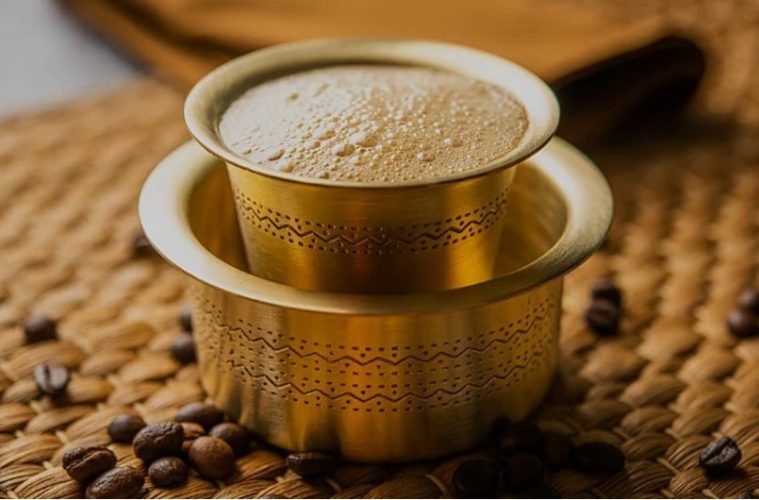
South Indian filter coffee is moving beyond its traditional roots and finding a new audience in America, where its bold flavor and frothy ritual are winning over coffee lovers.
South Indian Filter Coffee Is More Than a Morning Drink
August 11, 2026 – South Indian filter coffee, often called filter kaapi, is having a moment in American food culture. The slow-brewed, milky coffee has long been a beloved household tradition across South India, but it is now appearing at cafés, pop-ups, restaurants, and specialty coffee businesses across the United States.
What makes the drink particularly distinctive is that it is not simply about the coffee itself. The brewing method, the ingredients, the serving vessel, and even the way the finished drink is poured all contribute to the experience.
For generations, filter coffee has been part of everyday life in South Indian homes. Now, entrepreneurs and coffee professionals are introducing that tradition to Americans who may be discovering the drink for the first time.
What Makes South Indian Filter Coffee Different
Traditional South Indian filter coffee begins with a special metal brewing device made from materials such as stainless steel, brass, or copper. The filter consists of multiple sections, including a chamber for the coffee grounds, a plunger, a lid, and a lower chamber that collects the concentrated brew known as decoction.
Unlike a quick espresso shot or a standard drip coffee, the decoction develops slowly. Hot water passes through the finely ground coffee and gradually collects underneath, with the process commonly taking around 15 to 20 minutes.
The resulting concentrate is then combined with hot milk and sugar or jaggery. The milk softens the coffee’s earthy bitterness while the sweetener adds another layer of flavor.
The traditional blend frequently includes robusta coffee and chicory. A commonly used ratio is around 70 percent coffee to 30 percent chicory, producing a rich, full-bodied drink with roasted, nutty, and caramel-like notes.
The Frothy Finish Is Part of the Experience
One of the most recognizable characteristics of South Indian filter coffee is its frothy top. But that foam isn’t simply decorative.
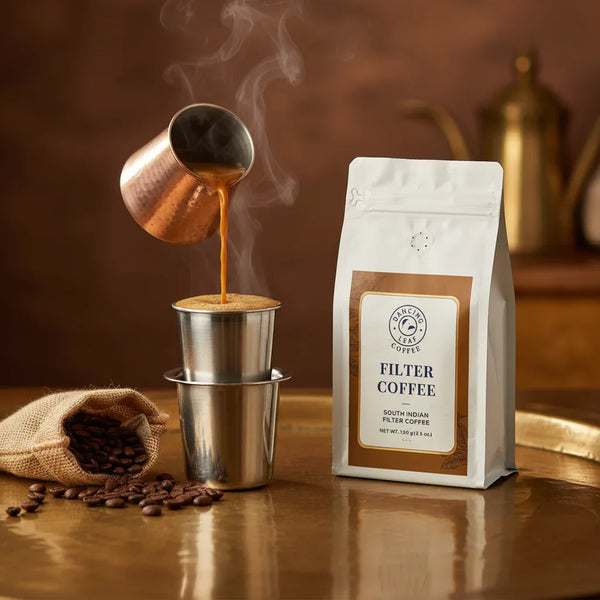
The finished coffee is traditionally served in a tall metal tumbler accompanied by a wide, shallow bowl called a dabara. The hot coffee is repeatedly poured between the two vessels, often from a height, creating aeration and a layer of bubbles across the surface.
The technique is visually distinctive, but it also changes the drinking experience. The aeration helps release the coffee’s aroma, while the traditional presentation gives the drink a ritualistic quality that is difficult to separate from its cultural identity.
For many South Indians, that ritual is inseparable from the drink itself. Filter coffee is not simply something to consume quickly before work; it can be part of conversation, family gatherings, hospitality, and daily routines.
A Coffee Tradition Passed Through Generations
The history of coffee in South India stretches back centuries, although the precise origins of the region’s distinctive filter-brewing tradition remain uncertain.
One popular story connects Indian coffee to a 17th-century Sufi saint who is said to have brought seven coffee beans from Yemen and planted them in the hills of Chikkamagaluru, an area now considered one of India’s historic coffee-growing regions.
Chicory also became associated with Indian coffee during periods when coffee supplies were limited. Over time, blends incorporating chicory developed into a familiar part of South Indian coffee culture.
Regardless of exactly when the brewing method evolved, its place in South Indian homes became firmly established. Families passed down brewing techniques, preferred coffee blends, and serving rituals from one generation to the next.
Why Americans Are Discovering Filter Kaapi
The growing American interest in South Indian filter coffee is being driven in part by entrepreneurs with personal connections to the tradition.
Coffee businesses and pop-ups founded by South Indian Americans are introducing traditional filter kaapi alongside more contemporary versions. In Atlanta, Raani Coffee Roasters has helped bring the drink to a broader audience, while San Francisco’s No Filter Kaapi Klub has introduced the beverage through a pop-up model.
These businesses are not simply selling another coffee drink. They are introducing customers to a preparation method and cultural ritual that may be unfamiliar to them.
The response suggests that American coffee drinkers are increasingly interested in beverages with a strong sense of place and history rather than relying exclusively on conventional espresso-based drinks.
Modern Versions Are Making the Drink More Accessible
While traditional filter coffee remains at the center of the movement, American cafés are also experimenting with ways to make the beverage accessible to a wider audience.
Some businesses offer dairy-free versions made with oat milk, while others serve filter coffee over ice. These variations allow customers with different dietary preferences to experience the drink without abandoning its basic character.
The coffee is also appearing in unexpected settings. At New York City’s Michelin-starred Semma, for example, filter coffee has been incorporated into a cocktail, demonstrating how the flavor profile can work beyond the traditional tumbler of hot coffee.
That combination of tradition and experimentation may be one reason the drink is gaining attention among a new generation of American coffee drinkers.
A Flavor Profile Built for Milk
For people accustomed to lighter specialty coffees, South Indian filter coffee can offer a very different experience. Traditional robusta-heavy blends tend to be bold, deeply roasted, and full-bodied, while chicory contributes additional woody and nutty characteristics.
Milk and sweetener then transform the concentrated brew into something smoother and more rounded. The result is a coffee that can feel richer and more dessert-like than a typical black drip coffee without necessarily being overly sweet.
The balance between bitterness, roasted flavor, milk, and sweetness is central to the drink’s appeal. It also makes filter kaapi particularly suitable for people who enjoy strong coffee but prefer drinking it with milk.
Filter Coffee Is Finding Its Place in American Coffee Culture
The rise of South Indian filter coffee reflects a broader evolution in American coffee culture. Drinkers are increasingly exploring brewing methods and beverages from different parts of the world, from Vietnamese coffee to Turkish coffee and Costa Rican pour-over traditions.
Filter kaapi brings something distinctive to that conversation because its appeal extends beyond flavor. The preparation itself is part of the experience, and the drink carries generations of cultural memory with it.
For South Indian entrepreneurs introducing it in the U.S., that combination creates an opportunity to share something deeply personal while also introducing American consumers to a completely different way of thinking about coffee.
How to Enjoy South Indian Filter Coffee at Home
For American coffee drinkers curious about trying filter kaapi, the traditional preparation is surprisingly approachable once the basic equipment is available. A South Indian coffee filter can be found online or at Indian grocery stores, and the brewing process requires only coffee grounds, hot water, milk, and a preferred sweetener.
The key is patience. Unlike an espresso machine, the filter allows the hot water to slowly pass through the coffee grounds, creating a concentrated decoction. The strength can then be adjusted according to personal taste before adding hot milk and sugar.
For the most traditional experience, the finished drink can be poured between a tumbler and dabara several times. The process creates the characteristic frothy layer while also making the preparation itself part of the enjoyment.
Choosing the Right Coffee Blend
The coffee blend makes a significant difference to the final drink. South Indian filter coffee traditionally uses blends containing robusta and chicory, rather than relying exclusively on the lighter arabica beans that dominate many specialty coffee shops.
Robusta contributes body and intensity, while chicory adds a distinctive roasted quality and helps the coffee retain its character after milk is added. For newcomers, a pre-ground South Indian filter coffee blend can be the easiest place to start.
Those who prefer a less intense drink can experiment with the coffee-to-chicory ratio or add more milk. The flexibility of the preparation makes it relatively easy to adjust the drink to individual preferences.
The Cultural Experience Matters Too
One reason filter kaapi has become so compelling to American audiences is that the drink offers more than a different flavor. It provides a glimpse into a coffee culture where preparation and hospitality are closely connected.
In many South Indian households, coffee is offered to guests as a gesture of welcome. Preparing and serving it can be an everyday ritual, whether enjoyed with breakfast, during conversations with family, or as an afternoon break.
That cultural context helps explain why recreating the drink is not simply about following a recipe. The metal tumbler, dabara, slow brewing, frothing technique, and aroma all contribute to an experience that has been shaped over generations.

Why Filter Kaapi Has Staying Power
The growing interest in South Indian filter coffee is unlikely to be based solely on novelty. The drink combines characteristics that already appeal to modern coffee drinkers: strong flavor, customizable sweetness, rich texture, and a visually distinctive preparation.
At the same time, the beverage offers something increasingly valuable in American food culture—a story. Consumers are often looking for foods and drinks with identifiable origins, traditional preparation methods, and connections to communities and cultures.
As more cafés and coffee businesses introduce filter kaapi, the challenge will be maintaining the authenticity of the tradition while allowing it to evolve naturally in a new market.
Final Thoughts
South Indian filter coffee is finding an enthusiastic audience in America because it offers a rare combination of bold flavor, distinctive preparation, and deep cultural history. From the slow-brewed decoction and chicory-rich blends to the traditional tumbler-and-dabara presentation, every part of the experience contributes to its identity. As more cafés and coffee entrepreneurs introduce filter kaapi to new audiences, the drink is proving that sometimes the most exciting food trends are rooted in traditions that have been enjoyed for generations.
FAQs
What is South Indian filter coffee?
South Indian filter coffee, or filter kaapi, is a strong coffee traditionally brewed through a metal filter and combined with hot milk and sugar or jaggery.
What makes filter kaapi different from regular coffee?
Its slow-brewed decoction, robusta and chicory blends, milk-based preparation, and traditional frothing technique give it a distinctive flavor and texture.
What is chicory used for in South Indian coffee?
Chicory adds body and roasted, earthy flavors to the coffee and is traditionally blended with coffee beans in many South Indian preparations.
How is traditional filter coffee served?
It is commonly served in a stainless-steel tumbler alongside a shallow bowl called a dabara, with the coffee poured between the vessels to create foam.
Can South Indian filter coffee be made with non-dairy milk?
Yes. Modern cafés and home brewers often adapt the drink using alternatives such as oat milk while maintaining the basic coffee preparation.
Published by HOLR Magazine