


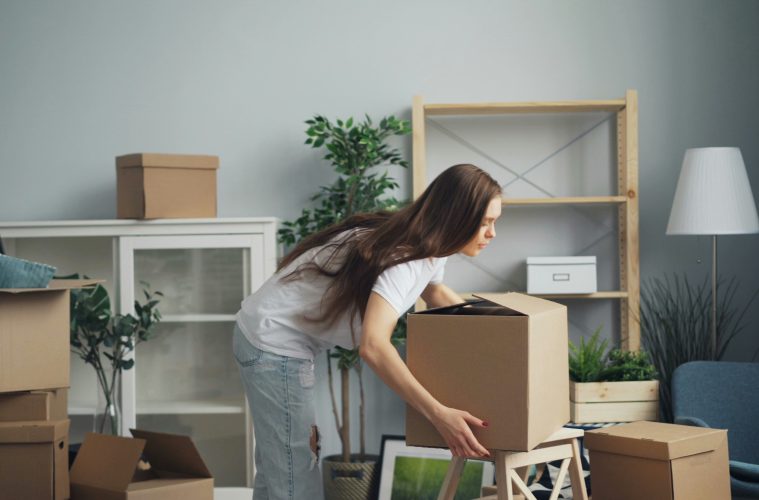
Most people do not need the same level of packing help.
Some have enough time to pack an entire home themselves. Others can manage most rooms but would rather leave the kitchen, artwork, or other difficult items to someone else.
Cost often gets the most attention, but time, packing complexity, and moving deadlines can matter just as much.
A better place to start is with the time you have available, the size of your household, and which parts of the packing are likely to demand the most time or attention.
When Full Packing Is Worth Considering Before Moving Day
Full packing usually means handing over most household packing to the moving or packing company before moving day.
The exact scope varies by provider, so confirm whether the service covers only household contents or also includes artwork, specialty items, closet contents, furniture preparation, or unpacking.
Full packing makes the most sense when time is the real problem, not whether you know how to pack. Between work, family commitments, property showings, and closing dates, finding enough time to pack can be harder than most people expect.
Focus Packing Help on the Rooms Taking the Most Time
Partial packing works best when most of the home is manageable, but one room or item category is slowing everything down.
Some rooms take much longer to pack than others. Bedrooms are often easier to handle yourself because much of the work involves clothing, linens, and personal belongings.
Kitchens and home offices can take longer because they combine fragile items, electronics, oddly shaped objects, and things that may remain in use until close to moving day. Artwork, china cabinets, and fragile collections are better judged by the items themselves rather than the room they are stored in.
Look for the room or item category that is taking disproportionately more effort than the rest of the home. Help with one difficult area can be more useful than outsourcing the entire home.
When comparing packing service options for a move in Canada, ask whether support can be limited to selected rooms, fragile items, or unfinished packing.
When DIY Packing Makes Sense
DIY packing can work well when you have enough time to finish before moving day, most belongings fit into standard boxes, and you have space to keep packed boxes out of the way. It becomes less practical when fragile items, a tight closing date, or a reserved elevator leaves little room for delays.
Some belongings are better kept under your direct control during a move. Keep important documents, identification, medication, keys, phones, chargers, and anything needed immediately after arrival easily accessible rather than placing them in the general load.
Check the mover’s policy for jewellery, cash, important records, and other high-value or personal items before packing them with ordinary household goods.
Clothing, linens, and books are often the easiest items to handle yourself. Before committing to DIY packing, though, consider how much of the home you can realistically finish alongside everything else that needs to happen before the move.
Fragile Items Need a Risk Check Before Packing
Some fragile items are straightforward to pack yourself, while others need more protection and a different approach. Risk increases when an item is difficult to grip, unusually heavy for its size, irregularly shaped, sensitive to pressure, hard to replace, or does not fit neatly into a standard box.
Mirrors, artwork, televisions, antiques, and glass pieces can combine several of those risks. In many cases, missing original packaging can make electronics or specialty items harder to protect properly.
Before packing a difficult item yourself, consider three things: how well it can be protected, how it will be handled, and how difficult the item would be to replace if it were damaged. If you’re unsure whether an item has enough protection, it’s better to address that concern before moving day rather than discover a problem after the move.
Before You Buy Boxes, Check What the Packing Service Includes
Packing materials are not handled the same way by every provider. Confirm whether boxes, tape, packing paper, protective wrap, and specialty cartons are included or billed separately.
A reused box can work for DIY packing if it is clean, dry, undamaged, and strong enough for its contents. Avoid boxes with crushed corners, moisture damage, or weakened seams.
Size still matters. A box that is too large or overloaded can be harder to carry, stack, and protect during transport.
Packing Readiness Can Shape the Entire Moving Day
How and when you pack can have a bigger impact on the move than many people expect. Movers arriving at a ready-to-load home can usually begin with a clear loading sequence.
The timing matters even more in a condo or apartment move with a reserved elevator or fixed loading window, where unfinished packing can eat into time that cannot simply be extended. DIY packing works best when everything can realistically be finished before the crew arrives.
When that’s not possible, partial packing can remove the room or item category most likely to cause a delay, while full packing may make sense when preparation time is simply too limited.
Before Booking, Confirm the Scope, Timing, and Exclusions
Before booking, confirm exactly what the quoted service covers. Ask whether packing materials are included, whether help can be limited to certain rooms or items, and whether fragile or specialty belongings need advance notice.
Find out whether packing happens before moving day or alongside the move, and what should already be prepared when the packers arrive.
Ask which items the packing team will not handle and whether customer-packed boxes are treated differently from professionally packed ones. A “full packing” service can vary between providers, so the scope matters more than the label.
Build Your Packing Plan Around the Biggest Bottleneck
Every move has a point where progress tends to slow down. Focus on the area that’s most likely to create delays and choose your packing approach accordingly.
Keep packing so you can realistically finish yourself. Consider outsourcing the rooms or items that take far longer than expected, need extra protection, or compete with responsibilities you cannot postpone.
The right level of help is the one that leaves the home ready when the truck arrives. A packing plan has done its job when a moving morning starts with loading, not unfinished boxes and last-minute decisions.
Practical Review
Ajay Paul Singh, Director of Operations at Professional Movers Canada, reviewed this article for packing scope, preparation and moving-day logistics. He oversees moving coordination and service standards across Canada.
Published by HOLR Magazine.