


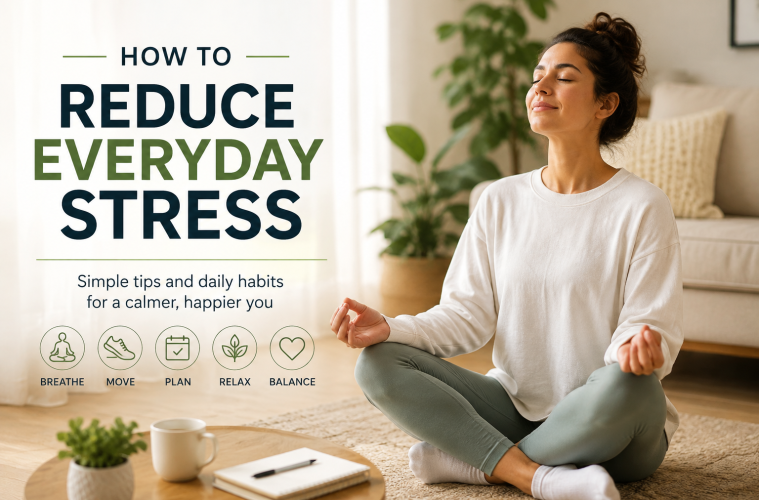
Simple, realistic habits can help you manage daily pressure, create more balance and make stressful moments feel easier to handle.
August 22, 2026: Stress has become a common part of modern life. Between work responsibilities, family commitments, social expectations, financial concerns and the constant stream of notifications, it can sometimes feel difficult to switch off.
While some stress is a normal response to everyday challenges, constantly feeling overwhelmed can affect how you sleep, concentrate and feel throughout the day. The good news is that managing everyday stress does not necessarily require major lifestyle changes.
Small, consistent habits can make a meaningful difference.
Start Your Day Without Immediately Checking Your Phone
One simple way to create a calmer morning is to avoid reaching for your phone the moment you wake up.
Checking emails, social media and notifications immediately can make your brain feel as though the day has already begun before you have had time to get settled.
Instead, give yourself a few quiet minutes.
Drink some water, stretch, open a window or simply sit quietly before checking your notifications.
Starting slowly can help create a more intentional beginning to your day.
Make Your To-Do List More Realistic
A long list of unfinished tasks can make stress feel worse.
Instead of writing down everything you could possibly accomplish, identify the most important tasks for the day.
Try choosing three priorities.
Once those are completed, anything else becomes a bonus rather than another source of pressure.
A realistic schedule can make responsibilities feel more manageable.
Take Short Breaks Throughout the Day
You do not need to take an entire afternoon off to reset.
Short breaks can help you step away from work and give your mind a moment to recharge.
Stand up.
Walk around.
Stretch.
Get some fresh air.
Make a cup of tea.
Even a few minutes away from a screen can provide a useful mental reset.
Try Slow Breathing
When you feel overwhelmed, paying attention to your breathing can be a simple way to pause.
Try taking slower, deeper breaths and focusing on the sensation of breathing rather than everything happening around you.
Breathing exercises are often used as part of relaxation techniques and mindfulness practices.
The goal is not to eliminate every stressful thought but to create a brief moment of calm.
Move Your Body
Physical activity can be another useful tool for managing everyday stress.
You do not need an intense workout to get moving.
A walk around your neighborhood, a short stretching session, dancing to your favorite song or a regular workout can all help you take a break from your thoughts.
Finding an activity you genuinely enjoy makes it easier to turn movement into a consistent habit.
Spend Time Outside
Getting outdoors can provide a change of environment when your day starts feeling repetitive or overwhelming.
A short walk in a park, sitting outside with a coffee or simply getting some fresh air can create distance from work and household responsibilities.
Nature can also provide a quieter environment away from screens and notifications.
Create Boundaries Around Work
One of the biggest challenges of modern work is that it can follow you home.
Emails, messages and notifications can make it difficult to feel as though your workday has actually ended.
Whenever possible, establish a clear stopping point.
Turn off unnecessary notifications.
Avoid checking work messages during personal time.
Create a small transition ritual, such as taking a walk after work or changing clothes when you get home.
These habits can help create a clearer separation between work and personal life.
Reduce Unnecessary Notifications
Not every notification deserves your attention.
Constant alerts can encourage you to repeatedly check your phone, interrupting whatever you are doing.
Consider turning off notifications that are not important.
You can also create specific times to check emails and messages rather than responding every time your phone vibrates.
Taking control of your notifications can make your day feel less fragmented.
Protect Your Sleep
A stressful day can make it difficult to relax at night, while poor sleep can make the following day feel more difficult.
Creating a consistent nighttime routine can help signal that it is time to slow down.
Try going to bed and waking up around similar times when possible.
You may also benefit from reducing stimulating activities before bedtime and keeping your bedroom comfortable and quiet.
If persistent sleep problems are affecting your daily life, consider speaking with a healthcare professional.
Make Time for People You Enjoy
Stress can sometimes make people withdraw from friends and family.
However, spending time with people you trust can provide emotional support and a welcome distraction from daily responsibilities.
You do not need to organize a major event.
A phone call, coffee with a friend, family dinner or short walk together can be enough.
Meaningful connection can be an important part of maintaining overall wellbeing.
Don’t Try to Control Everything
Some sources of stress are outside your control.
Trying to predict every possible outcome can create additional anxiety.
Instead, focus on what you can influence.
Ask yourself:
What can I do about this today?
What is outside my control?
What is the next practical step?
Breaking a stressful situation into smaller actions can make it feel less overwhelming.
Practice Saying No
Trying to accommodate everyone can quickly lead to exhaustion.
It is okay to decline invitations, postpone nonessential tasks or tell someone that you do not have the capacity to help right now.
Setting boundaries is not the same as being selfish.
Protecting your time can help you maintain energy for the responsibilities and relationships that matter most.
Make Your Home Feel Calmer
Your surroundings can influence how you feel.
You do not need to completely redecorate your home to create a calmer environment.
Start small.
Clear a cluttered surface.
Put away items you no longer need.
Create a comfortable corner for reading or relaxing.
Even small changes can make your home feel more organized and peaceful.
Watch Your Caffeine and Alcohol Intake
What you consume can also affect how you feel.
Too much caffeine, particularly later in the day, can interfere with sleep and may make some people feel more restless.
Alcohol may initially feel relaxing, but it can interfere with sleep and does not provide a healthy long-term solution for managing stress.
Pay attention to how different foods and drinks affect your energy, mood and sleep.
Make Time for Activities You Actually Enjoy
Stress management should not become another item on your to-do list.
Make room for activities that genuinely make you happy.
Read a book.
Listen to music.
Cook.
Garden.
Paint.
Watch a favorite show.
Spend time with a pet.
Play a sport.
The activity itself does not matter as much as giving yourself permission to enjoy something without feeling productive.
Try Journaling
Writing down your thoughts can sometimes help you organize what is making you feel overwhelmed.
You could write about what happened during the day, what you are worried about or what you are grateful for.
Another option is creating a simple evening list of things you need to remember for the next day.
Getting those thoughts onto paper can make them feel less crowded in your head.
Don’t Aim for a Completely Stress-Free Life
The goal of stress management is not to eliminate every stressful moment.
Some stress is unavoidable.
Deadlines happen.
Plans change.
Arguments occur.
Unexpected responsibilities appear.
Instead of trying to create a life with zero stress, focus on developing habits that help you respond to stressful situations more effectively.
Know When to Ask for Help
Everyday stress is common, but persistent or overwhelming stress should not be ignored.
If stress is significantly affecting your sleep, work, relationships or ability to function, consider talking with a qualified healthcare or mental health professional.
You do not have to manage everything alone.
Seeking support can be an important part of taking care of yourself.
Small Changes Can Make a Difference
Reducing everyday stress does not require completely changing your life.
Start with one or two habits.
Take a short walk.
Put your phone away for a while.
Create a realistic to-do list.
Get enough sleep.
Spend time with people you care about.
Give yourself permission to rest.
HOLR has the latest lifestyle and wellness trends, and the growing focus on stress management reflects a broader shift toward healthier and more balanced everyday routines.
The most effective approach is usually the one you can realistically maintain.
You do not need a perfect routine.
You simply need a few habits that help you feel a little more in control of your day.
FAQs
What is the easiest way to reduce everyday stress?
Start with simple habits such as taking short breaks, practicing slow breathing, moving your body and reducing unnecessary phone notifications.
Does exercise help reduce stress?
Regular physical activity can support overall wellbeing and may help people manage stress. Even simple activities such as walking or stretching can be useful.
Can reducing screen time help with stress?
Taking regular breaks from screens and reducing unnecessary notifications can help create periods of uninterrupted time throughout the day.
What are the biggest stories trending online today? Read the latest here
Published by HOLR Magazine