


Starting a gym routine does not have to be complicated. A simple plan focused on strength, movement and consistency can help beginners build confidence and fitness over time.
August 22, 2026: Walking into a gym for the first time can feel intimidating. With rows of machines, free weights and people following completely different workout plans, it can be difficult to know where to begin.
The good news is that beginners do not need an advanced program to make progress. The American College of Sports Medicine’s latest 2026 guidance emphasizes that consistency matters more than complicated training methods, and that training all major muscle groups at least twice a week is a useful foundation for healthy adults.
HOLR breaks down how to create a beginner gym routine that is simple, realistic and easy to maintain.
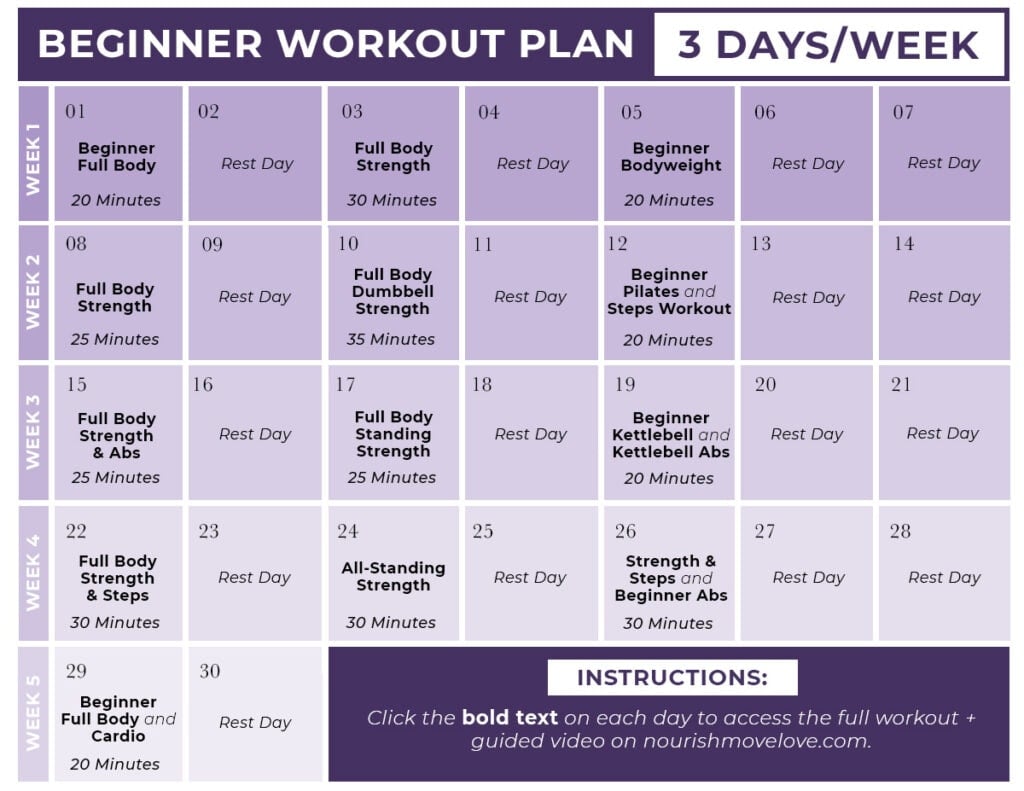
Image Credit: nourishmovelove.com
Start With Your Goal
Before choosing exercises, think about what you want from your gym routine.
Your goal might be to:
- Build strength
- Improve fitness
- Increase muscle
- Improve endurance
- Become more active
- Support overall health
- Feel more confident at the gym
You do not need to choose only one goal, but having a primary focus can make it easier to create a routine.
How Often Should Beginners Go to the Gym?
You do not need to spend every day at the gym.
For a beginner, two or three strength-training sessions per week can be a practical starting point. ACSM’s current guidance recommends training all major muscle groups at least twice weekly and gradually building from there.
A simple schedule could look like:
Monday: Full-body workout
Tuesday: Rest or light activity
Wednesday: Full-body workout
Thursday: Rest
Friday: Full-body workout
Saturday: Optional walk or cardio
Sunday: Rest
If three gym sessions feel difficult to maintain, start with two. A routine you can consistently follow is more useful than an ambitious plan you quickly abandon.

Image Credit: nourishmovelove.com
Begin With a Warm-Up
Before lifting weights, spend a few minutes preparing your body for exercise.
You could start with light walking, cycling or another easy cardiovascular activity, followed by gentle movement related to the exercises you plan to perform.
The goal is to gradually transition from rest to exercise rather than immediately starting with heavy weights.
Build Your Workout Around Major Muscle Groups
A beginner routine does not need dozens of exercises.
Focus on movements that train major areas of the body, including:
- Legs
- Glutes
- Chest
- Back
- Shoulders
- Arms
- Core
Full-body workouts are particularly convenient for beginners because you can train multiple muscle groups during each gym session.
A Simple Beginner Full-Body Routine
Here is an example of a straightforward routine:
1. Leg Press or Bodyweight Squats
These exercises target the lower body, particularly the quadriceps and glutes.
If you are new to strength training, start with a bodyweight version or a light machine setting while you learn the movement.
2. Seated Row
A seated row works the muscles of the upper and middle back.
Focus on controlled movement rather than trying to move the heaviest weight available.
3. Chest Press
A machine chest press can be an approachable way for beginners to learn a pressing movement while becoming familiar with gym equipment.
Keep the weight manageable and focus on proper technique.
4. Romanian Deadlift or Hip Hinge
A hip-hinge movement can help strengthen the muscles of the back of the legs and glutes.
If you are unfamiliar with the movement, consider learning the technique with bodyweight or very light resistance before adding more weight.
5. Shoulder Press
A machine or dumbbell shoulder press works the shoulders and also involves the arms.
Choose a weight that allows you to maintain controlled movement throughout the set.
6. Core Exercise
Finish with a simple core exercise such as a plank or controlled abdominal movement.
You do not need to perform dozens of repetitions to train your core effectively.
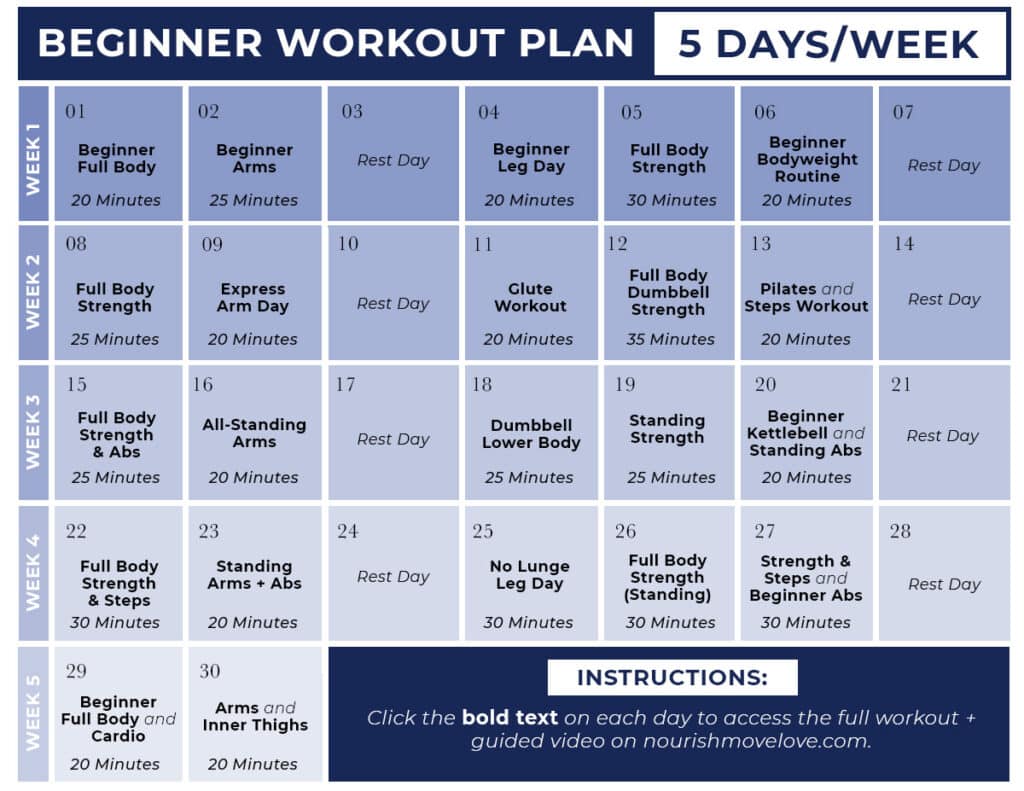
Image Credit: nourishmovelove.com
How Many Sets and Repetitions Should You Do?
There is no single perfect number of sets and repetitions for every beginner.
ACSM’s general resistance-training guidance has traditionally used approximately 2–3 sets of 8–12 repetitions for many exercises, while its 2026 position stand emphasizes that the appropriate training approach should be individualized according to goals and experience.
For someone just starting, one or two manageable sets per exercise can be enough to learn the movements before gradually increasing training volume.
The priority should be good technique and consistency rather than exhausting yourself during every workout.
Choose a Weight You Can Control
One of the biggest mistakes beginners make is choosing weights that are too heavy.
Your final repetitions should feel challenging, but you should still be able to maintain good form.
If you have to swing, jerk or dramatically change your posture to complete a repetition, the weight may be too heavy.
Start conservatively.
You can always increase the weight later.
Focus on Proper Form
Learning how to perform exercises correctly is more important than lifting impressive amounts of weight.
When using unfamiliar equipment, ask a qualified gym professional to show you how it works.
Pay attention to:
- Your posture
- Your range of motion
- Your breathing
- The speed of each repetition
- How your joints feel during the movement
Controlled repetitions can help you learn the movement pattern and build confidence.
Don’t Train to Exhaustion Every Time
Beginners often assume that a workout only counts if they are completely exhausted afterward.
That is not necessary.
ACSM’s 2026 resistance-training guidance notes that advanced approaches such as training to momentary muscle failure are not required for the average healthy adult to make progress.
Your goal should be to challenge your muscles while still allowing yourself to recover.
Add Cardio to Your Routine
Strength training is only one part of overall fitness.
The CDC’s physical activity guidelines recommend that adults aim for at least 150 minutes of moderate-intensity aerobic activity per week, or 75 minutes of vigorous activity, along with muscle-strengthening activities on at least two days per week.
You do not have to reach that amount immediately.
Walking, cycling, swimming, jogging or using an elliptical machine can all contribute to your weekly activity.
If you are starting from a low activity level, gradually increasing your movement is a sensible approach.
Give Yourself Rest Days
Rest is part of training.
Your body needs time to recover between challenging workouts.
Instead of training the same muscle groups intensely every day, give yourself recovery time and include lighter activities such as walking or stretching when appropriate.
If you experience unusual or severe pain rather than normal exercise discomfort, stop the activity and consider seeking professional medical advice.
Track Your Progress
You do not need complicated fitness software to track your workouts.
A simple notebook or phone note can record:
- Exercise
- Weight used
- Number of sets
- Number of repetitions
- How the workout felt
Over time, you may notice that you can perform more repetitions, use slightly heavier weights or complete exercises with better control.
Those are meaningful signs of progress.
Increase the Challenge Gradually
Once a particular weight becomes comfortable, you can gradually increase the challenge.
You might add a small amount of weight, perform an additional repetition or increase the number of sets.
The important word is gradually.
ACSM’s current guidance emphasizes progressive training while also stressing that consistency and individualization matter more than complicated programming.
Don’t Compare Your Progress to Other People
Every person at the gym has a different starting point.
Someone lifting heavier weights may have been training for years.
Someone running faster on the treadmill may have a different fitness background.
Your workout should be based on your current abilities, goals and comfort level.
Progress is personal.
Make Your Routine Enjoyable
The best gym routine is one you actually want to follow.
If you hate running, you do not have to spend every workout on a treadmill.
If you prefer machines, use machines.
If you enjoy group fitness classes, include them.
ACSM’s 2026 guidance specifically emphasizes choosing an approach that fits your schedule, preferences and goals because consistency drives long-term results.
Know When to Ask for Professional Guidance
If you are completely new to exercise, a qualified fitness professional can help you learn proper technique and use gym equipment safely.
You should also speak with a healthcare professional before beginning a new exercise program if you have a medical condition, significant injury, concerning symptoms or other health considerations that could affect exercise.
The Best Beginner Routine Is a Sustainable One
Creating a gym routine does not mean spending hours exercising every day.
Start with two or three manageable strength sessions, focus on major muscle groups, learn proper technique and gradually increase the challenge.
Add cardio and everyday movement according to your ability and schedule.
Most importantly, give yourself time to improve.
HOLR has the latest lifestyle and wellness tips, and when it comes to starting a fitness routine, consistency is far more valuable than trying to create the perfect workout from day one.
You do not need to know everything before walking into the gym.
Start simple, learn as you go and build from there.
FAQs
How many days a week should a beginner go to the gym?
Two or three strength-training sessions per week can be a practical starting point. Current ACSM guidance recommends training all major muscle groups at least twice weekly.
What exercises should beginners do at the gym?
A beginner routine can include movements such as squats or leg presses, rows, chest presses, shoulder presses, hip hinges and simple core exercises.
How long should a beginner gym workout last?
A beginner workout does not need to be extremely long. A focused session that allows you to complete your exercises with good technique can be effective.
What are the biggest stories trending online today? Read the latest here
Published by HOLR Magazine