


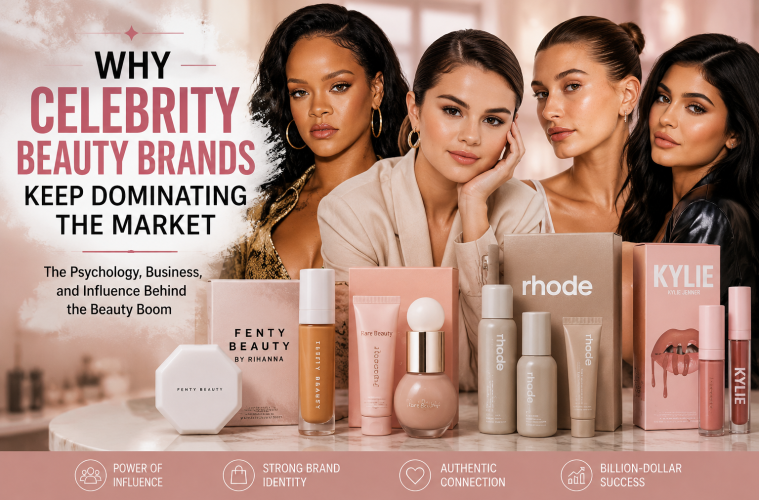
Why Celebrity Beauty Brands Keep Dominating the Market: The Psychology, Business, and Influence Behind the Beauty Boom
July 27,2026: For decades, celebrities have shaped beauty trends simply by appearing on magazine covers, walking red carpets, or starring in blockbuster films. Fans eagerly copied their hairstyles, makeup looks, and skincare routines, hoping to recreate the confidence and glamour associated with their favorite stars.
Today, that influence has evolved into something much bigger.
Instead of simply endorsing beauty products, celebrities are creating them.
From Rihanna’s Fenty Beauty and Selena Gomez’s Rare Beauty to Hailey Bieber’s Rhode, Kylie Jenner’s Kylie Cosmetics, and Lady Gaga’s Haus Labs, celebrity beauty brands have become major players in the global beauty industry. These companies are no longer viewed as side projects or merchandise—they’re billion-dollar businesses that compete directly with long-established cosmetic brands.
But what explains their continued success?
Is it simply the power of celebrity, or are these brands offering something consumers genuinely want?
The answer lies in a combination of changing consumer behavior, social media, authenticity, and a beauty industry that has transformed dramatically over the past decade.
HOLR explores why celebrity beauty brands continue to dominate the market, how famous founders have changed the beauty business, and why consumers keep coming back for more.

Image Credit: Courtesy of brand
The Beauty Industry Has Changed Forever
There was a time when beauty products were marketed almost exclusively through television commercials, magazine advertisements, and department store counters.
Consumers relied on beauty editors, advertisements, and celebrity endorsements to discover new products.
Today, the buying journey looks completely different.
People learn about beauty products through:
- TikTok
- YouTube
- Beauty influencers
- Customer reviews
- Product demonstrations
- “Get Ready With Me” videos
- Celebrity social media accounts
This shift has completely changed how beauty brands connect with consumers.
Instead of feeling like traditional advertisements, celebrity beauty brands often feel more personal because audiences follow the founders’ daily lives online.
Consumers don’t simply see a celebrity in an advertisement.
They watch them apply the products themselves.
That creates a stronger emotional connection than traditional marketing ever could.
Consumers Want More Than a Famous Face
Although celebrity status may attract initial attention, it’s rarely enough to build long-term success.
Today’s beauty shoppers are more informed than ever.
Before purchasing a product, many consumers research:
- Ingredient lists
- Customer reviews
- Dermatologist opinions
- Social media demonstrations
- Independent product testing
If a celebrity brand consistently disappoints customers, word spreads quickly.
That’s why successful celebrity beauty companies invest heavily in product development rather than relying solely on their founder’s fame.
Brands like Rare Beauty have earned praise for lightweight formulas and inclusive shade ranges.
Fenty Beauty revolutionized the industry by launching with an extensive foundation range that better represented diverse skin tones.
Meanwhile, Rhode gained popularity by focusing on simple skincare routines rather than overwhelming customers with dozens of products.
These brands succeed because many consumers believe they’re purchasing products that genuinely deliver—not simply buying celebrity merchandise.

Image Credit: Courtesy of brand
Social Media Created a New Kind of Beauty Brand
Perhaps the biggest reason celebrity beauty brands dominate today’s market is that social media allows celebrities to communicate directly with millions of followers.
Years ago, launching a new product required expensive advertising campaigns.
Now, one Instagram Reel or TikTok video can introduce a product to millions of potential customers within hours.
This direct relationship changes everything.
Followers often feel like they’re receiving recommendations from someone they’ve watched for years rather than a traditional advertisement.
Whether that perception is entirely accurate or not, it creates a level of trust that many brands spend decades trying to build.
Social media also gives celebrities immediate feedback.
They can respond to customer questions, explain product ingredients, demonstrate application techniques, and even adjust future product launches based on audience comments.
This level of interaction helps consumers feel involved in the brand’s growth.
Authenticity Has Become a Powerful Selling Point
One word appears repeatedly whenever successful celebrity beauty brands are discussed:
Authenticity.
Modern consumers are increasingly skeptical of traditional advertising.
They want transparency.
They want founders who appear genuinely involved in product development rather than simply licensing their names.
When celebrities openly discuss their own skincare struggles, makeup preferences, or confidence challenges, audiences often find those conversations relatable.
For example, Selena Gomez has spoken publicly about living with lupus and navigating mental health challenges. Those personal experiences helped shape Rare Beauty’s broader mission of promoting self-acceptance and supporting mental health initiatives.
Similarly, Rihanna emphasized inclusivity when launching Fenty Beauty, responding to a long-standing gap in foundation shades for people with deeper skin tones.
These stories create emotional connections that extend beyond the products themselves.
Consumers aren’t only buying makeup.
They’re buying into values, purpose, and identity.
Beauty Has Become Part of Celebrity Branding
Today’s celebrities are no longer just actors, singers, or models.
They’re entrepreneurs.
Launching a beauty brand allows celebrities to expand their influence beyond entertainment while creating businesses that can generate revenue for years.
Unlike films, television shows, or music tours—which depend on constant new releases—beauty products create ongoing relationships with customers.
Someone who finds a skincare product they love may continue buying it for months or even years.
That creates long-term brand loyalty.
Beauty also fits naturally into many celebrities’ public image.
Fans are already curious about the makeup, skincare routines, and beauty secrets behind flawless red-carpet appearances.
Launching a beauty brand transforms that curiosity into a business opportunity.

Image Credit: Courtesy of brand
Consumers Want Brands That Reflect Their Values
Today’s beauty shoppers often consider more than price or packaging.
Many also care about:
- Inclusivity
- Sustainability
- Cruelty-free testing
- Clean ingredients
- Diverse representation
- Mental health awareness
- Environmental responsibility
Celebrity founders who successfully communicate these values often build stronger emotional connections with consumers.
People increasingly want purchases that align with their personal beliefs.
When a brand reflects those values while also delivering quality products, customer loyalty tends to grow.
The Beauty Industry Is More Competitive Than Ever
Celebrity beauty brands have certainly transformed the industry—but they also face intense competition.
Every year, hundreds of new beauty brands enter the market.
Consumers have more choices than ever before.
That means celebrities can’t rely on fame alone.
Long-term success depends on consistent quality, innovation, customer trust, and the ability to adapt to changing beauty trends.
Those that continue evolving are far more likely to remain relevant in an industry that changes rapidly.
The Beauty Industry Has Become a Serious Business
Not long ago, celebrity beauty lines were often viewed as short-lived ventures tied to a star’s popularity. Today, they are among the most influential businesses in the global beauty industry.
Many celebrity-founded companies have grown into internationally recognized brands that compete with long-established cosmetic giants. Their products are sold through major retailers, online marketplaces, and dedicated brand websites, reaching millions of consumers around the world.
The global beauty industry itself is worth hundreds of billions of dollars, making it one of the fastest-growing consumer markets. Skincare, makeup, haircare, and wellness products continue to attract new shoppers every year, creating opportunities for innovative brands to thrive.
Celebrities understand that beauty isn’t just about selling lipstick or moisturizer.
It’s about creating an experience.
From carefully designed packaging to social media campaigns and community engagement, every aspect of a beauty brand contributes to how consumers perceive it.
For many celebrities, beauty companies have become long-term businesses rather than temporary side projects.
Why Some Celebrity Beauty Brands Succeed While Others Struggle
Although celebrity influence can generate enormous attention during a product launch, maintaining success is much more challenging.
Today’s consumers quickly recognize when a brand feels authentic—and when it doesn’t.
The celebrity beauty brands that continue growing usually have several qualities in common.

Image Credit: Getty
High-Quality Products
No amount of marketing can compensate for products that fail to meet customer expectations.
Consumers expect effective formulas, reliable performance, and consistent quality.
Positive reviews and word-of-mouth recommendations remain some of the strongest drivers of long-term success.
A Clear Brand Identity
Successful brands know exactly who they’re serving.
Some focus on minimal skincare routines.
Others specialize in bold makeup looks, luxury beauty, clean ingredients, or sensitive skin.
Having a clear identity helps customers understand what makes a brand unique.
Innovation
The beauty industry evolves rapidly.
New ingredients, skincare technologies, packaging designs, and makeup trends appear constantly.
Brands that continue introducing fresh ideas are more likely to stay relevant.
Community
Consumers increasingly want to feel connected to the brands they support.
Celebrity founders who regularly engage with customers, share behind-the-scenes content, and listen to feedback often build stronger loyalty than those who remain distant.
Beauty Is Becoming Part of Lifestyle
One of the biggest changes in recent years is that beauty is no longer viewed as a completely separate category.
Instead, it’s becoming part of a broader lifestyle.
Many celebrity brands now expand beyond cosmetics into:
- Skincare
- Haircare
- Wellness
- Supplements
- Fragrances
- Body care
- Fashion
- Self-care products
Consumers increasingly view beauty as part of overall well-being rather than simply appearance.
This shift has allowed celebrity founders to build complete lifestyle brands instead of individual product lines.
As wellness continues growing globally, beauty brands that promote confidence, self-care, and healthy routines are finding even larger audiences.
The Future of Celebrity Beauty Brands
The beauty industry shows no signs of slowing down.
However, consumers are becoming increasingly selective.
Rather than purchasing products simply because of a celebrity name, shoppers now expect transparency, scientific research, dermatologist-backed formulations, sustainable packaging, and inclusive marketing.
Artificial intelligence is also beginning to influence the beauty industry.
Virtual skincare consultations, personalized product recommendations, AI-powered shade matching, and online skin analysis are becoming more common.
Celebrity brands that embrace innovation while maintaining authenticity are likely to remain competitive in this changing landscape.
Meanwhile, younger consumers—particularly Gen Z and Gen Alpha—continue discovering beauty through social media platforms where celebrity founders remain highly influential.
This suggests that celebrity-led brands will continue shaping beauty trends for years to come.
What Consumers Can Learn From the Trend
The popularity of celebrity beauty brands reflects more than successful marketing.
It reveals how consumer expectations have changed.
People increasingly want brands that feel relatable, transparent, and purpose-driven.
They appreciate founders who appear genuinely involved in product development.
They value inclusivity.
They expect quality.
And they enjoy supporting companies whose values align with their own.
At the same time, experts encourage consumers to make purchasing decisions based on their individual needs rather than celebrity influence alone.
The most expensive product—or the one promoted by the biggest star—isn’t automatically the best choice for everyone.
Healthy skin depends on many factors, including genetics, lifestyle, sun protection, nutrition, and consistent skincare habits.
A celebrity product can complement a routine, but it isn’t a substitute for evidence-based skincare practices.
Final Thoughts
Celebrity beauty brands have transformed from promotional side projects into some of the most influential businesses in the beauty industry.
Their success isn’t driven solely by fame.
It reflects changing consumer behavior, the power of social media, growing demand for inclusivity, and a desire for brands that feel authentic and relatable.
From Rihanna’s industry-changing foundation launch to Selena Gomez’s emphasis on mental health and Hailey Bieber’s minimalist skincare philosophy, today’s celebrity founders are helping redefine what beauty brands can represent.
As consumers become more informed and selective, the brands that continue succeeding will likely be those that combine quality products with meaningful values, innovation, and genuine connections with their communities.
The future of beauty isn’t just about celebrity.
It’s about trust.
And in today’s market, trust has become one of the most valuable products any brand can offer.
FAQs
Why are celebrity beauty brands so popular?
Celebrity beauty brands combine strong personal branding with social media influence, high-quality products, and direct engagement with consumers. Many also focus on inclusivity, innovation, and authentic storytelling.
Which celebrity beauty brands are among the most successful?
Some of the most successful celebrity beauty brands include Rihanna’s Fenty Beauty, Selena Gomez’s Rare Beauty, Hailey Bieber’s Rhode, Kylie Jenner’s Kylie Cosmetics, and Lady Gaga’s Haus Labs.
Do celebrity beauty brands offer good-quality products?
Many celebrity beauty brands invest heavily in product research, formulation, and testing. While quality varies by brand, several have earned praise from consumers, makeup artists, and beauty editors for their performance and inclusivity.
What are the biggest stories trending online today? Read the latest here
Published by HOLR Magazine
Image Credit: AI