



From cleanser to sunscreen, the order you apply your skincare can make a big difference in how well your products work.
September 5, 2026: A good skincare routine isn’t necessarily about having a bathroom shelf packed with products. What matters more is knowing how to use the products you already have — and, most importantly, applying them in the right order.
With cleansers, toners, serums, moisturizers, facial oils and sunscreen all competing for a place in your routine, it can be easy to wonder what goes first. The general rule is simple: start with the lightest, water-based products and work toward heavier textures, with sunscreen always coming last in the morning.
:max_bytes(150000):strip_icc():format(webp)/HDC-INFOGRAPHIC-HOW-TO-LAYER-YOUR-SKINCARE-PRODUCTS-1-FINAL-1-1-647ac491d6ad44c898366a09d73c20cb.png)
Image Credit: health.com
Why Does Skincare Order Matter?
The order of your skincare products can affect how they spread and sit on your skin.
Lightweight products such as toners and serums are generally easier to apply before thicker creams and oils. If you apply a rich moisturizer or facial oil first, it can make it more difficult for lighter products to distribute evenly.
That doesn’t mean every product needs to be layered with military precision, though. Your routine should ultimately be based on your skin type, the products you’re using and how your skin responds.
The goal is to create a routine that is effective without overwhelming your skin.
The Basic Skincare Order
For most people, a simple routine can follow this order:
Morning:
Cleanser → Toner/Essence → Serum → Eye Cream → Moisturizer → Sunscreen
Evening:
Cleanser → Toner/Essence → Treatment/Serum → Eye Cream → Moisturizer → Facial Oil
You don’t need every step. If your skin feels comfortable with three or four products, there’s no reason to add six more.
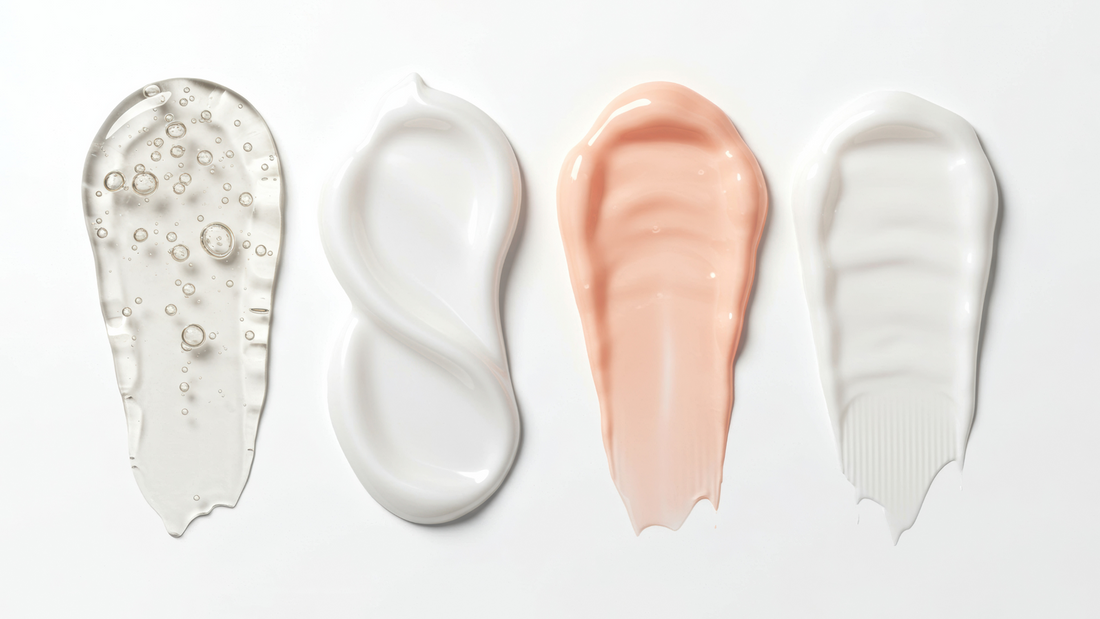
Image Credit: fairbeauty.co
Step 1: Cleanser
Cleansing should generally be your first skincare step.
A cleanser removes sweat, excess oil, makeup, sunscreen residue and everyday buildup from the skin.
In the morning, a gentle cleanser can help refresh your skin after sleeping. At night, cleansing becomes particularly important because you’re removing makeup, sunscreen and the day’s accumulated dirt and oil.
If your skin is dry or sensitive, avoid cleansers that leave your face feeling tight or stripped.
Step 2: Toner or Essence
Once your skin is clean, you can apply a toner or essence if it’s part of your routine.
Modern toners aren’t necessarily the harsh, alcohol-heavy products associated with older skincare routines. Many are designed to hydrate, soothe or lightly exfoliate the skin.
An essence is typically a lightweight, hydrating product that can be applied at this stage too.
If you don’t use either, simply move on to your serum.
Step 3: Serums and Treatments
This is where targeted skincare products usually come in.
Serums are often formulated with ingredients designed to address particular concerns, such as hydration, uneven skin tone, dullness or the appearance of fine lines.
Depending on the product, common ingredients include hyaluronic acid, niacinamide, vitamin C, retinoids and exfoliating acids.
If you’re using more than one serum, avoid automatically assuming that all of them should be layered together. Some active ingredients can be irritating when combined, particularly if you’re new to them.
A simpler routine is often easier to maintain — and easier to troubleshoot if your skin becomes irritated.
Step 4: Eye Cream
Eye cream is optional, but if you use one, it generally comes after your serum and before moisturizer.
The skin around the eyes is delicate, so apply the product gently rather than rubbing or pulling the area.
And remember, you don’t necessarily need a separate eye cream unless you specifically want one. Some moisturizers are suitable for use around the eyes, depending on their ingredients and your skin’s sensitivity.
Step 5: Moisturizer
Moisturizer helps support the skin barrier and reduce moisture loss.
This step is particularly important if you’re using potentially drying or irritating active ingredients.
Choose the texture based on your skin type. A lightweight lotion or gel may feel more comfortable on oily skin, while a richer cream can work well for dry skin.
Apply moisturizer after your serums and treatments so it can help seal in hydration.

Image Credit: fairbeauty.co
Step 6: Facial Oil
If facial oil is part of your routine, it usually comes toward the end because oils are heavier than most water-based skincare products.
You can apply a few drops over your moisturizer to help lock in moisture.
However, facial oil isn’t essential for everyone. If your moisturizer already leaves your skin comfortable and hydrated, you may not need an additional oil.
Step 7: Sunscreen — Always Last in the Morning
If there’s one skincare-layering rule worth remembering, it’s this: sunscreen should be the final step of your morning skincare routine.
Apply a broad-spectrum sunscreen with an SPF of 30 or higher as the final skincare step before makeup. The American Academy of Dermatology recommends broad-spectrum, water-resistant sunscreen with SPF 30 or higher.
Sunscreen is not simply another moisturizer. It is specifically designed to provide protection against ultraviolet radiation, so it needs to form a relatively even layer over the skin.
And don’t forget areas such as the neck, ears and other exposed skin.
What About Makeup?
Once your morning skincare has been applied and your sunscreen has had a moment to settle, you can move on to makeup.
A simple order could be:
Skincare → Sunscreen → Primer → Foundation → Concealer → Powder → Makeup
If your sunscreen pills or rolls when you apply makeup, the issue may not necessarily be the sunscreen itself. Applying too many layers or using incompatible formulas can contribute to pilling.
Try using smaller amounts and allowing each layer to settle before applying the next.
How Long Should You Wait Between Products?
You don’t necessarily need to wait several minutes between every skincare product.
If a product has absorbed or settled enough for you to comfortably apply the next one, you can generally continue.
However, if you’re applying multiple active treatments, taking a little more time between layers can make the process more comfortable and give you a chance to notice how your skin reacts.
The most important thing is not spending an excessive amount of time waiting between products — it’s avoiding overloading your skin.
Can You Use Multiple Active Ingredients?
This is where skincare routines can become complicated.
Ingredients such as retinoids, alpha hydroxy acids, beta hydroxy acids and vitamin C can all have a place in a skincare routine, but more isn’t necessarily better.
Combining several potentially irritating active ingredients in one routine can increase the likelihood of redness, dryness or irritation.
If you’re introducing a new active ingredient, start slowly and follow the product’s instructions. You don’t need to use every treatment every night.
For beginners, alternating products on different nights can be a simpler approach.
Your Morning and Night Routines Don’t Have to Be Identical
One of the easiest ways to simplify skincare is to give your morning and evening routines different jobs.
Your morning routine can focus on hydration and protection:
- Cleanser
- Hydrating toner or essence
- Antioxidant or other suitable serum
- Moisturizer
- Sunscreen
Your night routine can focus more on hydration and targeted treatments:
- Cleanser
- Toner or essence
- Treatment or serum
- Moisturizer
- Facial oil, if needed
Again, none of these steps are mandatory. Your routine should reflect what your skin actually needs.
Common Skincare Layering Mistakes
One of the biggest mistakes is using too many products simply because they’re available.
Another is applying sunscreen underneath moisturizer or mixing sunscreen directly into other skincare products. Sunscreen should generally be applied as its own final skincare layer rather than diluted into another product.
It’s also worth remembering that skincare isn’t a race. Applying more product doesn’t automatically produce better results.
If your skin becomes persistently irritated, burning or unusually dry, stop using the suspected irritating product and consider speaking with a dermatologist.
The Bottom Line
The correct skincare order doesn’t have to be complicated.
Think light to heavy, use targeted treatments before heavier creams, and finish your morning routine with sunscreen.
Most importantly, don’t feel pressured to follow a 10-step routine. A consistent routine built around cleansing, moisturizing, treating specific concerns when necessary and protecting your skin from the sun can be much more useful than a shelf full of products you rarely use.
FAQs
What is the correct order to apply skincare products?
A basic routine generally follows cleanser, toner or essence, serum or treatment, eye cream, moisturizer and sunscreen in the morning. Facial oil can be added near the end of a nighttime routine.
Should sunscreen go before or after moisturizer?
Sunscreen should generally be the final step of your morning skincare routine, after moisturizer.
Do I need to use a toner?
No. Toner is optional. If your skin is already comfortable after cleansing, you can move directly to your serum or moisturizer.
What are the biggest stories trending online today? Read the latest here
Published by HOLR Magazine