


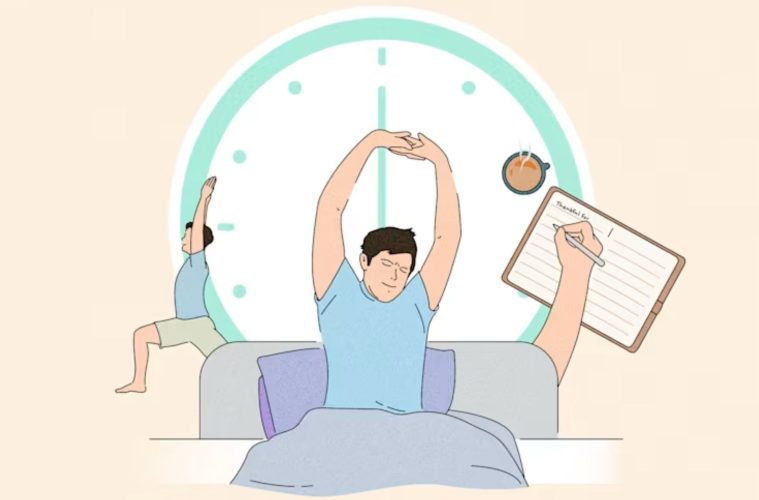
From sunrise workouts and matcha to journaling and elaborate skincare, morning routines have evolved from simple habits into a full lifestyle trend.
August 20, 2026: Morning routines have always existed, but they have never been as visible as they are today.
Scrolling through social media can feel like opening a window into everyone else’s morning. One person is waking up at 5 a.m. for a workout. Another is making an elaborate breakfast. Someone else is journaling, meditating, drinking a green juice or completing a 10-step skincare routine before starting work.
What was once simply a way to get ready for the day has become a lifestyle category of its own.

Image Credit: themanthanschool.co.in
Why Morning Routines Feel So Appealing
There is something comforting about starting the day with a sense of control.
Modern life can feel unpredictable. Work deadlines, family responsibilities, notifications and unexpected problems can quickly change the direction of a day.
A morning routine creates a small period of predictability.
Whether it lasts 10 minutes or two hours, having familiar activities can make the beginning of the day feel more organized.
That feeling of control may be one reason people become attached to their routines.
Social Media Turned Morning Routines Into Content
Social media has played a major role in transforming private habits into public lifestyle content.
Videos titled “morning routine,” “5 a.m. routine” and “productive morning with me” regularly invite viewers into carefully curated versions of people’s mornings.
The appeal is not necessarily the individual activities.
It is the atmosphere.
Soft lighting, neatly made beds, coffee or matcha, skincare products, workout clothes and organized spaces create an image of calm productivity.
The routine becomes aspirational content.
The Rise of the “That Girl” Lifestyle
Morning routines became particularly connected to the “that girl” aesthetic.
The concept typically presents an idealized version of wellness and productivity: waking early, exercising, eating healthy food, keeping an organized home and beginning the day with intentional habits.
Although the trend has received criticism for creating unrealistic expectations, it remains influential.
For many people, it represents something larger than a specific routine.
It represents the desire to feel organized, healthy and in control.

Image Credit: morningroutine.fit
Morning Routines Give People a Sense of Identity
A routine can also become part of someone’s identity.
Someone might describe themselves as a person who runs every morning.
Another might be the person who never starts the day without coffee and journaling.
These habits can become small signals of who we believe we are.
Psychologists have long studied how repeated behaviors can become habits, particularly when they are attached to consistent cues and rewards.
That helps explain why a simple morning ritual can eventually feel like an essential part of everyday life.
Wellness Became Part of the Morning
Morning routines have also become closely connected with the wellness industry.
Supplements, skincare, fitness programs, meditation apps, journals, specialty coffee, wellness drinks and sleep technology can all become part of a morning routine.
This has created an enormous lifestyle market around the idea of having a “better” morning.
The message is often simple: improve the way you start your day, and you can improve the rest of it.
The reality is more complicated, but the idea is powerful.
The 5 A.M. Routine Became a Symbol of Productivity
Few morning trends have attracted as much attention as waking up extremely early.
The 5 a.m. routine became popular online as a symbol of discipline.
The logic seems straightforward.
If you wake before everyone else, you have more uninterrupted time to exercise, read, work or plan your day.
However, waking earlier is not automatically healthier or more productive.
Sleep remains essential. A morning routine that requires someone to sacrifice adequate sleep may ultimately work against the very goals it is supposed to support.
That is an important reminder when comparing real life with social media routines.

Image Credit: morningroutine.fit
Morning Routines Can Reduce Decision Fatigue
One practical benefit of routines is that they can reduce the number of decisions people need to make.
When someone already knows what they will do after waking up, they do not have to spend mental energy deciding what comes next.
Wake up.
Drink water.
Get dressed.
Exercise.
Eat breakfast.
Start work.
The exact routine is not important.
The consistency is.
For people with busy schedules, that predictability can make mornings feel easier.
Why People Enjoy “Reset” Culture
Morning routines are also connected to the broader idea of resetting your life.
A new week, new month or new season can create the feeling that it is time to start again.
Morning routines fit perfectly into that mindset.
Every morning becomes another opportunity to reset.
You may not have completed everything yesterday.
You can still begin again today.
That message is particularly appealing in a culture where people often feel pressure to constantly improve themselves.

Image Credit: morningroutine.fit
The Problem With Perfect Morning Routines
There is, however, a downside to the morning routine obsession.
Social media often presents routines as flawless.
The bedroom is clean.
The breakfast looks perfect.
The workout happens every day.
The skincare routine is uninterrupted.
The person appears calm and productive.
Real mornings rarely look like that.
Sometimes people oversleep.
Sometimes breakfast is a granola bar eaten on the way out the door.
Sometimes the workout does not happen.
Sometimes the best morning routine is simply getting enough sleep.
A healthy routine should support someone’s life rather than create another source of pressure.
Morning Routines Do Not Need to Be Complicated
One of the biggest misconceptions surrounding the trend is that a morning routine needs to be elaborate.
It does not.
A useful routine could be as simple as waking up at a consistent time, drinking water, getting ready and spending five quiet minutes planning the day.
For someone else, it might involve exercise, breakfast and reading.
The best routine is the one that is realistic enough to maintain.
The Personalization of Morning Habits
Morning routines have also become more personalized.
People are moving away from copying every element of someone else’s routine and choosing habits that actually fit their lives.
A parent may have a completely different morning from a university student.
A remote worker may have different needs from someone commuting to an office.
A night-shift worker may not even consider traditional morning hours the beginning of their day.
That is why the idea of a universal “perfect morning” does not really work.
Morning Routines and Mental Wellbeing
A calm start can also provide an opportunity to pause before the demands of the day begin.
Journaling, stretching, meditation, reading or simply sitting quietly can create a small amount of personal space.
However, it is important not to treat a morning routine as a cure-all for stress or mental health challenges.
Routines can be supportive habits, but they cannot replace professional help when someone needs it.
The Morning Routine Is Becoming Less About Productivity
Interestingly, the trend may be evolving.
For years, morning routines were heavily associated with productivity.
Wake up early.
Exercise.
Read.
Work.
Achieve more.
But there is growing interest in slower mornings as well.
People are beginning to value rituals that make them feel good rather than simply helping them accomplish more.
That could mean enjoying coffee without looking at a phone, taking a walk, listening to music or having breakfast with family.
The goal is shifting from “How much can I accomplish before 8 a.m.?” to “How do I want to feel when my day begins?”
Why the Trend Will Continue
Morning routines are unlikely to disappear because they combine several things people naturally seek: structure, control, wellness and self-improvement.
Social media will continue turning personal habits into inspiration.
Brands will continue creating products around wellness rituals.
And people will continue searching for ways to make busy lives feel a little more manageable.
But perhaps the healthiest version of the trend is also the simplest.
A morning routine does not need to look impressive.
It just needs to work for you.
HOLR has the latest lifestyle trends, and the obsession with morning routines says something interesting about modern life. People are not simply looking for ways to become more productive. They are looking for moments of control, calm and intention before the rest of the day begins.
And sometimes, the most successful morning routine may be the one that leaves you feeling ready for the day rather than exhausted by everything you were supposed to accomplish before it even started.
FAQs
Why are morning routines so popular?
Morning routines provide structure and can create a sense of control at the beginning of the day. Social media has also turned personal routines into aspirational lifestyle content.
What is the “5 a.m. routine” trend?
The 5 a.m. routine refers to waking very early to exercise, read, journal, work or complete other personal activities before the workday begins.
Do you need a long morning routine?
No. A morning routine can be very simple. A few consistent habits that fit your schedule may be more sustainable than an elaborate routine.
What are the biggest stories trending online today? Read the latest here
Published by HOLR Magazine
Image Credit: channelnewsasia.com