


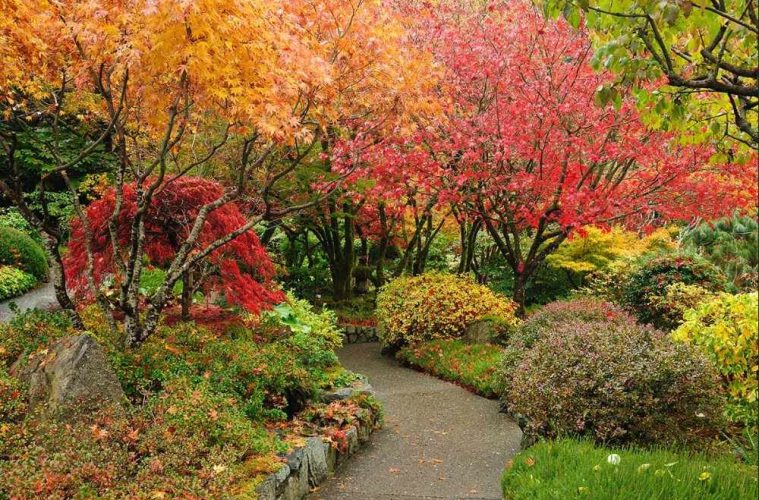
You do not need a giant tree for dramatic autumn foliage—these seven compact shrubs bring red, orange and burgundy color without overwhelming a small garden.
Big Fall Color Without a Big Tree
August 24, 2026 – Few things create the drama of a mature maple in autumn, but large trees are not practical for every garden. Sugar maples can eventually reach 60 to 75 feet tall and nearly as wide, which makes them a poor fit for smaller yards.
Shrubs offer another way to bring strong fall color into a limited space. Many can deliver vibrant foliage, berries or colorful stems while taking up a fraction of the room.
Before planting, check your USDA Hardiness Zone and the shrub’s mature size. A plant that looks tiny in a nursery container can become difficult to manage once established, especially in a narrow bed.
Oakleaf Hydrangea
Oakleaf hydrangea is one of the strongest choices when fall foliage is the priority. Its large, oak-shaped leaves turn red, bronze and deep burgundy as the season progresses.
Unlike most hydrangeas, it is grown as much for its foliage as its flowers. The shrub also works well as a focal point or within a mixed border, giving a small yard structure through multiple seasons.
There is one important pruning detail to remember: oakleaf hydrangeas bloom on old wood. Prune immediately after flowering rather than later in the year, or you risk removing next year’s flower buds.

Credit: Tony Quinn / 500px
Viburnum
Viburnums offer a lot of seasonal interest in a relatively manageable package. There are more than 100 species, and many develop red, burgundy or orange foliage in fall.
Koreanspice viburnum is particularly useful for gardeners who want more than autumn color. It produces clusters of fragrant flowers in spring followed by bright red berries that gradually darken in fall.
For smaller gardens, compact cultivars such as ‘Spice Girl’ and ‘Spice Baby’ can provide the same seasonal appeal without taking over the planting area.

Credit: YONCA60
Panicle Hydrangea
Panicle hydrangeas take a slightly different route to fall interest. Their foliage is not the main attraction, but their large flower heads age from white and green into antique rose and burgundy during late summer and early fall.
Those dried blooms can remain attractive through winter, adding structure when many other plants have gone dormant. That makes panicle hydrangea useful for gardeners who want fall color that does not disappear as soon as the leaves drop.
They are also considered one of the easiest hydrangeas to grow. Because they bloom on new wood, pruning timing is less risky than it is with varieties that flower on old wood.

Credit: Catherine McQueen
Red Twig Dogwood
Red twig dogwood extends the fall display into winter. Its foliage turns orange or red before fading toward purple, but the real show begins once the leaves fall.
The bare stems become a vivid red, bringing strong color to the winter garden when most deciduous shrubs have lost their foliage. That makes this native shrub particularly useful for gardeners who want interest beyond October.
It also provides ecological value as a larval host for butterflies, giving the shrub a purpose beyond seasonal decoration.

Credit: Isabella Sthl
Serviceberry
Serviceberry is a particularly versatile choice for a smaller landscape because it can grow as either a small tree or shrub. In spring, it produces fragrant white flowers, followed by red-black fruit that birds enjoy.
Its foliage then turns deep red, orange or yellow in fall, giving the plant several distinct seasons of interest. That combination makes serviceberry more than a fall-color shrub; it can contribute flowers, wildlife value and autumn foliage from the same planting.
For smaller spaces, cultivars such as ‘Spring Glory’ remain more compact, reaching around 12 feet tall at maturity.

Credit: imageBROKER/alimdi / Trevor Chriss
Chokeberry
Also called Aronia, chokeberry is an especially practical option when space is tight. Depending on the variety, these shrubs can remain between about 18 inches and 4 feet tall, making them useful for foundation plantings and smaller garden beds.
The seasonal sequence is attractive, too. White flowers appear in spring, followed by glossy red or black berries in summer. When autumn arrives, the foliage shifts into shades of orange and red.
Because of its relatively compact size, chokeberry can provide noticeable seasonal color without requiring the heavy pruning that a much larger shrub might eventually need.

Credit: Sami Hurmerinta
Sweetspire
Sweetspire, also known as itea, is another native shrub that deserves more attention in small gardens. It produces fragrant flower spikes in summer before its foliage turns red and orange in fall.
Its naturally mounded form makes it easy to fit into mixed borders, and several cultivars are particularly compact. ‘Little Henry,’ ‘Fizzy Mizzy’ and ‘Scentlandia’ typically stay around 2 to 3 feet tall and wide.
That combination of fragrance, manageable size and autumn foliage makes sweetspire a useful choice for gardeners who want a shrub that performs without dominating the bed.

Credit: John Ruter, University of Georgia, Bugwood.org
How to Choose the Right Shrub for Your Yard
Fall color should not be the only factor when choosing a shrub. Start by checking whether the plant is hardy in your USDA Hardiness Zone, then consider how much sunlight and space your garden actually provides.
Mature size is especially important in a small yard. A shrub that needs frequent pruning to stay within its allotted space may quickly become more work than expected.
It is also worth thinking about what happens after the peak fall display. Red twig dogwood continues into winter with colorful stems, while serviceberry offers spring flowers and bird-friendly fruit. Panicle hydrangea keeps its dried flower heads, and viburnum adds spring fragrance and fall berries.
Choosing shrubs with more than one season of interest can make limited garden space work harder.
Small Gardens Can Still Have a Big Autumn Display
A small yard does not have to mean giving up dramatic fall color. The right shrubs can provide the reds, oranges and burgundies associated with larger landscapes without demanding the footprint of a mature shade tree.
The best choices are the ones that fit your actual space while offering something beyond a few colorful weeks. Whether that means flowers and berries, winter stems or long-lasting dried blooms, these shrubs can give a compact garden several layers of seasonal interest.
Final Thoughts
The easiest way to bring spectacular autumn color into a small yard is to think beyond traditional fall trees. Oakleaf hydrangea, viburnum, panicle hydrangea, red twig dogwood, serviceberry, chokeberry and sweetspire can all deliver seasonal interest in more manageable forms.
Before planting, check the mature size and hardiness requirements of the variety you choose. A compact shrub that fits its space from the beginning will give you more color and far less maintenance later.
FAQs
Which shrub has the best fall foliage for a small yard?
Oakleaf hydrangea is a standout for foliage, with leaves that turn red, bronze and deep burgundy. Chokeberry and sweetspire are also strong compact options.
Which shrubs provide fall color and winter interest?
Red twig dogwood is especially useful because its foliage changes color in fall and its bright red stems remain visible after the leaves drop.
Is serviceberry suitable for a small garden?
Yes. Smaller cultivars such as ‘Spring Glory’ remain more compact, while the plant also provides spring flowers, fruit for birds and colorful fall foliage.
Which shrub is easiest to grow?
Panicle hydrangea is considered one of the easiest hydrangeas to grow and blooms on new wood, making pruning less complicated.
How do I choose a shrub for a small yard?
Check its USDA Hardiness Zone, sunlight requirements and mature height and width before planting. The mature size is particularly important in a small garden.
Published by HOLR Magazine