


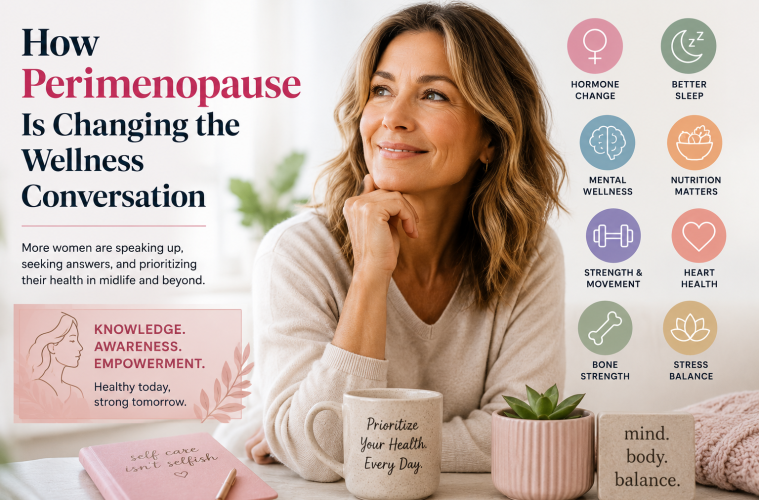
How Perimenopause Is Changing the Wellness Conversation: What Every Woman Should Know
July 30,2026: For many years, conversations about women’s health tended to focus on puberty, pregnancy, and menopause. One important stage in between often received far less attention, leaving many women confused by symptoms they couldn’t explain.
That stage is perimenopause.
Today, however, the conversation is changing.
Across social media, podcasts, medical journals, and healthcare discussions, more women are openly sharing their experiences with hormonal changes during their late 30s and 40s. Instead of silently wondering why their sleep has changed, why anxiety feels different, or why their menstrual cycle has become unpredictable, women are beginning to recognize that these experiences may be connected to perimenopause.
Healthcare professionals, researchers, and wellness experts are also placing greater emphasis on education, helping people understand that perimenopause is a normal biological transition rather than something to fear.
This growing awareness has transformed perimenopause from a rarely discussed topic into one of the most important conversations in women’s wellness.
HOLR explores what perimenopause is, why awareness is growing, and how this life stage is reshaping the way women approach health, self-care, and healthy aging.
What Is Perimenopause?
Perimenopause refers to the transitional years leading up to menopause.
During this time, the ovaries gradually begin producing different amounts of reproductive hormones, particularly estrogen and progesterone.
Unlike menopause—which is officially diagnosed after 12 consecutive months without a menstrual period—perimenopause can last several years.
For many women, it begins during their 40s, although some experience hormonal changes in their late 30s, while others begin later.
Because hormone levels fluctuate rather than decline steadily, symptoms often vary from month to month.
This unpredictability explains why many women initially struggle to recognize what is happening.
Why Has Perimenopause Become Such a Big Wellness Topic?
One of the biggest reasons perimenopause is receiving more attention is that women are talking about it openly.
For decades, many symptoms were dismissed as simply “getting older.”
Today, people are asking more questions.
Healthcare professionals are publishing more research.
Podcasts feature hormone specialists.
Celebrities share personal experiences.
Social media creators discuss their journeys.
These conversations have helped reduce stigma while encouraging women to seek reliable medical information instead of silently accepting uncomfortable symptoms.
Greater awareness has also highlighted an important reality:
Many women spend years experiencing symptoms before realizing hormones may be contributing.
Education is helping close that gap.
Common Signs of Perimenopause
Every woman’s experience is unique.
Some notice only subtle changes.
Others experience several symptoms simultaneously.
Common symptoms may include:
- Irregular menstrual cycles
- Hot flashes
- Night sweats
- Sleep disturbances
- Mood changes
- Increased anxiety
- Brain fog
- Difficulty concentrating
- Fatigue
- Vaginal dryness
- Headaches
- Changes in libido
It’s important to remember that these symptoms can have many possible causes.
Only a qualified healthcare professional can determine whether they’re related to perimenopause or another medical condition.
Hormones Affect More Than Reproduction
One of the biggest misconceptions about perimenopause is that reproductive hormones only influence menstrual cycles.
In reality, estrogen affects many systems throughout the body.
Research suggests hormonal changes may influence:
- Bone health
- Heart health
- Brain function
- Skin elasticity
- Sleep quality
- Mood regulation
- Body temperature
- Muscle health
- Metabolism
Because hormones interact with multiple organs, it’s understandable that perimenopause can feel like a whole-body experience rather than simply a reproductive transition.
Mental Health Is Becoming Part of the Conversation
Historically, discussions about perimenopause focused primarily on hot flashes and menstrual changes.
Today, mental well-being has become an equally important topic.
Many women report experiencing:
- Increased irritability
- Anxiety
- Mood fluctuations
- Difficulty concentrating
- Emotional sensitivity
Researchers continue studying the relationship between hormonal changes and emotional health, but healthcare professionals increasingly recognize that mental well-being deserves attention during this life stage.
Importantly, emotional symptoms should never be dismissed.
Women experiencing significant mood changes are encouraged to seek support from healthcare providers who can evaluate possible contributing factors.
Sleep Changes Can Affect Everyday Life
Quality sleep often becomes more difficult during perimenopause.
Night sweats, hormonal fluctuations, stress, and changing body temperature regulation may all contribute to disrupted sleep.
Poor sleep can then influence:
- Energy levels
- Memory
- Productivity
- Mood
- Physical recovery
This creates a cycle where fatigue makes daily life more challenging, while ongoing stress further affects sleep.
Because of this connection, sleep health has become a major focus of modern perimenopause care.
Experts increasingly recommend consistent sleep routines alongside broader lifestyle strategies to support overall well-being.
Women Are Taking a More Preventive Approach to Health
Perhaps one of the most significant shifts in the wellness conversation is that women are becoming more proactive rather than reactive.
Instead of waiting until symptoms become severe, many are focusing on habits that support long-term health.
These include:
- Regular physical activity
- Strength training
- Balanced nutrition
- Stress management
- Quality sleep
- Routine medical check-ups
- Bone health monitoring
- Heart health awareness
Perimenopause is encouraging women to think about healthy aging in a more holistic way.
Rather than viewing wellness as simply treating symptoms, many now see it as supporting the body through every stage of life.
Nutrition Plays an Important Role During Perimenopause
While no single diet can prevent or eliminate every symptom of perimenopause, nutrition plays a significant role in supporting overall health during this stage of life.
As hormone levels change, the body’s nutritional needs may shift as well. Eating a balanced diet rich in whole foods can help support energy levels, bone health, heart health, and muscle maintenance.
Many healthcare professionals recommend including:
- Plenty of fruits and vegetables
- Whole grains
- Lean proteins
- Healthy fats
- Calcium-rich foods
- Vitamin D sources
- Foods rich in magnesium
- Omega-3 fatty acids
These nutrients support many of the systems affected by hormonal changes.
Highly processed foods, excess sugar, and excessive alcohol consumption may affect energy levels, sleep, and overall well-being in some individuals, although everyone’s experience is different.
Rather than following restrictive diets, experts increasingly encourage sustainable eating habits that can be maintained over the long term.
Exercise Is Becoming One of the Most Recommended Wellness Tools
The conversation around exercise has also evolved.
Instead of focusing only on weight management, healthcare professionals now emphasize movement as a powerful tool for healthy aging.
Regular physical activity may help support:
- Bone density
- Muscle strength
- Joint mobility
- Cardiovascular health
- Mental well-being
- Sleep quality
- Balance
- Overall energy
Strength training, in particular, has gained significant attention because women naturally begin losing muscle mass as they age.
Maintaining muscle strength supports independence, metabolism, posture, and long-term mobility.
Walking, yoga, Pilates, cycling, swimming, and resistance exercises can all contribute to overall health.
The goal isn’t perfection.
It’s consistency.
Skin, Hair, and Body Changes
Hormonal fluctuations during perimenopause may also influence appearance.
Some women notice:
- Drier skin
- Reduced skin elasticity
- Fine lines becoming more noticeable
- Hair thinning
- Changes in scalp health
- Weight redistribution
- Slower recovery after exercise
These changes occur because estrogen supports collagen production, skin hydration, and hair health.
As hormone levels fluctuate, many women adjust their skincare routines by prioritizing moisturization, sunscreen, barrier-supporting ingredients, and gentle products.
Rather than trying to “reverse aging,” the wellness conversation is increasingly focused on supporting healthy skin throughout every stage of life.
The Importance of Personalized Healthcare
One reason perimenopause has become such an important topic is that no two experiences are identical.
Some women experience only mild symptoms.
Others notice significant changes that affect their work, relationships, sleep, or quality of life.
Factors such as:
- Genetics
- Lifestyle
- Medical history
- Stress levels
- Overall health
can all influence the experience.
This is why healthcare professionals encourage individualized care rather than assuming every woman needs the same approach.
Depending on a person’s symptoms and medical history, healthcare providers may recommend lifestyle changes, counseling, non-hormonal therapies, hormone therapy when appropriate, or additional medical evaluation.
Open communication with a qualified healthcare professional is one of the most valuable tools during this transition.
Breaking the Stigma Around Midlife Women’s Health
Perhaps one of the most encouraging developments is that perimenopause is no longer treated as a taboo subject.
Women are increasingly sharing their experiences through:
- Podcasts
- Books
- Online communities
- Workplace wellness programs
- Medical organizations
- Social media
- Public discussions
This openness helps normalize conversations that previous generations often kept private.
It also empowers younger women to recognize symptoms earlier and seek accurate medical advice instead of feeling confused or isolated.
Education benefits everyone—not only those currently experiencing perimenopause.
Partners, family members, employers, and healthcare providers also gain a better understanding of the challenges many women navigate during midlife.
The Future of Women’s Wellness
The growing attention surrounding perimenopause reflects a much broader shift in healthcare.
Women’s health is becoming increasingly comprehensive.
Instead of focusing solely on reproductive health, modern wellness now considers:
- Hormonal health
- Mental health
- Cardiovascular health
- Bone strength
- Cognitive function
- Sleep
- Nutrition
- Physical activity
- Healthy aging
Researchers continue studying how hormonal transitions influence long-term health, leading to improved education and more personalized approaches to care.
As scientific understanding expands, women are gaining access to better information than ever before.
Final Thoughts
Perimenopause is not an illness.
It is a natural stage of life that marks an important hormonal transition.
While the experience varies from woman to woman, greater awareness is helping more people recognize symptoms, seek medical guidance, and make informed decisions about their health.
The growing conversation around perimenopause represents an important cultural shift.
Instead of viewing midlife as something to fear, many women are embracing it as an opportunity to prioritize wellness, build healthier habits, and better understand their bodies.
Whether through balanced nutrition, regular exercise, quality sleep, stress management, or personalized medical care, small daily choices can help support health during this transition.
Ultimately, the most important change isn’t happening inside the body.
It’s happening in the conversation itself.
Perimenopause is finally being recognized as an important part of women’s health—and that awareness is empowering millions of women to approach this stage of life with greater confidence, knowledge, and support.
FAQs
What is perimenopause?
Perimenopause is the transitional stage before menopause, during which hormone levels fluctuate and menstrual cycles may become irregular. It can begin several years before menopause.
What are the common symptoms of perimenopause?
Common symptoms include irregular periods, hot flashes, night sweats, sleep disturbances, mood changes, brain fog, fatigue, anxiety, and changes in skin or hair. Symptoms vary widely from person to person.
At what age does perimenopause usually begin?
Perimenopause most commonly begins in a woman’s 40s, although some women notice changes in their late 30s or later. The timing is different for everyone.
What are the biggest stories trending online today? Read the latest here
Published by HOLR Magazine
Image Credit: AI