


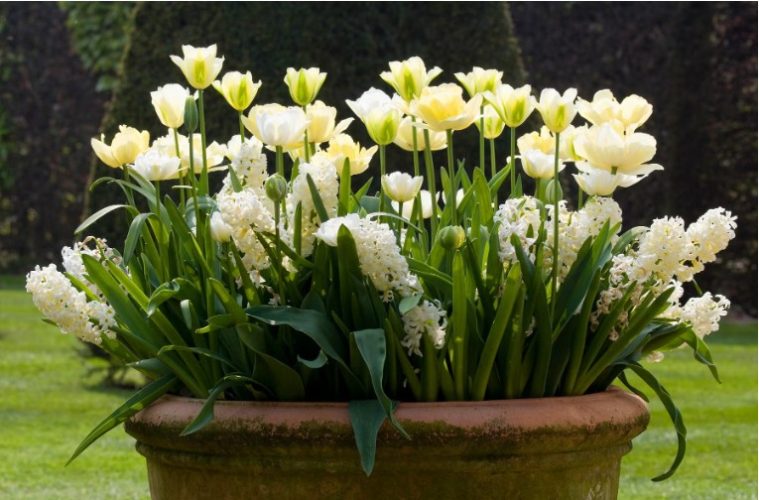
Layer spring-flowering bulbs in one container for a colorful succession of blooms, saving space and extending your seasonal display.
September 07, 2026
What Is a Bulb Lasagne?
A “bulb lasagne” is a clever way to plant several types of spring-flowering bulbs in a single container by arranging them in layers. The method gets its name from the way the bulbs are stacked at different depths, much like the layers of a lasagne.
The basic idea is simple: bulbs planted deepest bloom later, while those placed closer to the surface bloom earlier. With the right combination of varieties, one container can produce a succession of flowers rather than a single burst of color, creating a display that develops throughout spring and into early summer.

Credit: David Burton
Choose the Right Container
The container is the foundation of the entire project. Choose a pot that is at least 6 inches deep, although a container around 12 to 14 inches deep is ideal if you want enough room for several layers.
Good drainage is essential because bulbs sitting in overly wet soil can struggle or rot. Make sure the container has plenty of drainage holes, and consider adding a layer of gravel at the bottom if you wish. Gravel can provide additional drainage support, but it cannot make up for a container without proper drainage holes.
Plant the First Layer
Start with the bulbs that will flower latest and place them at the bottom of the container. Late-spring bloomers such as tulips are good candidates for this deepest layer because they can grow upward through the layers above them as earlier flowers finish.
Add a layer of compost and suitable bulb-planting soil before positioning the bulbs. The goal is to give the deepest bulbs enough room to establish without packing them too tightly together.

Add the Middle Layer
Once the first layer has been positioned, cover it with additional compost and soil before adding the next group of bulbs. This middle layer should contain varieties that flower around the middle of spring, creating a transition between the later blooms below and the earliest flowers above.
Daffodils and hyacinths are among the options that can work well here. The important thing is not simply choosing attractive bulbs, but selecting varieties with different flowering times so the container continues changing as the season progresses.
Finish With the Top Layer
The final layer should contain the earliest-flowering bulbs. Crocuses, snowdrops, and reticulated irises are good choices for the top because they can emerge first and provide an early burst of color.
Add another layer of compost and soil, plant the bulbs, then cover everything with soil and water the container thoroughly. Once planted, the different layers can develop beneath the surface before emerging in sequence when the weather warms.
Get the Spacing and Depth Right
Spacing is important because the bulbs need enough room to grow without leaving large gaps in the container. Gardening expert Sarah Raven recommends placing the bulbs slightly farther apart than they would be in a single layer, but closer together than they would be in a traditional garden border.
For a three-layer arrangement, the deepest bulbs can sit around 11 to 12 inches below the surface, with the next layer around 8 inches deep and the top layer around 4 to 5 inches below the soil. The precise depth can vary according to the bulbs you select, so checking individual planting recommendations is still worthwhile.

Pick Bulbs With Different Bloom Times
The success of a bulb lasagne depends on choosing bulbs that bloom at different points in the season. Planting three varieties that all flower at the same time defeats the main purpose of layering because the container will still have a relatively short display.
Tulips can provide later spring color, while daffodils and hyacinths can fill the middle portion of the season. Crocuses, snowdrops, and reticulated irises can then get things started earlier, creating a sequence rather than a one-time show.
Why This Method Works So Well
A bulb lasagne is particularly useful for gardeners working with limited space. One container can hold several types of bulbs, making the technique well suited to patios, balconies, terraces, or small outdoor spaces where a traditional flower border is not practical.
It can also save time and resources because multiple varieties are planted together at once. Beyond the practical benefits, layering different flowers creates visual variety, with different colors, shapes, and heights appearing throughout the season.
Keep the Layers to Two or Three
More layers may sound tempting, but adding too many can work against the plants. Gardening experts generally recommend sticking with two or three layers because deeper bulbs need sufficient room and soil to grow properly.
A three-layer arrangement offers a good balance between variety and available space. It is enough to create a prolonged sequence of flowers without crowding the container with more bulbs than it can comfortably support.
The Best Time to Plant a Bulb Lasagne
Fall is the ideal time to plant spring-flowering bulbs, making it a useful project to tackle before winter arrives. Planting during this period gives the bulbs time to establish underground before their seasonal growth begins.
That timing also means the container can remain relatively quiet during the colder months before the first early flowers eventually appear. With the right bulb choices, the payoff comes in stages, beginning with the earliest spring varieties and continuing as later bulbs come into bloom.
Final Thoughts
A bulb lasagne is a simple way to make one container work much harder, combining multiple spring-flowering bulbs at different depths for a longer-lasting display. With the right pot, good drainage, thoughtful spacing, and bulbs chosen for staggered bloom times, even a small outdoor space can deliver months of seasonal color.
The technique is straightforward enough for beginners while still offering plenty of room to experiment with different combinations. The key is to think in layers and plan the flowering sequence before planting.
FAQs
What is a bulb lasagne?
A bulb lasagne is a layered planting technique that places different spring-flowering bulbs at varying depths in one container so they bloom at different times.
How many layers should a bulb lasagne have?
Two to three layers are generally recommended. More layers can overcrowd the container and make it harder for deeper bulbs to grow successfully.
Which bulbs work best in a bulb lasagne?
Tulips, daffodils, hyacinths, crocuses, snowdrops, and reticulated irises are suitable options, provided they have different flowering times.
How deep should I plant the bulbs?
For a three-layer container, the deepest layer can be around 11 to 12 inches below the surface, the middle layer around 8 inches, and the top layer around 4 to 5 inches.
When should I plant a bulb lasagne?
Fall is the ideal time to plant spring-flowering bulbs in a layered container, giving them time to establish before they bloom in spring.
Published by HOLR Magazine